
Oshibana
In its own language: 押し花
The craft of making pictures from pressed flowers and leaves
Oshibana is the practice of arranging pressed flowers and plant parts to form detailed pictures. This art began in Japan in the 1500s and is now enjoyed in many countries, with artists using both traditional and modern techniques to preserve and display botanical materials.
- Oshibana uses pressed flowers and leaves to make pictures.
- The craft began in Japan in the 1500s.
- Pressed flowers are glued onto paper or fabric to form images.
- Modern artists use new methods to keep colors bright.
- Oshibana is practiced and taught around the world.
What is Oshibana?
Oshibana is a form of art where dried and pressed flowers, leaves, and other plant parts are arranged to create images. Artists select and flatten botanical materials, then carefully place them on paper or fabric to form pictures, sometimes adding watercolor backgrounds. The finished pieces can be framed or used in books and crafts, showing both the shapes and colors of the plants.
Where does Oshibana come from?
This art form began in Japan during the 16th century, where it was practiced by samurai as a way to encourage patience and a close connection with nature. Over time, the craft spread to other parts of the world, with similar pressed flower techniques appearing in Europe, especially during the Victorian period. Oshibana has since become a global art, with artists and enthusiasts in many countries.
How Oshibana is made
To create oshibana, fresh flowers and leaves are pressed between sheets of paper to remove moisture and flatten them. Once dried, these materials are arranged on a surface such as handmade paper, Japanese paper, or fabric. Each piece is glued in place to build up a scene or design. Some artists enhance the background with paint or use special mounting and framing methods to help preserve the colors.

When and where Oshibana is used
Oshibana artworks are often displayed in homes, given as gifts, or included in decorative books. In some places, pressed flower pictures are sold as souvenirs, sometimes combined with photographs or mounted on wooden covers. The craft is also taught in classes and featured in exhibitions and competitions, bringing together artists from different backgrounds.
Forms of Oshibana
Artists use many kinds of flowers and leaves, and the style can range from simple designs to complex scenes. Some use modern methods like vacuum-sealing to help preserve the color and texture of the pressed materials. Organizations and schools dedicated to oshibana have helped spread new techniques and encourage creative approaches.
What Oshibana means
Oshibana is valued for its connection to nature and its meditative process. It is seen as a way to appreciate the beauty of plants and the changing seasons. The craft has been promoted by notable figures and organizations, and international societies now support artists, hold competitions, and help keep the tradition alive.
Questions people ask about Oshibana
Where did oshibana originate?
Oshibana started in Japan in the 16th century, where it was practiced as a way to develop patience and a sense of harmony with nature.
What materials are used in oshibana?
Artists use pressed flowers, leaves, and petals, which are arranged on paper or fabric. Sometimes, backgrounds are painted, and materials like velvet or wood are also used.
How are the flowers preserved in oshibana?
Flowers and leaves are pressed to remove moisture and flatten them. Some artists use special papers or vacuum-sealing to help keep the colors and prevent damage.
What does oshibana represent?
Oshibana is seen as a way to connect with nature, encourage patience, and celebrate the beauty of plants. It is also valued as a traditional and creative art form.
Good reading and sources
- World of freeze-framed flowers at MitsukoshiThe Japan Times, Article
- AGRICOLAUS Department of Agriculture, Article
The facts on this page come from the Wikipedia article "Oshibana", written by its contributors and used under the CC BY-SA 4.0 licence, and from its Wikidata record (CC0). Phool rewrote the text in its own words, with AI assistance, and compares every page with the article to make sure no passage is copied. It may be reused under the same CC BY-SA 4.0 licence with a link back.
It may contain mistakes. If something is wrong, tell us. Last refreshed 2026-10-03.
More of the same kind
 Decoration
Corn dolly
Straw figures shaped for harvest customs across Europe
🇮🇪 Ireland and 3 more · Flower craft
Decoration
Corn dolly
Straw figures shaped for harvest customs across Europe
🇮🇪 Ireland and 3 more · Flower craft
 Decoration
Paisleyبته
A curved teardrop motif from Iran and India, now used worldwide on textiles
🇮🇷 Iran and 8 more · Art or design
Decoration
Paisleyبته
A curved teardrop motif from Iran and India, now used worldwide on textiles
🇮🇷 Iran and 8 more · Art or design
 Decoration
Butaبوته
A curved floral motif found in Persian, Indian, and Central Asian art and textiles
🇮🇷 Iran and 5 more · Art or design
Decoration
Butaبوته
A curved floral motif found in Persian, Indian, and Central Asian art and textiles
🇮🇷 Iran and 5 more · Art or design
 Decoration
Vase
An open container for holding and displaying cut flowers
Arrangement
Decoration
Vase
An open container for holding and displaying cut flowers
Arrangement
More from Japan
All the flowers of Japan Decoration
Sōgetsu草月流
A modern school of Japanese ikebana open to all materials and styles
🇯🇵 Japan · Arrangement
Decoration
Sōgetsu草月流
A modern school of Japanese ikebana open to all materials and styles
🇯🇵 Japan · Arrangement
 Decoration
Tokonoma床の間
A Japanese alcove for displaying scrolls and flower arrangements
🇯🇵 Japan · Arrangement
Decoration
Tokonoma床の間
A Japanese alcove for displaying scrolls and flower arrangements
🇯🇵 Japan · Arrangement
 Decoration
Bonsai盆栽
The Japanese art of shaping miniature trees in shallow pots
🇯🇵 Japan and 7 more · Art or design
Decoration
Bonsai盆栽
The Japanese art of shaping miniature trees in shallow pots
🇯🇵 Japan and 7 more · Art or design
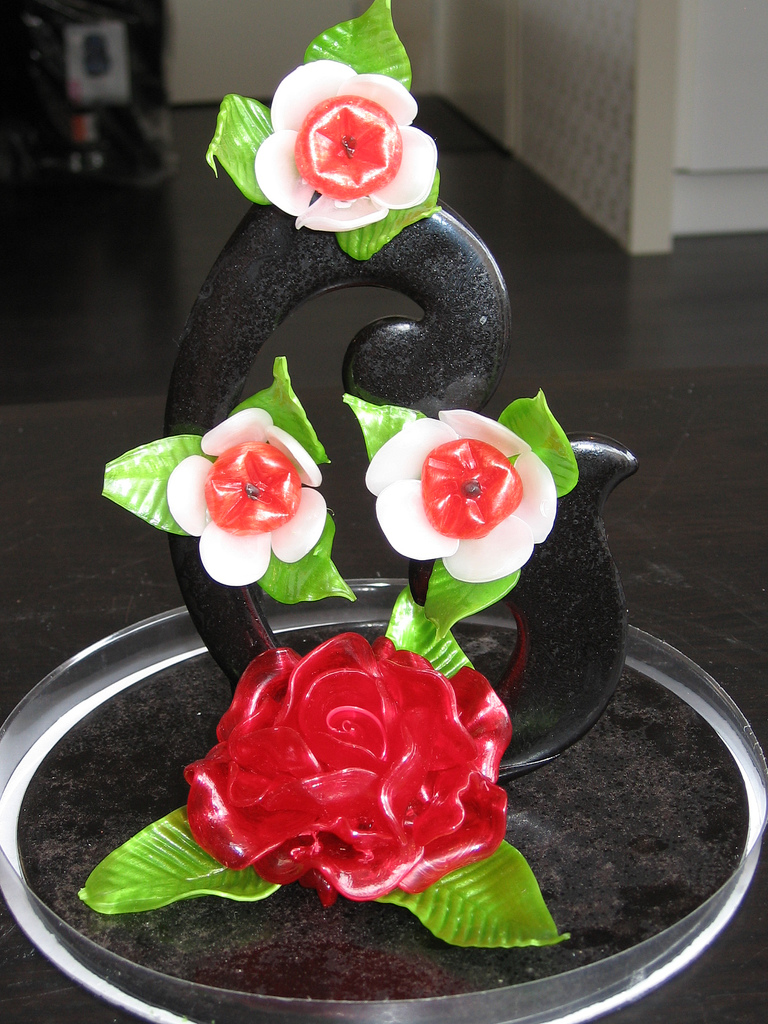 Decoration
Sugar sculpture
Artistic centerpieces and figures made entirely from cooked sugar
🇨🇳 China and 1 more · Flower craft
Decoration
Sugar sculpture
Artistic centerpieces and figures made entirely from cooked sugar
🇨🇳 China and 1 more · Flower craft