
Albuca
African bulb plants with sticky leaves and striped, nodding flowers
Albuca is a genus of perennial bulbous herbs native to Africa and the Arabian Peninsula. Its strap-shaped, fleshy leaves exude a mucilaginous sap, and its white or yellow flowers each bear a central green or brown stripe on the tepals.
- Leaves exude a sticky, mucilaginous sap
- Flowers have six tepals with a central green or brown stripe
- Inner tepals curve inward and often meet at the tips
- Pollinated by leafcutter bees that pry open the flowers
- Petals can function like stigmas in fertilization
What does Albuca look like?
Albuca plants grow from bulbs and have long, flat or keeled leaves that feel fleshy and release a sticky juice, hence the name 'slime lilies'. Their flowers appear in clusters called racemes. Each bloom has six tepals: the outer three spread outward, while the inner three curve inward, often meeting at the tips. The tepals are white or yellow with a distinct green or brown stripe down the middle.
Where does Albuca come from?
This genus is found across much of Africa, especially in the south and east, with a few species extending into northern Africa and the Arabian Peninsula. Though sometimes grouped with other genera like Ornithogalum in the past, modern genetic studies support keeping Albuca separate as its own distinct lineage.
When and how Albuca blooms
Albuca species are perennials that grow from bulbs. They thrive in full sun and well-drained soil. Some, like Albuca nelsonii, are evergreen and sensitive to frost, suited to greenhouses in cooler climates. Others, from alpine or dry Karoo regions, are deciduous and tolerate frost once established. Many flower in winter. They can be propagated by seed or by separating offsets.
Kinds of Albuca
About 167 species are currently accepted. Traditionally, around 60 were placed in Albuca, but some classifications have expanded it to include related genera such as Stellarioides and Battandiera, bringing the total to over 100. Molecular evidence now favors a narrower definition.
What Albuca means
Leafcutter bees have been seen forcing open the closed inner tepals of certain Albuca flowers to reach nectar. In doing so, they deposit pollen on the tepal tips, where it germinates and fertilizes the ovules, a rare case where petals act like stigmas in pollination.
Questions people ask about Albuca
Where does Albuca come from?
It is native to southern and eastern Africa, with some species in northern Africa and the Arabian Peninsula.
Why are they called slime lilies?
Their fleshy leaves contain a sticky, mucilaginous juice that gives them this common name.
How do Albuca flowers get pollinated?
Leafcutter bees force open the inner tepals to reach nectar, leaving pollen that germinates on the tepal tips.
Are Albuca plants hardy?
It depends on the species: some are frost-sensitive evergreens, while others from dry or alpine areas tolerate frost.
Good reading and sources
- Plants of the World OnlineRoyal Botanic Gardens, Kew, Plant database
- Where it has been recordedGBIF, Plant database
- Sightings and photos by naturalistsiNaturalist, Plant database
The facts on this page come from the Wikipedia article "Albuca", written by its contributors and used under the CC BY-SA 4.0 licence, and from its Wikidata record (CC0). Phool rewrote the text in its own words, with AI assistance, and compares every page with the article to make sure no passage is copied. It may be reused under the same CC BY-SA 4.0 licence with a link back.
It may contain mistakes. It is not medical or foraging advice: many flowers are poisonous, and traditional uses are reported, not recommended. If something is wrong, tell us. Last refreshed 2026-10-03.
Others in the family Asparagaceae
The whole family Lily-of-the-valleyConvallaria majalis
A woodland plant with sweet-scented white bell flowers in late spring
🇫🇮 Finland and 4 more · Wildflower
Lily-of-the-valleyConvallaria majalis
A woodland plant with sweet-scented white bell flowers in late spring
🇫🇮 Finland and 4 more · Wildflower
 HyacinthHyacinthus
A spring-blooming bulb with fragrant, colourful flower spikes
🇹🇷 Turkey and 7 more · Bulb flower
HyacinthHyacinthus
A spring-blooming bulb with fragrant, colourful flower spikes
🇹🇷 Turkey and 7 more · Bulb flower
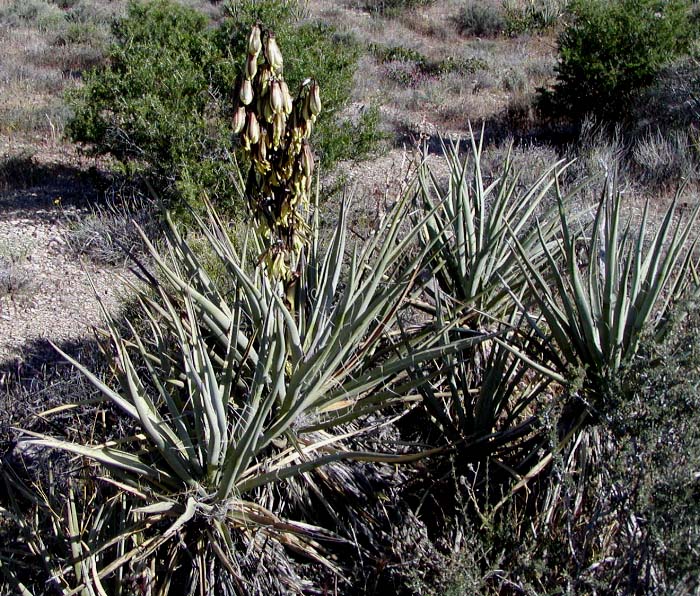 Yucca
Dry-climate plants with pointed leaves and clusters of creamy white flowers
🇲🇽 Mexico and 4 more · Wildflower
Yucca
Dry-climate plants with pointed leaves and clusters of creamy white flowers
🇲🇽 Mexico and 4 more · Wildflower
 Ornithogalum thyrsoides
A white, long-lasting bulb flower from South Africa’s Cape Province
🇿🇦 South Africa · Bulb flower
Ornithogalum thyrsoides
A white, long-lasting bulb flower from South Africa’s Cape Province
🇿🇦 South Africa · Bulb flower
More from South Africa
All the flowers of South Africa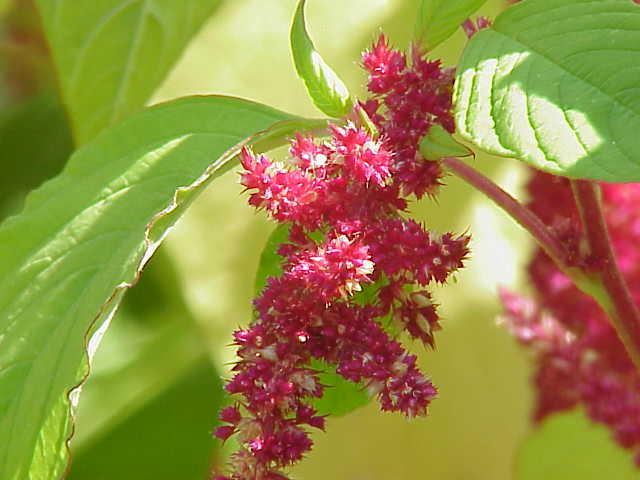 AmaranthAmaranthus
A tall, colourful plant grown for its flowers, leaves and edible seeds
🇲🇽 Mexico and 7 more · Wildflower
AmaranthAmaranthus
A tall, colourful plant grown for its flowers, leaves and edible seeds
🇲🇽 Mexico and 7 more · Wildflower
 Sensitive PlantMimosa pudica
A touch-sensitive plant whose leaves fold up when disturbed
🇧🇷 Brazil and 8 more · Wildflower
Sensitive PlantMimosa pudica
A touch-sensitive plant whose leaves fold up when disturbed
🇧🇷 Brazil and 8 more · Wildflower
 Thorn-appleDatura stramonium
A poisonous, night-blooming plant with trumpet-shaped white or violet flowers
🇨🇳 China and 7 more · Wildflower
Thorn-appleDatura stramonium
A poisonous, night-blooming plant with trumpet-shaped white or violet flowers
🇨🇳 China and 7 more · Wildflower
 White cloverTrifolium repens
A low-growing, mat-forming clover with white flower heads
🇨🇳 China and 7 more · Wildflower
White cloverTrifolium repens
A low-growing, mat-forming clover with white flower heads
🇨🇳 China and 7 more · Wildflower