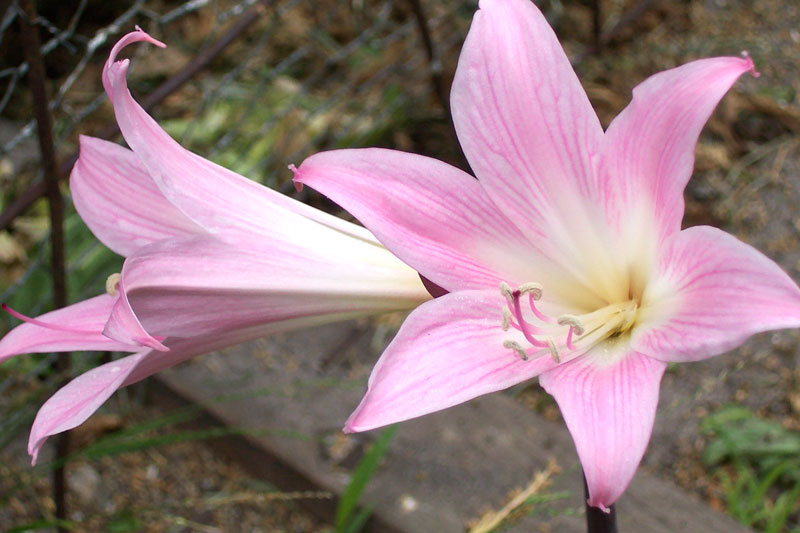
Amaryllis
A South African bulb with pink or white funnel-shaped blooms on bare stems
Amaryllis is a small group of bulbous plants from South Africa, best known for its striking, funnel-shaped flowers that appear on leafless stems. The blooms, which range from white with crimson lines to pink and purple, are grown in gardens and have spread to places like Australia and California.
- Native to South Africa's Cape Provinces
- Blooms on bare stems in late summer
- Flowers range from white to deep pink and purple
- Toxic to humans and animals, especially the bulbs
- Main pollinators are carpenter bees
What does Amaryllis look like?
Amaryllis grows from a bulb about 5 to 10 cm wide. Its long, green, strap-like leaves appear in two rows but die back before flowering. Each bulb sends up one or two sturdy, leafless stems, each topped with a cluster of two to twelve funnel-shaped flowers. The blooms are usually white with red or pink streaks, but can also be pink, purple, cream, peach, or red. The flowers have six spreading segments and often show delicate veining. The plant is sometimes called 'naked lady' because the flowers appear after the leaves have faded.
Where does Amaryllis come from?
Amaryllis is native to the Cape Provinces of South Africa, especially the rocky areas of the southwest between the Olifants River Valley and Knysna. The genus was named by Linnaeus in 1753, but for many years, plants from both South Africa and South America were grouped together, causing confusion. In 1987, botanists agreed that the name Amaryllis should apply to the South African group. The name itself comes from a character in Virgil's poetry and means 'to sparkle' in Greek.
When and how Amaryllis blooms
The plant produces leaves in autumn or early spring, depending on rainfall, which then die back by late spring. In late summer, the bulb sends up flower stalks from dry ground. In its native range, flowering is often triggered after fires clear the overhead vegetation, but in open sandy places, it can bloom every year. Seeds are large and heavy, falling near the parent plant and germinating with the first winter rains. Amaryllis is not frost-hardy and needs a dry dormant period.


How Amaryllis is used
Amaryllis is grown in gardens for its showy flowers and has naturalized in places with climates similar to its South African home, such as coastal California and parts of Australia. It is sometimes used as a symbol of hope, beauty, and determination. The plant is toxic to people and pets, especially the bulbs, so care is needed around children and animals.
Kinds of Amaryllis
There are two accepted species: Amaryllis belladonna and Amaryllis paradisicola, both from South Africa. Many hybrids have been developed, especially in Australia, with a wide range of flower colors and forms, including pure white, peach, magenta, and nearly red. Some hybrids have fuller, more circular flower clusters, and may show stripes, veining, or colored edges.
What Amaryllis means
In the Victorian language of flowers, amaryllis stands for love, beauty, determination, hope, and achievement. The plant is sometimes called 'March lily' in South Africa and 'Easter lily' in southern Australia, reflecting when it blooms. Though often called a lily, it is only distantly related to true lilies. The name 'naked lady' refers to its habit of flowering after the leaves have died back.
Where Amaryllis is used and seen

Questions people ask about Amaryllis
Where does Amaryllis come from?
Amaryllis is native to the Cape Provinces in South Africa, especially the rocky southwest between the Olifants River Valley and Knysna. It grows wild in these regions and has been introduced to other parts of the world.
What does the Amaryllis flower look like?
The plant produces clusters of funnel-shaped flowers on tall, leafless stems. The blooms are most often white with pink or crimson streaks, but can also be pink, purple, cream, peach, or red. The flowers appear after the leaves have died back.
Is Amaryllis poisonous?
Yes, all parts of Amaryllis, especially the bulbs, are toxic to humans and animals. Ingesting the plant can cause vomiting, diarrhea, and other symptoms. Pets like dogs, cats, and horses are also at risk if they eat it.
How is Amaryllis used?
Amaryllis is mainly grown as a garden plant for its attractive flowers. It is also used as a symbol of hope and beauty, and has become naturalized in gardens in places like Australia and California.
What does Amaryllis symbolize?
In the Victorian language of flowers, amaryllis represents love, beauty, determination, hope, and achievement.
Good reading and sources
- Plants of the World OnlineRoyal Botanic Gardens, Kew, Plant database
- Where it has been recordedGBIF, Plant database
- Sightings and photos by naturalistsiNaturalist, Plant database
The facts on this page come from the Wikipedia article "Amaryllis", written by its contributors and used under the CC BY-SA 4.0 licence, and from its Wikidata record (CC0). Phool rewrote the text in its own words, with AI assistance, and compares every page with the article to make sure no passage is copied. It may be reused under the same CC BY-SA 4.0 licence with a link back.
It may contain mistakes. It is not medical or foraging advice: many flowers are poisonous, and traditional uses are reported, not recommended. If something is wrong, tell us. Last refreshed 2026-10-03.
Others in the family Amaryllidaceae
The whole family Narcissus
Spring-flowering bulbs with trumpet-shaped blooms in white, yellow, and orange
🇬🇧 United Kingdom and 7 more · Wildflower
Narcissus
Spring-flowering bulbs with trumpet-shaped blooms in white, yellow, and orange
🇬🇧 United Kingdom and 7 more · Wildflower
 Wild GarlicAllium ursinum
A wild woodland plant with star-shaped white flowers and edible leaves
🇮🇪 Ireland · Wildflower
Wild GarlicAllium ursinum
A wild woodland plant with star-shaped white flowers and edible leaves
🇮🇪 Ireland · Wildflower
 Allium
The genus of onions, garlic, leeks, chives and their wild relatives
Allium · Wildflower
Allium
The genus of onions, garlic, leeks, chives and their wild relatives
Allium · Wildflower
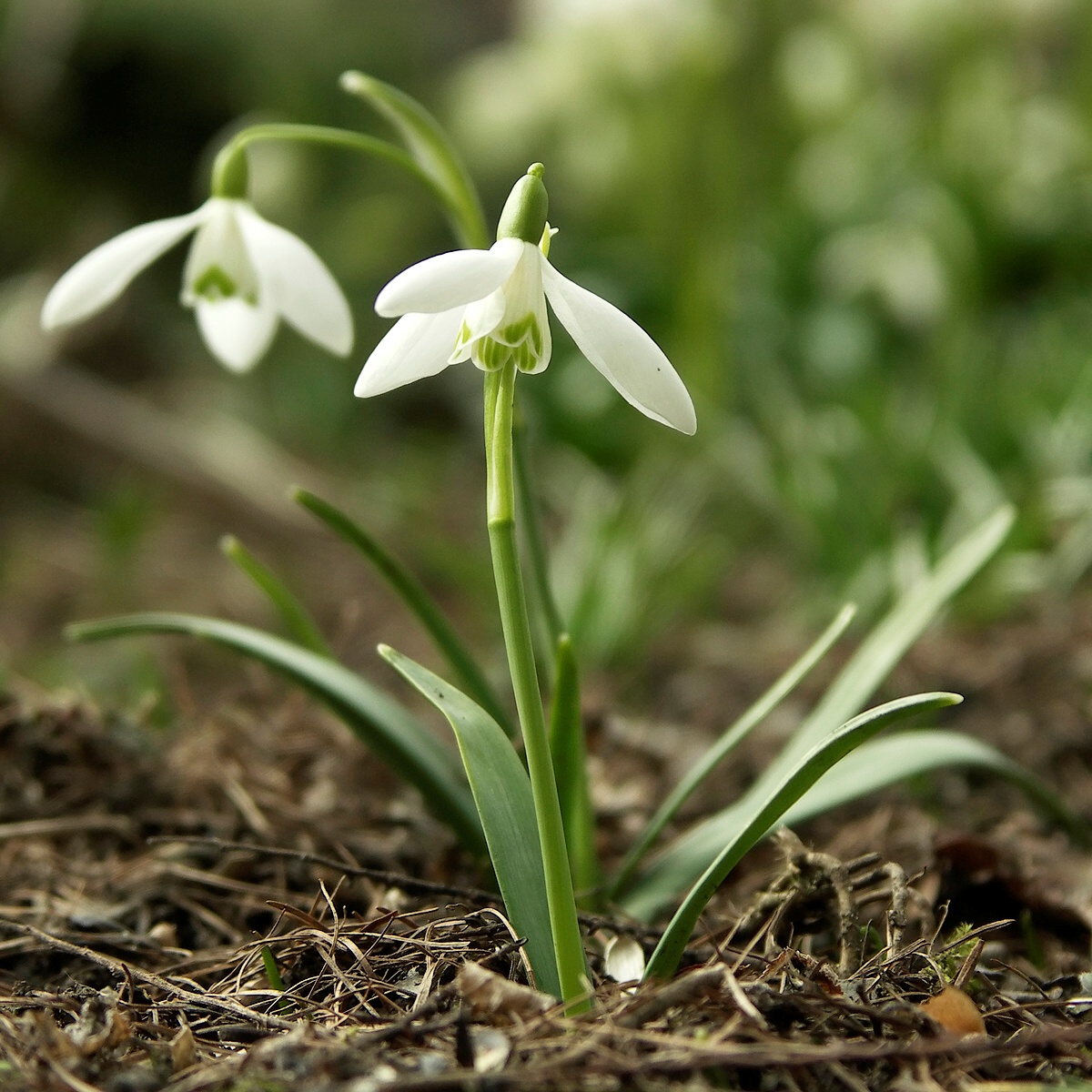 SnowdropGalanthus
White bell-shaped flowers that bloom at the end of winter
🇹🇷 Turkey and 7 more · Wildflower
SnowdropGalanthus
White bell-shaped flowers that bloom at the end of winter
🇹🇷 Turkey and 7 more · Wildflower
More from South Africa
All the flowers of South Africa Eucalyptus
The tall, aromatic trees and shrubs known as gum trees or eucalypts
🇦🇺 Australia and 7 more · Flowering tree
Eucalyptus
The tall, aromatic trees and shrubs known as gum trees or eucalypts
🇦🇺 Australia and 7 more · Flowering tree
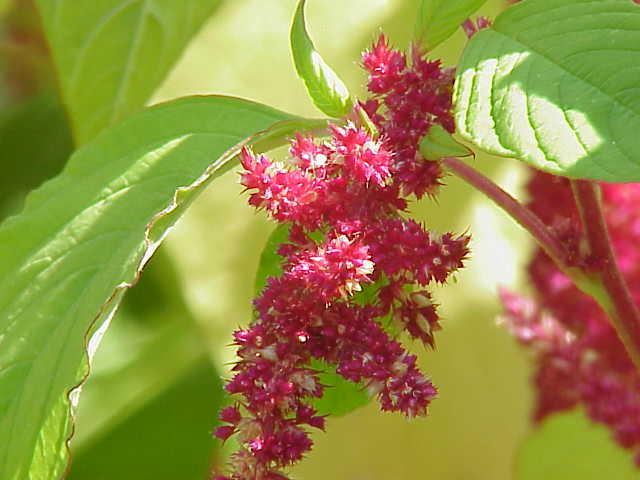 AmaranthAmaranthus
A tall, colourful plant grown for its flowers, leaves and edible seeds
🇲🇽 Mexico and 7 more · Wildflower
AmaranthAmaranthus
A tall, colourful plant grown for its flowers, leaves and edible seeds
🇲🇽 Mexico and 7 more · Wildflower
 Acacia
Shrubs and trees with golden or cream puffball flowers, native mostly to Australia
🇦🇺 Australia and 6 more · Wildflower
Acacia
Shrubs and trees with golden or cream puffball flowers, native mostly to Australia
🇦🇺 Australia and 6 more · Wildflower
 Sensitive PlantMimosa pudica
A touch-sensitive plant whose leaves fold up when disturbed
🇧🇷 Brazil and 8 more · Wildflower
Sensitive PlantMimosa pudica
A touch-sensitive plant whose leaves fold up when disturbed
🇧🇷 Brazil and 8 more · Wildflower