
Angraecum
A genus of white-flowered orchids with long nectar spurs, mostly from Africa and Madagascar
Angraecum is a large orchid genus with over 200 species, native to tropical Africa, Madagascar and nearby islands. Its flowers are usually white, long-lasting, and feature a distinctive spur at the base of the lip; many grow as epiphytes in humid woodlands.
- Darwin predicted its moth pollinator based on the flower's 30 cm spur
- Flowers are mostly white and release strong fragrance at night
- Over 220 species, mostly epiphytic and native to Africa and Madagascar
- Protected under CITES due to extinction risk in the wild
- Name derived from Malay 'anggrek', meaning orchid
What does Angraecum look like?
Angraecum orchids vary in form but often have thick, fleshy leaves suited to dry tropical woodlands. Their flowers emerge from leaf joints in clusters, lasting a long time. Most blooms are white, though some are yellow, green or ochre. Every flower has a long spur extending from the lip, which holds nectar at its tip.
Where does Angraecum come from?
The genus was first described in 1804, with Angraecum eburneum as its type. Though most species grow in Africa and Madagascar, the name comes from the Malay word 'anggrek' for orchid, via Javanese. A few species occur on Sri Lanka, and others were once classified here from Japan and the Philippines, though these are now considered separate.
When and how Angraecum blooms
These orchids thrive as epiphytes on trees or lithophytes on rocks in humid areas from sea level up to 2,000 metres. They prefer indirect light, regular morning watering, and well-draining potting mix. In cultivation, they bloom best when not exposed to direct sun and are fed during the growing season with diluted orchid fertiliser.

How Angraecum is used
Grown widely in horticulture, Angraecum orchids are valued for their elegant, fragrant night-blooming flowers. They are kept as houseplants or in shade houses, especially hybrids like Angraecum Veitchii. Their strong evening scent and waxy white blooms make them popular for indoor display rather than cut arrangements.
Kinds of Angraecum
The genus includes over 220 species. Notable ones include Angraecum sesquipedale from Madagascar, famous for its 30 cm spur, and Angraecum Veitchii, a hybrid with large, fragrant white-to-cream flowers. Many species are endemic to Madagascar, such as Angraecum sororium.
What Angraecum means
Angraecum sesquipedale is famed for Charles Darwin’s prediction of its moth pollinator, later confirmed with the discovery of Xanthopan morganii praedicta. The genus is a conservation priority due to habitat loss, over-collection, and declining pollinators. It is protected under CITES, and many species are threatened in the wild.
Questions people ask about Angraecum
Where does Angraecum come from?
It is native to tropical and southern Africa, Madagascar, the Comoros, Seychelles, Mascarenes, and one species occurs in Sri Lanka.
Why is Angraecum sesquipedale famous?
Charles Darwin predicted it must be pollinated by a moth with an extremely long tongue, which was discovered decades later.
Are Angraecum orchids fragrant?
Yes, many release a strong, pleasant scent at night, especially cultivated hybrids like Angraecum Veitchii.
How are they grown?
As epiphytes in loose, well-draining mix, in indirect light, with morning watering and regular feeding during summer growth.
Are they endangered?
Many species are at risk in the wild due to habitat loss and over-collection, and are protected under international trade rules (CITES).
Good reading and sources
- Plants of the World OnlineRoyal Botanic Gardens, Kew, Plant database
- Where it has been recordedGBIF, Plant database
- Sightings and photos by naturalistsiNaturalist, Plant database
The facts on this page come from the Wikipedia article "Angraecum", written by its contributors and used under the CC BY-SA 4.0 licence, and from its Wikidata record (CC0). Phool rewrote the text in its own words, with AI assistance, and compares every page with the article to make sure no passage is copied. It may be reused under the same CC BY-SA 4.0 licence with a link back.
It may contain mistakes. It is not medical or foraging advice: many flowers are poisonous, and traditional uses are reported, not recommended. If something is wrong, tell us. Last refreshed 2026-10-03.
Others in the family Orchidaceae
The whole family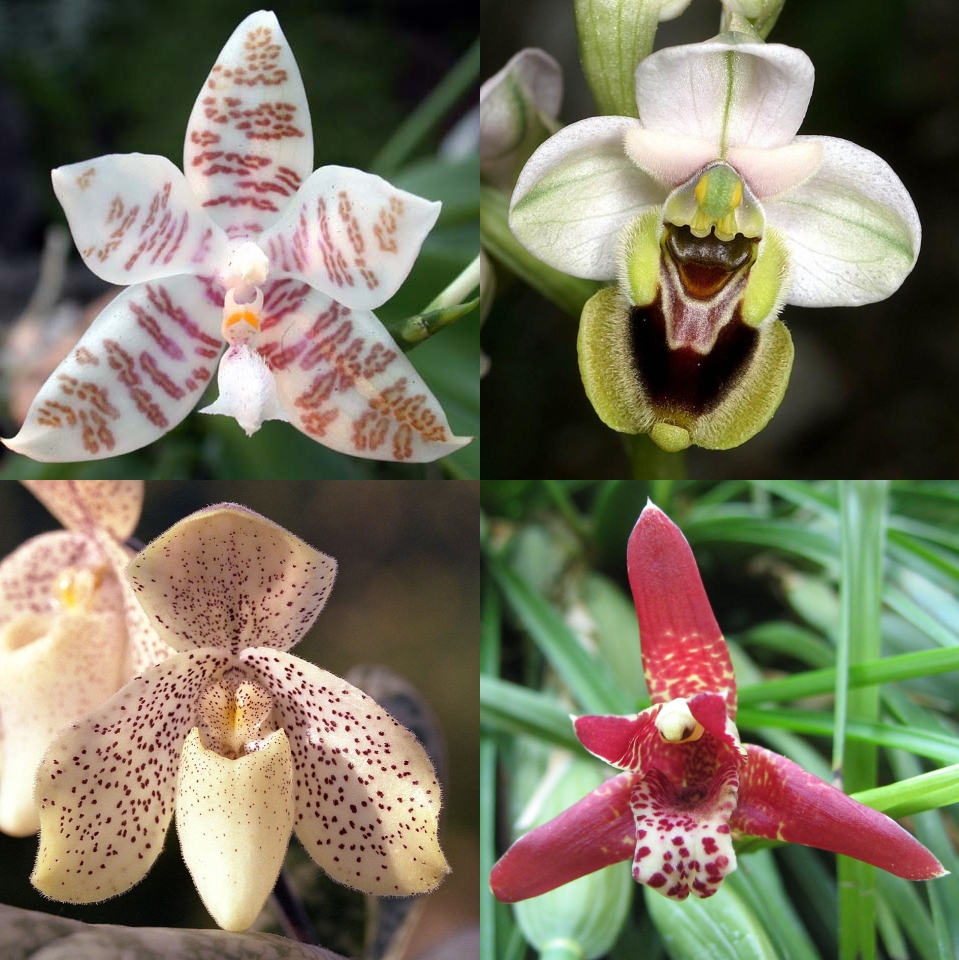 OrchidOrchidaceae
A vast family of colourful, often fragrant flowers found almost everywhere on earth
Orchidaceae · Wildflower
OrchidOrchidaceae
A vast family of colourful, often fragrant flowers found almost everywhere on earth
Orchidaceae · Wildflower
 Vanilla
Climbing orchids with pods used for the world’s most popular flavor
🇲🇽 Mexico and 7 more · Wildflower
Vanilla
Climbing orchids with pods used for the world’s most popular flavor
🇲🇽 Mexico and 7 more · Wildflower
 Orchis
A group of wild orchids with tuberous roots from Europe, North Africa and Asia
🇹🇷 Turkey and 7 more · Wildflower
Orchis
A group of wild orchids with tuberous roots from Europe, North Africa and Asia
🇹🇷 Turkey and 7 more · Wildflower
 VanillaVanilla planifolia
The climbing orchid behind most of the world’s vanilla flavour
🇲🇽 Mexico and 8 more · Wildflower
VanillaVanilla planifolia
The climbing orchid behind most of the world’s vanilla flavour
🇲🇽 Mexico and 8 more · Wildflower
More from Madagascar
All the flowers of Madagascar Gardenia
A fragrant white-flowered shrub from tropical regions worldwide
🇨🇳 China and 6 more · Flowering shrub
Gardenia
A fragrant white-flowered shrub from tropical regions worldwide
🇨🇳 China and 6 more · Flowering shrub
 Darwin’s orchidAngraecum sesquipedale
The Madagascan orchid with a long nectar spur and a famous moth pollinator
🇲🇬 Madagascar · Wildflower
Darwin’s orchidAngraecum sesquipedale
The Madagascan orchid with a long nectar spur and a famous moth pollinator
🇲🇬 Madagascar · Wildflower
 Comet orchidAngraecum eburneum
The white and green orchid that is the national flower of Seychelles
🇲🇬 Madagascar and 5 more · Orchid
Comet orchidAngraecum eburneum
The white and green orchid that is the national flower of Seychelles
🇲🇬 Madagascar and 5 more · Orchid
 Rhipsalis
A genus of hanging cacti with thin, tangled stems and small white flowers
🇧🇷 Brazil and 2 more · Cactus or succulent
Rhipsalis
A genus of hanging cacti with thin, tangled stems and small white flowers
🇧🇷 Brazil and 2 more · Cactus or succulent