
Darwin’s orchid
Angraecum sesquipedale, family Orchidaceae
The Madagascan orchid with a long nectar spur and a famous moth pollinator
Darwin’s orchid is an epiphytic orchid native to Madagascar, known for its star-shaped white flowers with an exceptionally long green nectar spur. The flower gives off a strong spicy scent at night and is famous for its link to Charles Darwin, who predicted it would be pollinated by a moth with an equally long proboscis.
- Has a nectar spur up to 43 cm long
- Native to Madagascar’s eastern lowland forests
- Pollinated by a moth with an equally long proboscis
- Strong spicy scent at night
- Famous for its link to Charles Darwin
What does Darwin’s orchid look like?
Darwin’s orchid grows up to 1 meter tall, with dark green, leathery leaves and thick, gray roots that cling tightly to tree bark. Its flowers are star-shaped, waxy, and open green before turning white, then yellowish or orange as they age. The most striking feature is the long, green nectar spur, which can reach up to 43 cm. The flowers give off a powerful, spicy fragrance at night, reminiscent of lilies, and usually appear in small groups of one to five.
Where does Darwin’s orchid come from?
This orchid is native to the lowland rainforests along Madagascar’s east coast, often found attached to trees at forest edges where light and air circulate freely. It was first collected in 1798 by Louis-Marie Aubert du Petit-Thouars and described in 1822. The plant is adapted to humid, rainy environments with no dry season, and is rarely found growing on rocks or as a semi-terrestrial. Its story became famous through Charles Darwin, who predicted the existence of a moth with a proboscis long enough to reach its nectar, a prediction confirmed decades later.
When and how Darwin’s orchid blooms
In the wild, Darwin’s orchid flowers from June to September, while cultivated plants in Europe bloom from December to January. The plant grows best in bright, humid conditions, attaching itself to trees or sometimes rocks. Its thick roots help it anchor securely and absorb moisture. The flowers open sequentially on a long inflorescence, each developing a long nectar spur filled with sugary nectar. The plant continues to grow and bloom as long as conditions remain moist and warm.


How Darwin’s orchid is used
Darwin’s orchid is mainly admired for its unique appearance and the story of its pollination. It is grown by orchid enthusiasts for its dramatic flowers and strong night scent. There is no record in the sources of it being used in ceremonies, medicine, or as an emblem. Its main significance lies in its role in the study of evolution and plant-pollinator relationships.
Kinds of Darwin’s orchid
There are two main varieties: Angraecum sesquipedale var. sesquipedale, which is widespread in Madagascar’s eastern rainforests, and var. angustifolium, which is smaller, has narrower leaves, and grows in drier, sandy habitats in the south. The latter is sometimes called A. bosseri and is found in areas now threatened by sand mining.
What Darwin’s orchid means
Darwin’s orchid is best known for its connection to Charles Darwin, who predicted that a moth with an extraordinarily long proboscis must exist to pollinate it. This was later confirmed with the discovery of the moth Xanthopan morganii praedicta in Madagascar. The orchid’s story is often cited as a classic example of coevolution and natural selection, making it a symbol in the history of science.
Questions people ask about Darwin’s orchid
Where does Darwin’s orchid come from?
Darwin’s orchid is native to the lowland rainforests along the east coast of Madagascar, where it grows attached to trees in humid, rainy environments.
What does Darwin’s orchid look like?
It has star-shaped, waxy flowers with a long green nectar spur, dark green leathery leaves, and thick gray roots. The flowers open green, turn white, then yellowish or orange as they age.
Why is it called Darwin’s orchid?
It is called Darwin’s orchid because Charles Darwin predicted that a moth with a very long proboscis must exist to pollinate its long-spurred flowers, a prediction later proven true.
What does the flower smell like?
The flower produces a strong, spicy fragrance at night, described as similar to lilies and some night-blooming tobacco species.
Are there different varieties of this orchid?
Yes, there are two main varieties: the widespread var. sesquipedale and the smaller, narrow-leaved var. angustifolium, which grows in drier, sandy habitats.
Good reading and sources
- Encyclopaedia BritannicaArticle
- Plants of the World OnlineRoyal Botanic Gardens, Kew, Plant database
- Where it has been recordedGBIF, Plant database
- Sightings and photos by naturalistsiNaturalist, Plant database
- Angraecum sesquipedale on WikipediaEncyclopedia
- More photos on Wikimedia CommonsPhotos
- Wikidata recordOpen data
The facts on this page come from the Wikipedia article "Angraecum sesquipedale", written by its contributors and used under the CC BY-SA 4.0 licence, and from its Wikidata record (CC0). Phool rewrote the text in its own words, with AI assistance, and compares every page with the article to make sure no passage is copied. It may be reused under the same CC BY-SA 4.0 licence with a link back.
It may contain mistakes. It is not medical or foraging advice: many flowers are poisonous, and traditional uses are reported, not recommended. If something is wrong, tell us. Last refreshed 2026-10-03.
Others in the family Orchidaceae
The whole family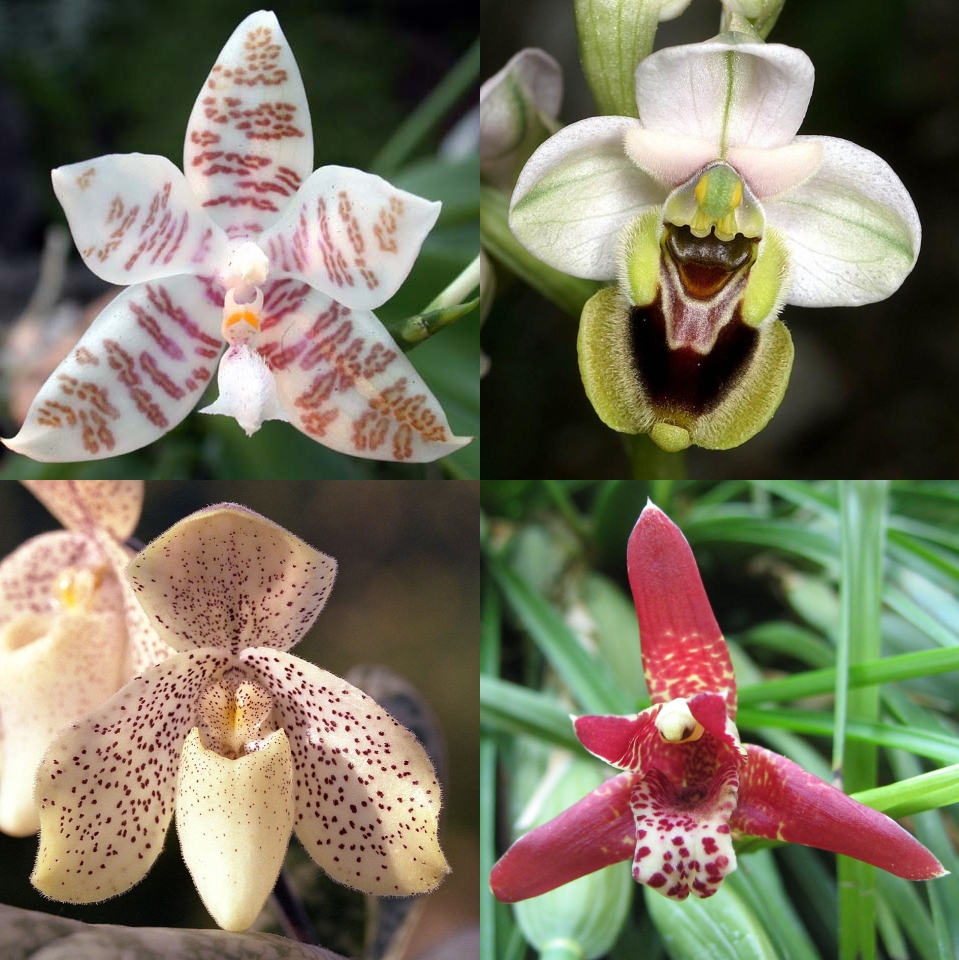 OrchidOrchidaceae
A vast family of colourful, often fragrant flowers found almost everywhere on earth
Orchidaceae · Wildflower
OrchidOrchidaceae
A vast family of colourful, often fragrant flowers found almost everywhere on earth
Orchidaceae · Wildflower
 Vanilla
Climbing orchids with pods used for the world’s most popular flavor
🇲🇽 Mexico and 7 more · Wildflower
Vanilla
Climbing orchids with pods used for the world’s most popular flavor
🇲🇽 Mexico and 7 more · Wildflower
 Orchis
A group of wild orchids with tuberous roots from Europe, North Africa and Asia
🇹🇷 Turkey and 7 more · Wildflower
Orchis
A group of wild orchids with tuberous roots from Europe, North Africa and Asia
🇹🇷 Turkey and 7 more · Wildflower
 Waling-walingVanda sanderiana
A rare orchid known as the 'Queen of Philippine flowers'
🇵🇭 Philippines · Orchid
Waling-walingVanda sanderiana
A rare orchid known as the 'Queen of Philippine flowers'
🇵🇭 Philippines · Orchid
More from Madagascar
All the flowers of Madagascar Pelargonium
A diverse group of flowering plants often grown as garden and house plants
🇿🇦 South Africa and 7 more · Garden flower
Pelargonium
A diverse group of flowering plants often grown as garden and house plants
🇿🇦 South Africa and 7 more · Garden flower
 Ylang-ylangCananga odorata
A tropical tree with highly fragrant yellow flowers used for perfume and decoration
🇻🇳 Vietnam and 8 more · Flowering tree
Ylang-ylangCananga odorata
A tropical tree with highly fragrant yellow flowers used for perfume and decoration
🇻🇳 Vietnam and 8 more · Flowering tree
 Erica
Evergreen shrubs with tiny needle leaves and nodding flowers, known as heaths or heathers
🇿🇦 South Africa and 1 more · Wildflower
Erica
Evergreen shrubs with tiny needle leaves and nodding flowers, known as heaths or heathers
🇿🇦 South Africa and 1 more · Wildflower
 Crown of thornsEuphorbia milii
A spiny flowering shrub with red, pink, or white bracts, native to Madagascar
🇲🇬 Madagascar and 5 more · Wildflower
Crown of thornsEuphorbia milii
A spiny flowering shrub with red, pink, or white bracts, native to Madagascar
🇲🇬 Madagascar and 5 more · Wildflower