
Pelargonium
A diverse group of flowering plants often grown as garden and house plants
Pelargonium is a group of flowering plants with about 280 species, including perennials, shrubs, and succulents. Originally from southern Africa and Australia, these plants are popular in gardens and as houseplants for their long blooming season and wide range of flower and leaf forms.
- Pelargonium includes about 280 species of flowering plants
- Most species come from southern Africa
- Flowers have five petals and come in many colors
- Grown widely as garden and house plants
- Leaves can be scented or patterned
What does Pelargonium look like?
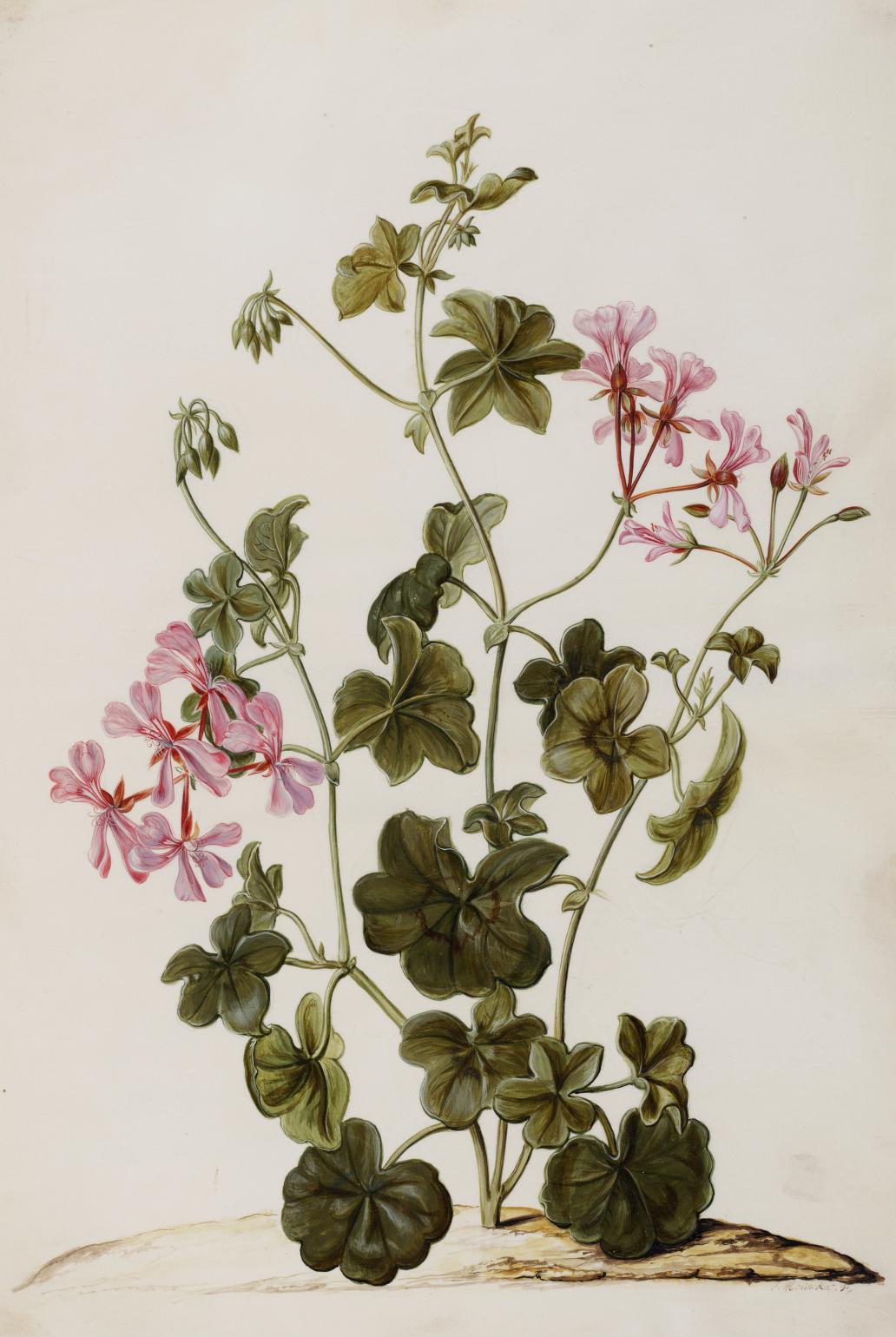
Pelargonium plants come in many forms, from low-growing perennials to upright shrubs and even succulents. Their leaves are usually lobed or divided, sometimes with striking patterns or scents. The flowers have five petals, often in shades of red, pink, white, orange, yellow, or purple, and are grouped in clusters. Unlike true Geraniums, their flowers are symmetrical along one line, with two upper and three lower petals.
Where does Pelargonium come from?
Most Pelargonium species are native to southern Africa, especially the southwestern part where winter rains are common. A smaller number are found in Australia, Madagascar, and parts of East Africa and the Arabian Peninsula. The first European descriptions came in the 18th century, and the group was separated from true Geraniums by botanists based on flower structure and other features.
When and how Pelargonium blooms
Pelargoniums bloom over a long period, especially in mild climates. They thrive in warm, sunny places with well-drained soil and can handle dry conditions but are sensitive to hard frost. Many are grown from cuttings or seeds, and breeders have created a wide range of varieties with different flower colors, leaf shapes, and scents.


How Pelargonium is used
These plants are widely grown as ornamentals in gardens, containers, and indoors. Their long flowering time and tolerance for dry conditions make them popular choices for bedding and houseplants. Some species are used as emblems or symbols in certain regions, and their aromatic leaves are sometimes valued for their scent.
Kinds of Pelargonium
There are hundreds of Pelargonium species and many more hybrids and cultivars. They are grouped into several subgenera and sections based on flower and leaf features. Some are grown mainly for their showy blooms, while others are prized for scented foliage or unusual forms, such as trailing or succulent types.
What Pelargonium means
Pelargoniums have been cultivated in Europe and elsewhere since the 17th century. They are often confused with true Geraniums, but differ in flower shape and growth habit. In some countries, they are used as regional emblems or in public plantings. Their diversity and adaptability have made them a staple of gardens around the world.
Where Pelargonium is used and seen

Traditions that use it
Where to see Pelargonium
 🇦🇪 Dubai · Jan to DecDubai Miracle GardenA winter-only display garden in the desert, with huge structures covered in bedding flowers.
 🇮🇱 Haifa · All yearBaha'i Gardens of HaifaNineteen formal terraces that step down Mount Carmel around the golden-domed Shrine of the Bab.
 🇿🇦 Plettenberg Bay · Aug to NovGarden Route coastal fynbos walksCoastal paths along South Africa's southern shore, through fynbos and old forest.
 🇫🇷 Paris · All yearThe flower market on the Île de la CitéGreen iron pavilions of plants and flowers on the island at the centre of Paris, a short walk from Notre-Dame.
 🇪🇸 Córdoba · MayThe patios of Córdoba in MayFor two weeks each May, families in Córdoba's old quarters open their flower-filled courtyards to anyone who walks in.
Questions people ask about Pelargonium
Where does Pelargonium come from?
Most Pelargonium species are native to southern Africa, with a smaller number found in Australia, Madagascar, and parts of East Africa and the Arabian Peninsula.
How is Pelargonium different from true Geraniums?
Pelargonium flowers have a single plane of symmetry, while true Geraniums have radially symmetrical flowers. They also differ in leaf and growth forms.
What are Pelargoniums used for?
They are mainly grown as ornamental plants in gardens, containers, and indoors, valued for their long flowering season and variety of forms.
What colors do Pelargonium flowers come in?
Their flowers can be red, pink, white, orange, yellow, or purple, depending on the species or variety.
Are there scented Pelargoniums?
Some Pelargonium species and varieties have aromatic leaves, which are sometimes grown for their scent as well as their flowers.
Good reading and sources
- Encyclopaedia BritannicaArticle
- How to grow pelargoniums / RHS Growing GuideRoyal Horticultural Society, Article
- BBC - Gardening - Gardening Guides - TechniquesBBC, Article
- The British islands that disappear every dayBBC, Article
- Plants of the World OnlineRoyal Botanic Gardens, Kew, Plant database
- Where it has been recordedGBIF, Plant database
- Sightings and photos by naturalistsiNaturalist, Plant database
The facts on this page come from the Wikipedia article "Pelargonium", written by its contributors and used under the CC BY-SA 4.0 licence, and from its Wikidata record (CC0). Phool rewrote the text in its own words, with AI assistance, and compares every page with the article to make sure no passage is copied. It may be reused under the same CC BY-SA 4.0 licence with a link back.
It may contain mistakes. It is not medical or foraging advice: many flowers are poisonous, and traditional uses are reported, not recommended. If something is wrong, tell us. Last refreshed 2026-10-03.
Others in the family Geraniaceae
The whole family Geranium
A group of wild and garden flowers with five-petaled blooms and lobed leaves
Geranium · Wildflower
Geranium
A group of wild and garden flowers with five-petaled blooms and lobed leaves
Geranium · Wildflower
 Meadow Crane's-billGeranium pratense
A hardy wildflower with pale blue, saucer-shaped blooms
🇨🇳 China · Wildflower
Meadow Crane's-billGeranium pratense
A hardy wildflower with pale blue, saucer-shaped blooms
🇨🇳 China · Wildflower
 Bloody crane's-billGeranium sanguineum
A hardy crimson-flowered perennial of grasslands and gardens
🇨🇭 Switzerland · Wildflower
Bloody crane's-billGeranium sanguineum
A hardy crimson-flowered perennial of grasslands and gardens
🇨🇭 Switzerland · Wildflower
 Herb-RobertGeranium robertianum
A pink-flowered wild geranium found in woods and gardens across the north
Geranium robertianum · Wildflower
Herb-RobertGeranium robertianum
A pink-flowered wild geranium found in woods and gardens across the north
Geranium robertianum · Wildflower
More from South Africa
All the flowers of South Africa Eucalyptus
The tall, aromatic trees and shrubs known as gum trees or eucalypts
🇦🇺 Australia and 7 more · Flowering tree
Eucalyptus
The tall, aromatic trees and shrubs known as gum trees or eucalypts
🇦🇺 Australia and 7 more · Flowering tree
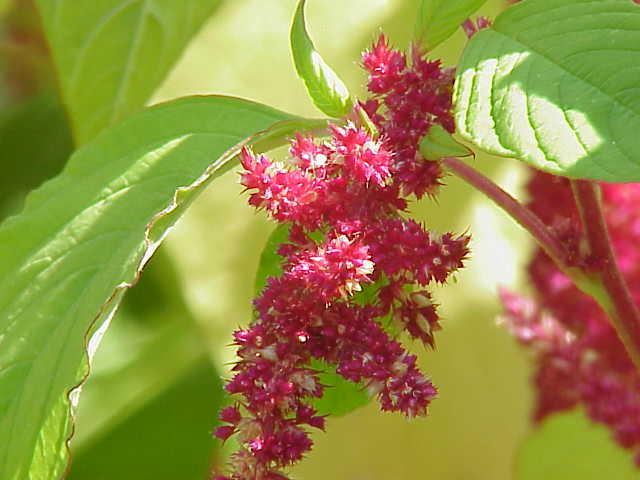 AmaranthAmaranthus
A tall, colourful plant grown for its flowers, leaves and edible seeds
🇲🇽 Mexico and 7 more · Wildflower
AmaranthAmaranthus
A tall, colourful plant grown for its flowers, leaves and edible seeds
🇲🇽 Mexico and 7 more · Wildflower
 Acacia
Shrubs and trees with golden or cream puffball flowers, native mostly to Australia
🇦🇺 Australia and 6 more · Wildflower
Acacia
Shrubs and trees with golden or cream puffball flowers, native mostly to Australia
🇦🇺 Australia and 6 more · Wildflower
 Sensitive PlantMimosa pudica
A touch-sensitive plant whose leaves fold up when disturbed
🇧🇷 Brazil and 8 more · Wildflower
Sensitive PlantMimosa pudica
A touch-sensitive plant whose leaves fold up when disturbed
🇧🇷 Brazil and 8 more · Wildflower