
Apricot
Prunus armeniaca, family Rosaceae
A spring-flowering fruit tree with white or pink blossoms and orange-yellow fruit
The apricot is a small tree in the rose family, grown for its early spring flowers and edible orange-yellow fruit. Native to Central Asia and China, it is now cultivated across Eurasia and North Africa. Its blossoms are white or pinkish, and the fruit is eaten fresh, dried, or used in cooking and drinks.
- Apricot flowers bloom before the leaves in early spring
- The fruit is orange-yellow and eaten fresh or dried
- Apricot kernels contain toxic amygdalin
- Armenia considers the apricot its national fruit
- Apricot drinks are traditional during Ramadan
What does Apricot look like?
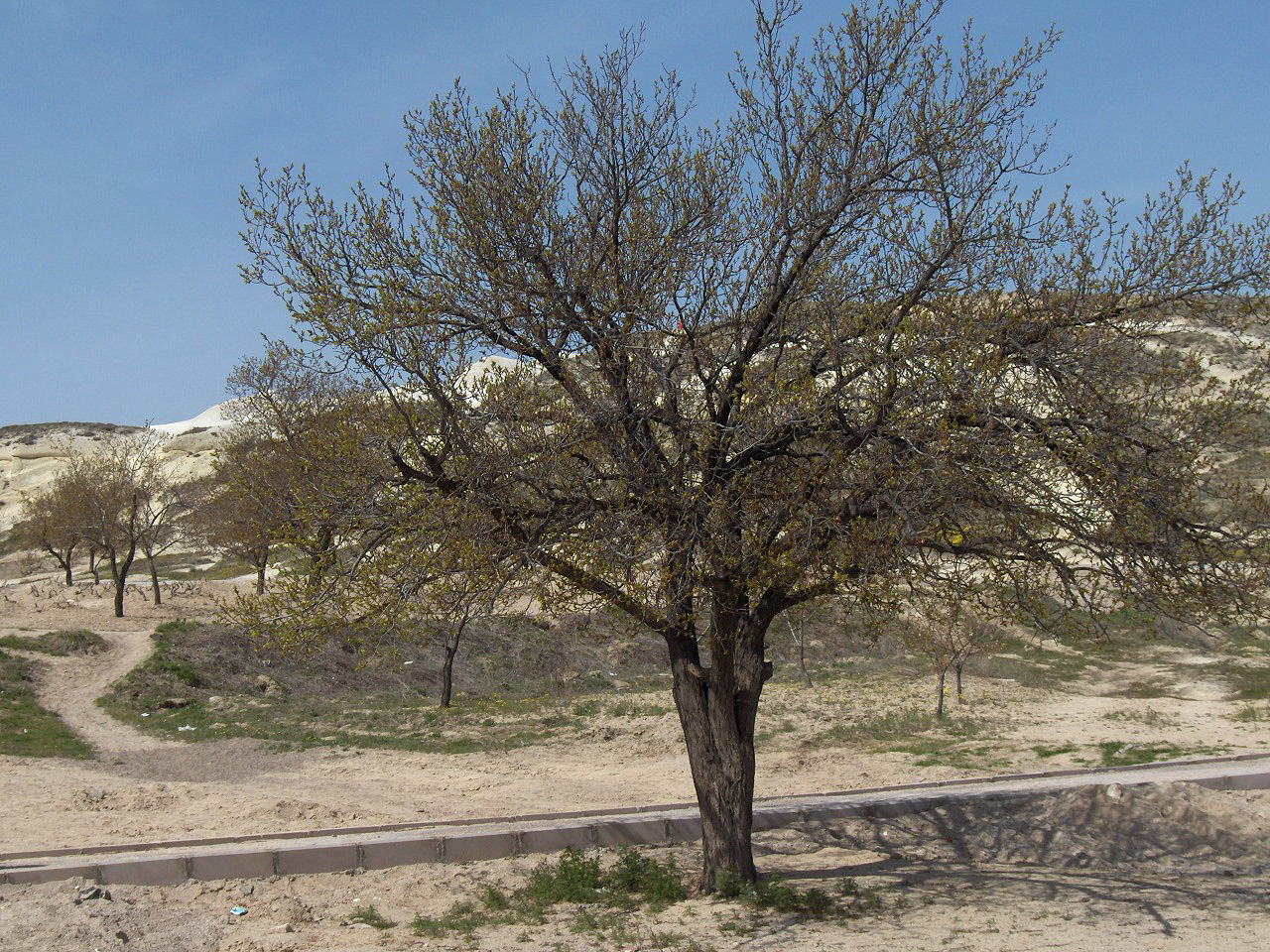
The apricot tree grows up to 8 metres tall with a rounded canopy. In early spring, before the leaves appear, it produces white or pinkish flowers about 2 cm wide. The fruit is a small, round, orange-yellow stone fruit, sometimes tinged with red. Each fruit contains a single hard seed inside. The tree is deciduous, losing its leaves in winter.
Where does Apricot come from?
Apricots were first domesticated in Central Asia and China. From there, cultivation spread west to Armenia, the Mediterranean, and North Africa, and east to Japan. The species name armeniaca reflects the long history of apricots in Armenia, though genetic studies show their origin lies further east. Today, apricots are grown in many temperate regions worldwide.
When and how Apricot blooms
Apricot trees flower very early in spring, often before the leaves emerge. They need cold winters but are sensitive to spring frosts. The trees prefer well-drained soil and are usually grafted onto plum or peach rootstocks. Some varieties are self-pollinating, while others need a second tree for pollination. Fruit matures in dry climates and is harvested in late spring or early summer.



How Apricot is used
Apricots are eaten fresh, dried, or cooked in both sweet and savoury dishes. Dried apricots are common in Middle Eastern and Mediterranean cuisines. The fruit is used in drinks, jams, and desserts, and apricot oil is pressed from the kernels. The kernels themselves contain amygdalin, which is toxic. Apricot wood is used for musical instruments in Armenia.
Kinds of Apricot
There are several species and hybrids called apricots, including the Manchurian, Siberian, and Briançon apricots. Hybrids like the purple apricot and various plum-apricot crosses exist. Flowering apricot (Prunus mume) is grown for its blossom as well as fruit. Cultivars vary in cold-hardiness, fruit quality, and flowering time.
What Apricot means
The apricot is Armenia's national fruit and is widely grown in the Ararat plain. In China, it is linked to education and medicine, with apricot groves symbolizing scholarly circles. In Egypt and the Middle East, apricot drinks are served during Ramadan. In Jewish tradition, apricots are eaten at Tu BiShvat. Apricots are also linked to superstition in the U.S. Marines.
Where Apricot is used and seen


Days and festivals
Questions people ask about Apricot
Where do apricots come from?
Apricots were first domesticated in Central Asia and China. From there, they spread to Armenia, the Mediterranean, North Africa, and East Asia. Today, they are grown in many temperate regions.
What do apricot flowers look like?
Apricot flowers are white or pinkish and about 2 cm wide. They appear on the tree before the leaves in early spring, giving a delicate display.
Are apricot seeds safe to eat?
Apricot kernels contain amygdalin, which can release cyanide and is toxic. Eating the kernels is not considered safe due to the risk of poisoning.
How are apricots used in cooking?
Apricots are eaten fresh, dried, or cooked in cakes, tarts, jams, and savoury dishes. In some cuisines, they are used in drinks or as stuffing for meats.
What does the apricot symbolise?
In Armenia, the apricot is a national symbol. In China, it is associated with education and medicine, and in Jewish and Muslim traditions, it features in certain festivals and rituals.
Good reading and sources
The facts on this page come from the Wikipedia article "Apricot", written by its contributors and used under the CC BY-SA 4.0 licence, and from its Wikidata record (CC0). Phool rewrote the text in its own words, with AI assistance, and compares every page with the article to make sure no passage is copied. It may be reused under the same CC BY-SA 4.0 licence with a link back.
It may contain mistakes. It is not medical or foraging advice: many flowers are poisonous, and traditional uses are reported, not recommended. If something is wrong, tell us. Last refreshed 2026-10-03.
Others in the family Rosaceae
The whole family RoseRosa
Woody perennial plants with showy, often fragrant flowers in many colours
Rosa · Wildflower
RoseRosa
Woody perennial plants with showy, often fragrant flowers in many colours
Rosa · Wildflower
 PeachPrunus persica
A flowering fruit tree from China, grown for its pink blossoms and sweet fruit
🇨🇳 China and 7 more · Flowering tree
PeachPrunus persica
A flowering fruit tree from China, grown for its pink blossoms and sweet fruit
🇨🇳 China and 7 more · Flowering tree
 AlmondPrunus amygdalus
A Mediterranean tree grown for its fragrant spring flowers and edible seeds
🇮🇷 Iran and 6 more · Flowering tree
AlmondPrunus amygdalus
A Mediterranean tree grown for its fragrant spring flowers and edible seeds
🇮🇷 Iran and 6 more · Flowering tree
 Wild cherryPrunus avium
A tall flowering tree native to Europe, grown for its sweet fruit and spring blossom
🇮🇹 Italy and 6 more · Flowering tree
Wild cherryPrunus avium
A tall flowering tree native to Europe, grown for its sweet fruit and spring blossom
🇮🇹 Italy and 6 more · Flowering tree
More from Armenia
All the flowers of Armenia
ApricotPrunus armeniaca
A small fruit tree with early white to pink blossoms and golden-orange fruit
🇨🇳 China and 6 more · Flowering tree
 Forget-me-notMyosotis
Small blue wildflowers known for remembrance and love
🇳🇿 New Zealand and 7 more · Wildflower
Forget-me-notMyosotis
Small blue wildflowers known for remembrance and love
🇳🇿 New Zealand and 7 more · Wildflower
 White Water-lilyNymphaea alba
A floating white flower of ponds and lakes across Europe and Asia
🇸🇪 Sweden and 5 more · Wildflower
White Water-lilyNymphaea alba
A floating white flower of ponds and lakes across Europe and Asia
🇸🇪 Sweden and 5 more · Wildflower
 Armenian tulipTulipa armena
A wild tulip from the Armenian Highlands with many forms and colours
🇦🇲 Armenia and 4 more · Wildflower
Armenian tulipTulipa armena
A wild tulip from the Armenian Highlands with many forms and colours
🇦🇲 Armenia and 4 more · Wildflower