
White Water-lily
Nymphaea alba, family Nymphaeaceae
A floating white flower of ponds and lakes across Europe and Asia
The white water-lily is an aquatic plant with round floating leaves and large white flowers, found in ponds and lakes across Europe, North Africa, and temperate to tropical Asia. Its flowers open during the day in summer, and people use them for decoration, food, and traditional medicine.
- White water-lily flowers float on water and open during the day in summer
- Leaves can reach up to 35 cm and each plant may spread 1.5 meters
- Young leaves and rhizomes are eaten as vegetables in north-eastern India
- A rare red variety was discovered in Sweden’s Fagertärn lake
- Flowers are used for decoration and have a light scent
What does White Water-lily look like?
White water-lily is an aquatic plant with round, dark green leaves that float on the water’s surface, reaching up to 35 cm across. Its flowers are white, opening cup-shaped at first and later spreading star-like, up to 20 cm wide, with rows of petals around many yellow stamens. Both leaves and flowers float, creating a striking display on still or slow-moving water.
Where does White Water-lily come from?
Nymphaea alba grows wild in ponds, lakes, and ditches across Europe, North Africa, and parts of Asia, including India and China. It was first described by Carl Linnaeus in 1753 and is the type species of its genus. The plant has also been introduced to places like Bangladesh, Chile, and New Zealand. A rare red form was found in Sweden’s Fagertärn lake and became nearly extinct from over-collection before protection measures were put in place.
When and how White Water-lily blooms
The plant blooms in summer, with flowers opening during the day. It prefers full sun and grows best in clay or loam soils under still or slow-moving water. When cultivated, the rhizome is first placed shallowly and then gradually sunk deeper as the plant establishes. In nature, it often grows in water deeper than 90 cm. Each plant can spread up to 1.5 meters.


How White Water-lily is used
People harvest white water-lily flowers for decoration and their pleasant scent, as they last well in vases. In north-eastern India, young leaves, stalks, and rhizomes are eaten as vegetables. Parts of the plant, especially the flower, have been used in traditional medicine for various ailments. Monks and nuns once used the root as an anaphrodisiac, mixing it with wine.
Kinds of White Water-lily
A notable variety is the red-flowered Nymphaea alba f. rosea, found in Sweden’s Fagertärn lake. Another related form, Nymphaea candida, is sometimes considered a subspecies. The white water-lily is the type species of its genus, with several forms and cultivars grown for gardens.
What White Water-lily means
The white water-lily is valued for its beauty and fragrance, and is used for decoration and in traditional herbal practices. Its red variety in Sweden became a symbol of conservation after nearly disappearing from the wild. The plant’s role in food and medicine is especially noted in parts of India. Its presence in literature and art is not detailed in the sources.
Where White Water-lily is used and seen

Questions people ask about White Water-lily
Where does the white water-lily come from?
It is native to ponds, lakes, and slow-moving waters across Europe, North Africa, and parts of temperate and tropical Asia, including India and China. It has also been introduced to other regions such as Bangladesh, Chile, and New Zealand.
What does the white water-lily look like?
It has round, dark green floating leaves up to 35 cm across and large white flowers that start cup-shaped and become star-shaped, with yellow stamens in the center. The flowers float on the water’s surface and can be up to 20 cm wide.
How is the white water-lily used?
The flowers are used for decoration and have a pleasant scent. In north-eastern India, the young leaves, stalks, and rhizomes are eaten as vegetables. Parts of the plant are also used in traditional medicine.
What does the white water-lily symbolise?
The sources do not mention specific symbolism, but it is valued for its beauty, fragrance, and use in traditional practices. Its rare red variety in Sweden became a symbol of conservation.
Are there different varieties of white water-lily?
Yes, there is a rare red-flowered form called Nymphaea alba f. rosea found in Sweden, and Nymphaea candida is sometimes considered a subspecies. Several forms are grown in gardens.
Good reading and sources
- Encyclopaedia BritannicaArticle
- IUCN Red List of Threatened SpeciesIUCN Red List, Article
- USDA Plants DatabaseUS Department of Agriculture, Article
- Nymphaea alba (H)Royal Horticultural Society, Article
- Plants of the World OnlineRoyal Botanic Gardens, Kew, Plant database
- Where it has been recordedGBIF, Plant database
- Sightings and photos by naturalistsiNaturalist, Plant database
- Nymphaea alba on WikipediaEncyclopedia
- More photos on Wikimedia CommonsPhotos
- Wikidata recordOpen data
The facts on this page come from the Wikipedia article "Nymphaea alba", written by its contributors and used under the CC BY-SA 4.0 licence, and from its Wikidata record (CC0). Phool rewrote the text in its own words, with AI assistance, and compares every page with the article to make sure no passage is copied. It may be reused under the same CC BY-SA 4.0 licence with a link back.
It may contain mistakes. It is not medical or foraging advice: many flowers are poisonous, and traditional uses are reported, not recommended. If something is wrong, tell us. Last refreshed 2026-10-03.
Others in the family Nymphaeaceae
The whole family WaterlilyNymphaea
Floating aquatic flowers found in ponds and lakes worldwide
🇪🇬 Egypt and 7 more · Water flower
WaterlilyNymphaea
Floating aquatic flowers found in ponds and lakes worldwide
🇪🇬 Egypt and 7 more · Water flower
 Water-lily familyNymphaeaceae
Floating aquatic plants with showy flowers and round leaves
🇧🇩 Bangladesh and 2 more · Wildflower
Water-lily familyNymphaeaceae
Floating aquatic plants with showy flowers and round leaves
🇧🇩 Bangladesh and 2 more · Wildflower
 Hairy Water LilyNymphaea pubescens
A night-blooming water lily with softly hairy leaves and large pink or white flowers
🇧🇩 Bangladesh and 7 more · Water flower
Hairy Water LilyNymphaea pubescens
A night-blooming water lily with softly hairy leaves and large pink or white flowers
🇧🇩 Bangladesh and 7 more · Water flower
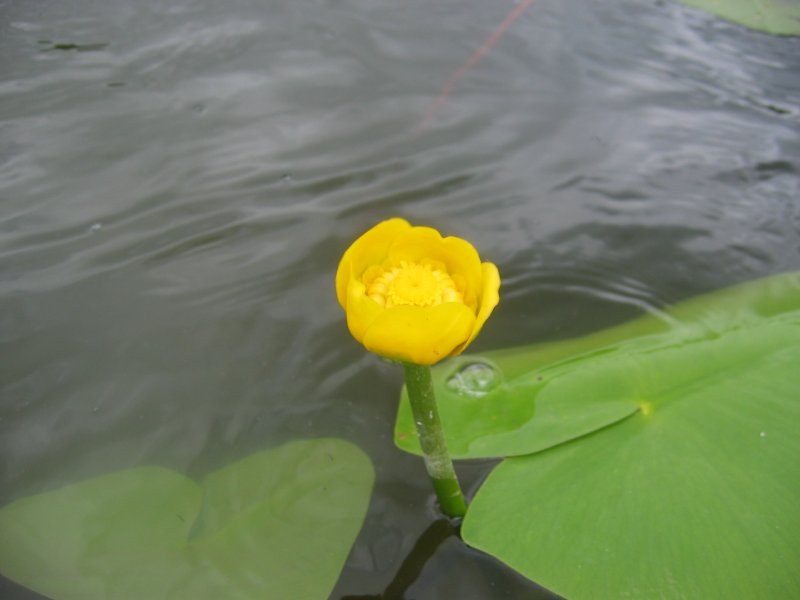 Yellow Water-lilyNuphar lutea
A floating yellow water-lily of lakes and ponds from Europe to western Asia
🇨🇳 China and 5 more · Wildflower
Yellow Water-lilyNuphar lutea
A floating yellow water-lily of lakes and ponds from Europe to western Asia
🇨🇳 China and 5 more · Wildflower
More from Sweden
All the flowers of Sweden YarrowAchillea millefolium
A wild, fern-leaved plant with flat clusters of white or pink flowers and a spicy scent
🇨🇳 China and 6 more · Wildflower
YarrowAchillea millefolium
A wild, fern-leaved plant with flat clusters of white or pink flowers and a spicy scent
🇨🇳 China and 6 more · Wildflower
 Pedunculate oakQuercus robur
A towering oak tree with stalked acorns, native to Europe and western Asia
🇷🇸 Serbia and 8 more · Flowering tree
Pedunculate oakQuercus robur
A towering oak tree with stalked acorns, native to Europe and western Asia
🇷🇸 Serbia and 8 more · Flowering tree
 ElderSambucus nigra
A tall shrub or small tree with clusters of white flowers and dark berries
🇩🇪 Germany and 6 more · Wildflower
ElderSambucus nigra
A tall shrub or small tree with clusters of white flowers and dark berries
🇩🇪 Germany and 6 more · Wildflower
 Common ValerianValeriana officinalis
Tall, sweet-scented wildflower with pale pink blooms and a long history in herbal lore
🇮🇸 Iceland and 8 more · Wildflower
Common ValerianValeriana officinalis
Tall, sweet-scented wildflower with pale pink blooms and a long history in herbal lore
🇮🇸 Iceland and 8 more · Wildflower