
Bellevalia
Bulb-forming plants with grape-like clusters of bell-shaped flowers
Bellevalia is a group of bulbous perennials in the asparagus family, found from the Mediterranean region through parts of North Africa, southern Europe, and into western and central Asia. These plants grow from bulbs and produce spikes of small, bell-shaped flowers in shades of white, cream, brown, blue, or purple.
- Bellevalia includes 81 recognized species.
- Flowers can be white, cream, brown, blue, or purple.
- Native from the Mediterranean to Central Asia.
- Named after botanist Pierre Richer de Belleval.
- New species are still being discovered, such as in Iran.
What does Bellevalia look like?
Bellevalia plants grow from bulbs covered in a thin, papery layer. Their leaves are long, simple, and grow from the base, with veins running lengthwise. Each plant sends up a smooth, round stem topped with a dense cluster of small flowers that resemble grapes. The flowers are bell-shaped, tubular, or funnel-like, and can be white, cream, brown, or less often blue or purple. After flowering, they form triangular seed capsules with winged edges.
Where does Bellevalia come from?
Bellevalia is native to a wide region stretching from the Mediterranean Basin through North Africa and southern Europe, across western and central Asia, and into countries like Iran, Pakistan, and Uzbekistan. The genus was established in the early 19th century and named in honor of the French botanist Pierre Richer de Belleval. Some species were once grouped with hyacinths before being recognized as a separate genus.
When and how Bellevalia blooms
These perennials grow from bulbs that store energy underground. They send up leaves and flower stems in the growing season, with each stem carrying a cluster of flowers. The plants thrive in climates similar to the Mediterranean, often in open, sunny places. Propagation is typically by bulb division or seed.


How Bellevalia is used
There is no specific mention of Bellevalia being widely used in gardens, for decoration, or in cultural practices. The genus is mainly of interest to botanists and plant collectors, and some species may be grown in collections or specialty gardens.
Kinds of Bellevalia
There are 81 recognized species in the Bellevalia genus, with new ones still being described, such as Bellevalia iranica from Iran. Some species that were once part of this group have been moved to other genera like Muscari and Hyacinthella.
What Bellevalia means
The genus name Bellevalia commemorates Pierre Richer de Belleval, a French botanist. While not widely featured in popular culture or symbolism, the plants are noted in botanical literature and are of interest for their diversity and distribution across a broad region.
Questions people ask about Bellevalia
Where does Bellevalia come from?
Bellevalia is native to a wide area that includes the Mediterranean Basin, North Africa, southern Europe, and stretches east through western and central Asia, including countries like Iran and Pakistan.
What do Bellevalia flowers look like?
The flowers grow in dense, grape-like clusters on top of smooth stems. Each flower is bell-shaped, tubular, or funnel-like, and may be white, cream, brown, blue, or purple.
How many species are in the Bellevalia genus?
There are 81 accepted species in the Bellevalia genus, with new species still being described by botanists.
What is the origin of the name Bellevalia?
The genus was named in honor of Pierre Richer de Belleval, a French botanist who lived from 1564 to 1632.
Are Bellevalia plants used for any particular purpose?
The sources do not mention any widespread uses for Bellevalia, but they are of interest to botanists and sometimes grown in collections.
Good reading and sources
- Plants of the World OnlineRoyal Botanic Gardens, Kew, Plant database
- Where it has been recordedGBIF, Plant database
- Sightings and photos by naturalistsiNaturalist, Plant database
The facts on this page come from the Wikipedia article "Bellevalia", written by its contributors and used under the CC BY-SA 4.0 licence, and from its Wikidata record (CC0). EveryPhool rewrote the text in its own words, with AI assistance, and compares every page with the article to make sure no passage is copied. It may be reused under the same CC BY-SA 4.0 licence with a link back.
It may contain mistakes. It is not medical or foraging advice: many flowers are poisonous, and traditional uses are reported, not recommended. If something is wrong, tell us. Last refreshed 2026-10-03.
Others in the family Asparagaceae
The whole family Lily-of-the-valleyConvallaria majalis
A woodland plant with sweet-scented white bell flowers in late spring
🇫🇮 Finland and 4 more · Wildflower
Lily-of-the-valleyConvallaria majalis
A woodland plant with sweet-scented white bell flowers in late spring
🇫🇮 Finland and 4 more · Wildflower
 HyacinthHyacinthus
A spring-blooming bulb with fragrant, colourful flower spikes
🇹🇷 Turkey and 7 more · Bulb flower
HyacinthHyacinthus
A spring-blooming bulb with fragrant, colourful flower spikes
🇹🇷 Turkey and 7 more · Bulb flower
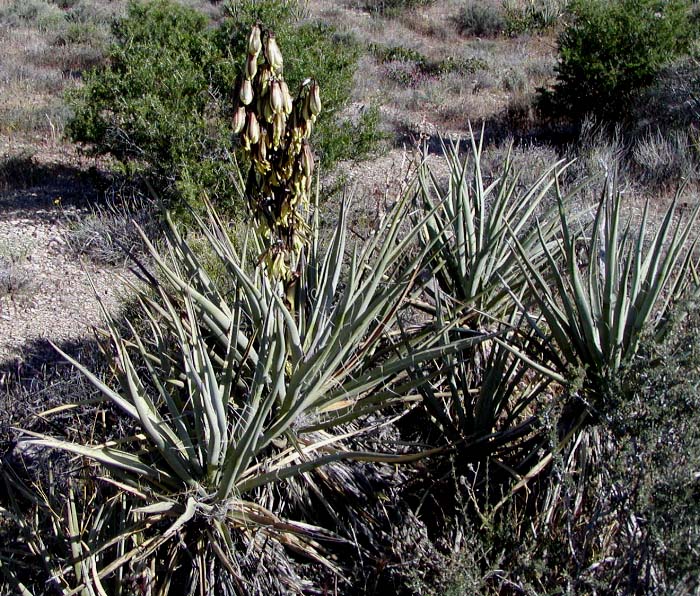 Yucca
Dry-climate plants with pointed leaves and clusters of creamy white flowers
🇲🇽 Mexico and 4 more · Wildflower
Yucca
Dry-climate plants with pointed leaves and clusters of creamy white flowers
🇲🇽 Mexico and 4 more · Wildflower
 Ornithogalum thyrsoides
A white, long-lasting bulb flower from South Africa’s Cape Province
🇿🇦 South Africa · Bulb flower
Ornithogalum thyrsoides
A white, long-lasting bulb flower from South Africa’s Cape Province
🇿🇦 South Africa · Bulb flower
More from Iran
All the flowers of Iran RoseRosa
Prickly flowering shrubs grown across the world for fragrant blossoms and rose hips
🇨🇳 China and 7 more · Flowering shrub
RoseRosa
Prickly flowering shrubs grown across the world for fragrant blossoms and rose hips
🇨🇳 China and 7 more · Flowering shrub
 PeachPrunus persica
A flowering fruit tree from China, grown for its pink blossoms and sweet fruit
🇨🇳 China and 7 more · Flowering tree
PeachPrunus persica
A flowering fruit tree from China, grown for its pink blossoms and sweet fruit
🇨🇳 China and 7 more · Flowering tree
 PomegranatePunica granatum
A shrub with bright red flowers and a fruit full of edible seeds
🇮🇷 Iran and 9 more · Flowering shrub
PomegranatePunica granatum
A shrub with bright red flowers and a fruit full of edible seeds
🇮🇷 Iran and 9 more · Flowering shrub
 AlmondPrunus amygdalus
A Mediterranean tree grown for its fragrant spring flowers and edible seeds
🇮🇷 Iran and 6 more · Flowering tree
AlmondPrunus amygdalus
A Mediterranean tree grown for its fragrant spring flowers and edible seeds
🇮🇷 Iran and 6 more · Flowering tree