
Mariposa lily
Calochortus, family Liliaceae
Wild lilies with showy, often hairy flowers across western North America
Mariposa lilies are perennial, bulb-forming wildflowers in the lily family, native to western North America from British Columbia to Guatemala. Their flowers come in many shapes and colors, with some species having open, petal-like blooms and others forming globe-shaped or pointed flowers. Indigenous peoples have used their bulbs for food and ceremonies.
- Native to western North America, from British Columbia to Guatemala
- Flowers can be open, globe-shaped, or pointed, often with hairy petals
- Bulbs were eaten by Native Americans and Mormon settlers
- About 70 species, with many found only in California
- Grows in habitats from dry grasslands to forests
What does Mariposa lily look like?
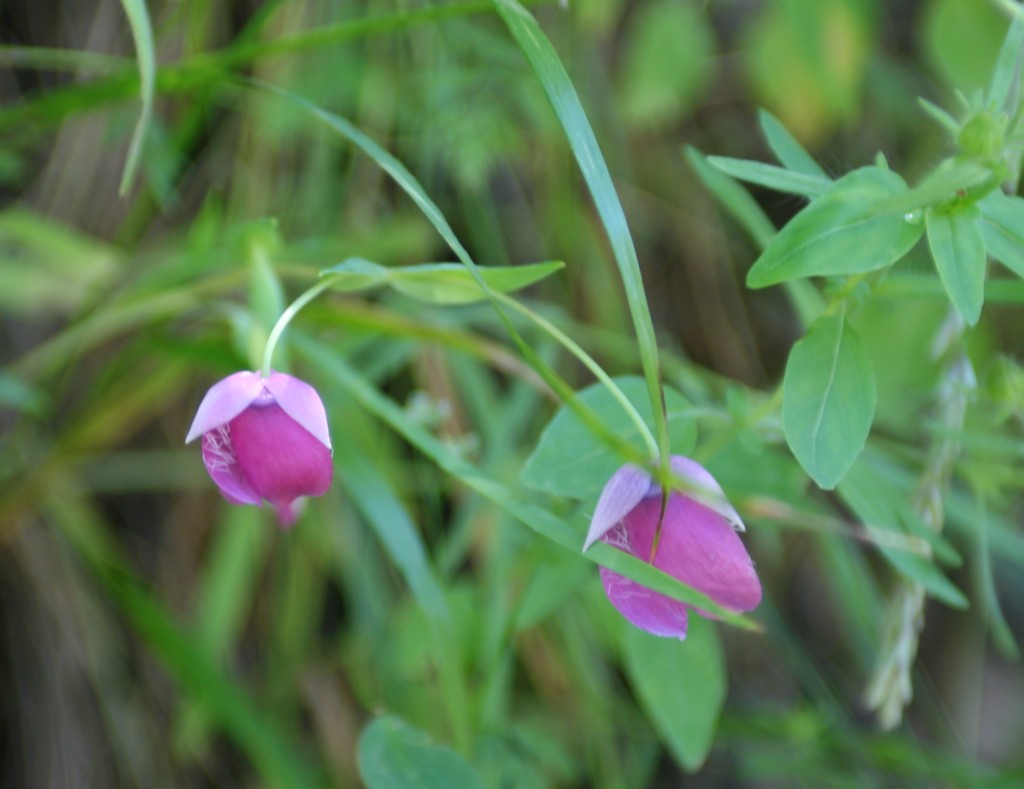
Mariposa lilies grow from bulbs and send up slender stems that can reach over 30 centimeters tall. Their flowers vary in form: some are open with wedge-shaped petals, others are rounded or pointed. Each flower has six parts called tepals, arranged in two sets, with the inner ones often larger and brightly marked. The inside of the petals is often covered in fine hairs, and the blooms appear in a range of colors including white, yellow, pink, red, orange, and purple.
Where does Mariposa lily come from?
Calochortus is native to a broad region stretching from southwestern Canada through the western United States and into Mexico and Guatemala. The genus was first described in 1814, based on a specimen collected during the Lewis and Clark expedition. Over time, botanists have divided the group into sections based on flower form, chromosome numbers, and habitat. Many species are found only in California, and some are adapted to grow on serpentine soils.
When and how Mariposa lily blooms
These lilies bloom in spring or early summer, sending up flowering stems from underground bulbs. They grow in open places with partial shade, at various elevations. Different species prefer different habitats, such as dry grasslands, meadows, woodlands, or forests. Gardeners sometimes grow them in rock gardens or containers, especially where dry summer dormancy is needed.


How Mariposa lily is used
Native American peoples gathered the bulbs for food, eating them raw or cooked, and sometimes used the young flower buds. The bulbs were also a food source for Mormon settlers during times of crop failure. Some groups used the plant in ceremonies or for traditional medicine. Today, mariposa lilies are grown for their attractive flowers in gardens and naturalized landscapes.
Kinds of Mariposa lily
The genus includes about 70 species, with notable groups like mariposas, globe lilies, fairy lanterns, cat's ears, and star tulips. Each group has its own flower shape and preferred habitat. Botanists have divided Calochortus into several sections based on geography and genetics, with many species found only in certain regions, especially California.
What Mariposa lily means
Calochortus has played a role in the diets and traditions of Native American peoples, who sometimes called it 'sego.' The plant is also remembered for its importance as a famine food for Mormon pioneers. Its diversity and beauty have made it a subject of botanical study, especially in California, where many species are unique to the state.
Questions people ask about Mariposa lily
Where do mariposa lilies come from?
Mariposa lilies are native to western North America, ranging from southwestern Canada through the western United States and into Mexico and Guatemala.
What do mariposa lilies look like?
They have slender stems and flowers that can be open, rounded, or pointed, with six tepals in two sets. The inner tepals are often larger and brightly marked, and the flowers come in white, yellow, pink, red, orange, or purple.
How have people used mariposa lilies?
Native Americans ate the bulbs raw or cooked and sometimes used the flower buds as food. The bulbs were also a food source for Mormon settlers during crop failures. Some groups used the plant in ceremonies and traditional medicine.
Are mariposa lilies grown in gardens?
Yes, some species are cultivated in gardens, especially in rock gardens or containers, for their attractive flowers. They are valued in native plant and wildlife gardens.
What does the name Calochortus mean?
The name comes from Greek and means 'beautiful grass,' referring to the plant's graceful form.
Good reading and sources
- Encyclopaedia BritannicaArticle
- USDA Plants DatabaseUS Department of Agriculture, Article
- Plants of the World OnlineRoyal Botanic Gardens, Kew, Plant database
- Where it has been recordedGBIF, Plant database
- Sightings and photos by naturalistsiNaturalist, Plant database
The facts on this page come from the Wikipedia article "Calochortus", written by its contributors and used under the CC BY-SA 4.0 licence, and from its Wikidata record (CC0). Phool rewrote the text in its own words, with AI assistance, and compares every page with the article to make sure no passage is copied. It may be reused under the same CC BY-SA 4.0 licence with a link back.
It may contain mistakes. It is not medical or foraging advice: many flowers are poisonous, and traditional uses are reported, not recommended. If something is wrong, tell us. Last refreshed 2026-10-03.
Others in the family Liliaceae
The whole family TulipTulipa
Spring-blooming bulbs with showy, cup-shaped flowers in many colours
🇳🇱 Netherlands and 7 more · Wildflower
TulipTulipa
Spring-blooming bulbs with showy, cup-shaped flowers in many colours
🇳🇱 Netherlands and 7 more · Wildflower
 LilyLilium
Tall bulb flowers with large, colourful blooms in many gardens and cultures
Lilium · Wildflower
LilyLilium
Tall bulb flowers with large, colourful blooms in many gardens and cultures
Lilium · Wildflower
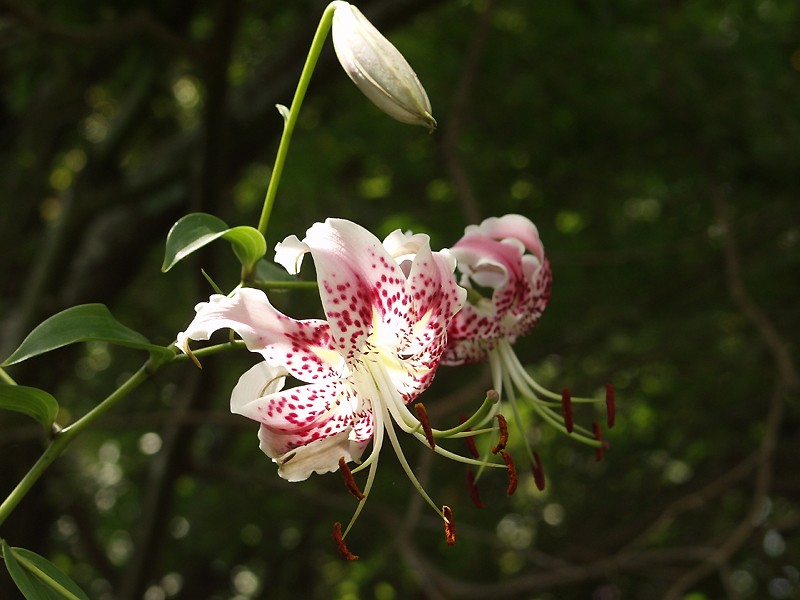 Lilium speciosum
A late-summer lily with fragrant white to pink flowers from East Asia
🇯🇵 Japan and 2 more · Wildflower
Lilium speciosum
A late-summer lily with fragrant white to pink flowers from East Asia
🇯🇵 Japan and 2 more · Wildflower
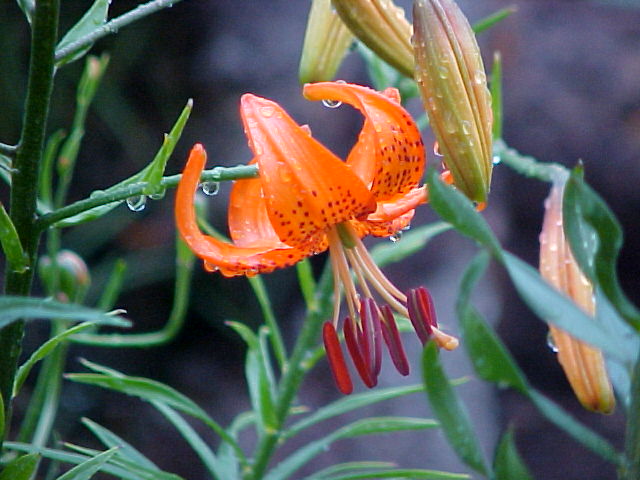 Lilium davidii
A tall Asian lily with edible bulbs and orange recurved flowers
🇨🇳 China and 1 more · Wildflower
Lilium davidii
A tall Asian lily with edible bulbs and orange recurved flowers
🇨🇳 China and 1 more · Wildflower
More from the United States
All the flowers of the United States PeachPrunus persica
A flowering fruit tree from China, grown for its pink blossoms and sweet fruit
🇨🇳 China and 7 more · Flowering tree
PeachPrunus persica
A flowering fruit tree from China, grown for its pink blossoms and sweet fruit
🇨🇳 China and 7 more · Flowering tree
 AlmondPrunus amygdalus
A Mediterranean tree grown for its fragrant spring flowers and edible seeds
🇮🇷 Iran and 6 more · Flowering tree
AlmondPrunus amygdalus
A Mediterranean tree grown for its fragrant spring flowers and edible seeds
🇮🇷 Iran and 6 more · Flowering tree
 CactusCactaceae
Succulent plants with spines, native to the Americas
🇲🇽 Mexico and 7 more · Wildflower
CactusCactaceae
Succulent plants with spines, native to the Americas
🇲🇽 Mexico and 7 more · Wildflower
 Chrysanthemum菊花
Autumn-blooming flower with thousands of varieties, cherished in East Asia and beyond
🇨🇳 China and 6 more · Wildflower
Chrysanthemum菊花
Autumn-blooming flower with thousands of varieties, cherished in East Asia and beyond
🇨🇳 China and 6 more · Wildflower