
Spear thistle
Cirsium vulgare, family Asteraceae
Tall, spiny thistle with purple flowers and a symbol of Scotland
Spear thistle is a tall, spiny plant with purple flower heads, native to much of Europe, western Asia, and northwestern Africa. It is known for its rich nectar, supports many insects and birds, and is the national flower of Scotland. The plant is often seen as a weed but is also used in food and traditional ceremonies.
- National flower of Scotland
- Rich nectar source for bees and butterflies
- Seeds are food for goldfinches and linnets
- Used in Italian cheese-making and Iranian stews
- Regarded as a weed in Australia and North America
What does Spear thistle look like?
Spear thistle grows upright, reaching up to nearly 2 metres tall. Its leaves are grey-green, deeply lobed, and lined with sharp spines. The plant forms a rosette of leaves in its first year, then sends up a flowering stem. Its flower heads are round, 2.5–5 cm across, and show a pink to purple colour. The stems have narrow, spiny wings running along their length. Seeds are small and attached to feathery hairs, helping them travel on the wind.
Where does Spear thistle come from?
This thistle is native to most of Europe, stretching north to the Arctic Circle, as well as western Asia and the Atlas Mountains of northwestern Africa. It has spread widely and now grows in North America and Australia, where it is often considered an invasive weed. The plant thrives in disturbed soils and open ground, and its name comes from the spear-like shape of its leaf lobes.
When and how Spear thistle blooms
Spear thistle usually lives for two years, forming a leaf rosette and deep taproot in the first year, then sending up a tall flowering stem in the second. It can sometimes flower in its first year. The plant prefers nitrogen-rich soils and open, disturbed areas. It reproduces only by seed, which is carried by wind, water, animals, or human activity.


How Spear thistle is used
While often unwanted in fields, spear thistle is valued for its nectar, attracting bees and butterflies. Its seeds feed birds such as goldfinches and linnets. In rural Italy, dried flower heads are used to curdle goat’s milk for cheese. In Iran, the stems are cooked in stews, and in Cajun cooking, the peeled stems are pickled. In Scotland, it appears in traditional ceremonies.
Kinds of Spear thistle
There are several related thistles, such as marsh thistle (Cirsium palustre), but spear thistle is notable for its tall size and spiny leaves. It sometimes behaves as an annual, flowering in its first year, but usually follows a biennial cycle. Other names reflect its appearance and cultural ties, especially in Scotland.
What Spear thistle means
Spear thistle is a national symbol of Scotland and features in events like the Riding of the Marches in Langholm. It is also used as a local emblem in some English villages. The plant is important for wildlife, ranking high in nectar production for pollinators in Britain. Despite being labelled a weed in some places, it plays a role in both nature and tradition.
Questions people ask about Spear thistle
Where does spear thistle come from?
Spear thistle is native to most of Europe, western Asia, and northwestern Africa. It has also spread to North America and Australia, where it often grows as an introduced species.
What does spear thistle look like?
This plant is tall and upright, with deeply lobed, spiny leaves and purple or pink flower heads. The stems are winged and also lined with spines.
Why is spear thistle important in Scotland?
Spear thistle is the national flower of Scotland and appears in traditional events and ceremonies. It is a symbol of Scottish identity.
How is spear thistle used by people?
People use spear thistle in food, such as pickled stems in Cajun cooking and as a curdling agent for cheese in Italy. In Iran, the stems are cooked in stews.
What wildlife benefits from spear thistle?
Its flowers provide nectar for bees and butterflies, and its seeds are eaten by birds like goldfinches and linnets.
Good reading and sources
- Cirsium vulgareUS Department of Agriculture, Article
- Cirsium vulgareRoyal Horticultural Society, Article
- Plants of the World OnlineRoyal Botanic Gardens, Kew, Plant database
- Where it has been recordedGBIF, Plant database
- Sightings and photos by naturalistsiNaturalist, Plant database
- Cirsium vulgare on WikipediaEncyclopedia
- More photos on Wikimedia CommonsPhotos
- Wikidata recordOpen data
The facts on this page come from the Wikipedia article "Cirsium vulgare", written by its contributors and used under the CC BY-SA 4.0 licence, and from its Wikidata record (CC0). Phool rewrote the text in its own words, with AI assistance, and compares every page with the article to make sure no passage is copied. It may be reused under the same CC BY-SA 4.0 licence with a link back.
It may contain mistakes. It is not medical or foraging advice: many flowers are poisonous, and traditional uses are reported, not recommended. If something is wrong, tell us. Last refreshed 2026-10-03.
Others in the family Asteraceae
The whole family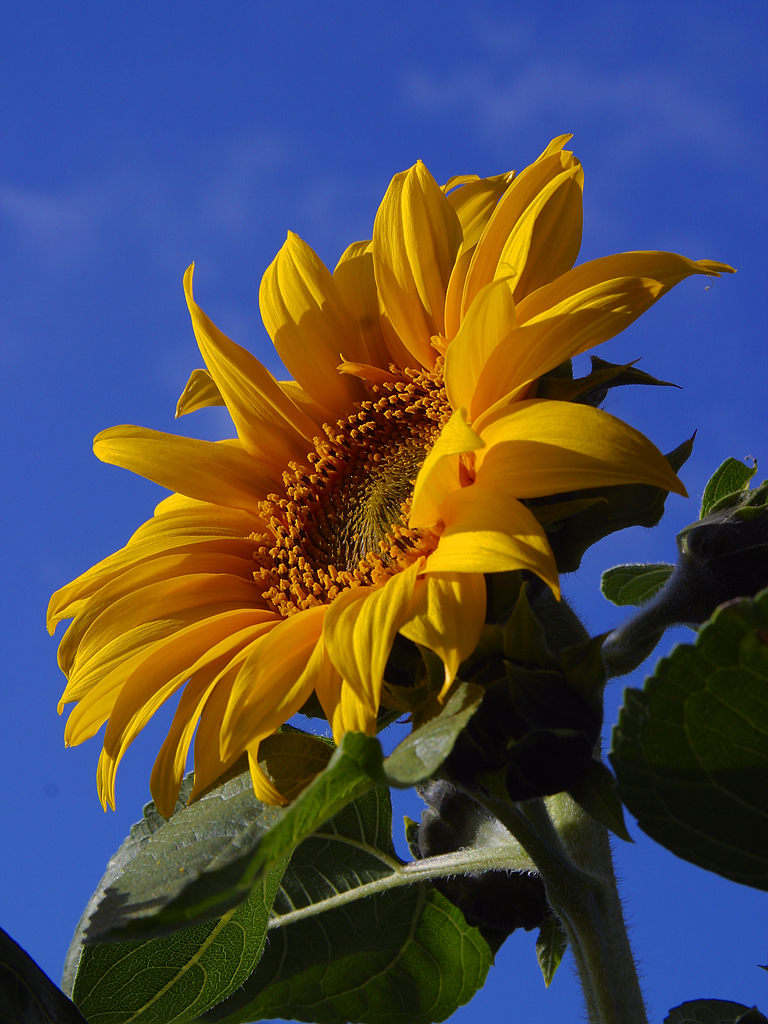 Common sunflowerHelianthus annuus
A tall annual plant grown for its large yellow flower heads and edible seeds
🇨🇦 Canada and 4 more · Wildflower
Common sunflowerHelianthus annuus
A tall annual plant grown for its large yellow flower heads and edible seeds
🇨🇦 Canada and 4 more · Wildflower
 Chrysanthemum菊花
Autumn-blooming flower with thousands of varieties, cherished in East Asia and beyond
🇨🇳 China and 6 more · Wildflower
Chrysanthemum菊花
Autumn-blooming flower with thousands of varieties, cherished in East Asia and beyond
🇨🇳 China and 6 more · Wildflower
 Asteraceae
The vast family of daisies, asters, and sunflowers with star-like flower heads
Asteraceae · Wildflower
Asteraceae
The vast family of daisies, asters, and sunflowers with star-like flower heads
Asteraceae · Wildflower
 DandelionTaraxacum
A yellow-flowered perennial found in fields, lawns, and gardens worldwide
Taraxacum · Wildflower
DandelionTaraxacum
A yellow-flowered perennial found in fields, lawns, and gardens worldwide
Taraxacum · Wildflower
More from Australia
All the flowers of Australia AlmondPrunus amygdalus
A Mediterranean tree grown for its fragrant spring flowers and edible seeds
🇮🇷 Iran and 6 more · Flowering tree
AlmondPrunus amygdalus
A Mediterranean tree grown for its fragrant spring flowers and edible seeds
🇮🇷 Iran and 6 more · Flowering tree
 FennelFoeniculum vulgare
A tall, aromatic herb with feathery leaves and yellow umbels, used for food and spice
🇨🇳 China and 7 more · Herb or useful flower
FennelFoeniculum vulgare
A tall, aromatic herb with feathery leaves and yellow umbels, used for food and spice
🇨🇳 China and 7 more · Herb or useful flower
 RosemarySalvia rosmarinus
A fragrant evergreen shrub with needle-like leaves and purple, blue, or white flowers
🇪🇸 Spain and 5 more · Flowering shrub
RosemarySalvia rosmarinus
A fragrant evergreen shrub with needle-like leaves and purple, blue, or white flowers
🇪🇸 Spain and 5 more · Flowering shrub
 Eucalyptus
The tall, aromatic trees and shrubs known as gum trees or eucalypts
🇦🇺 Australia and 7 more · Flowering tree
Eucalyptus
The tall, aromatic trees and shrubs known as gum trees or eucalypts
🇦🇺 Australia and 7 more · Flowering tree