
Common spotted orchid
Dactylorhiza fuchsii, family Orchidaceae
A wild orchid with spotted leaves and pale purple flowers across Europe and Asia
The common spotted orchid is a perennial wildflower found from Ireland to Mongolia and Xinjiang. It grows 10–60 cm tall, with dense spikes of white to pale purple flowers marked by purple spots, and narrow, often dark-spotted leaves. People find it in meadows, forests, and marshes, where it attracts moths and bees.
- Found from Ireland to Mongolia and Xinjiang
- Flowers range from white to pale purple with purple spots
- Leaves are narrow and often dark-spotted
- Blooms in dense spikes from June to August
- Hybridizes easily with other orchids
What does Common spotted orchid look like?
The common spotted orchid is a slender perennial growing from 10 to 60 cm tall. Its leaves are narrow, lance-shaped, and often marked with dark spots. The flower spike is dense, first conical then cylindrical, and blooms from June to August. Flowers range from white to pale purple, each with purple spots and a three-lobed lip. Some colonies have a strong scent that attracts day-flying moths. Bracts are usually shorter than the flowers.
Where does Common spotted orchid come from?
This orchid is native to a wide area from western Europe, including Ireland and Great Britain, across to Siberia, Mongolia, and Xinjiang in China. It is one of the most common wild orchids in Europe and is found in a range of habitats, from forests to meadows and marshes. The name Dactylorhiza comes from Greek, meaning 'finger root', while 'fuchsii' honours the botanist Leonhart Fuchs. The plant is highly variable in appearance and scent, partly due to frequent hybridization and adaptation to different environments.
When and how Common spotted orchid blooms
The common spotted orchid blooms in summer, producing dense spikes of flowers. It grows in calcareous or neutral soils, from sea level up to alpine regions at 2300 m. The plant forms associations with specific fungi in the soil, which help it grow. It can be found in a variety of habitats, including forests, meadows, bogs, and stream margins. It is sometimes grown in gardens for its attractive flowers.


How Common spotted orchid is used
People enjoy the common spotted orchid mainly for its appearance in the wild and in gardens. It is valued for its attractive, spotted flowers and is the most common orchid in Britain, often found in marshes and chalk grassland. The orchid attracts pollinators such as bumblebees and beetles, and some colonies are noted for their strong fragrance.
Kinds of Common spotted orchid
Dactylorhiza fuchsii is very variable, with over 25 forms described and 7 recognized as valid varieties. It hybridizes easily with other Dactylorhiza species and even with orchids from other genera, leading to a range of forms in the wild. It is closely related to D. maculata and D. majalis, which differ in flower and leaf details.
What Common spotted orchid means
The common spotted orchid is named for its abundance and the spots on its leaves. It is not linked to specific symbolism or religious use in the sources, but is appreciated as a wildflower and garden plant. Its adaptability and ability to hybridize make it a subject of interest for botanists and orchid enthusiasts.
Questions people ask about Common spotted orchid
Where does the common spotted orchid come from?
It is native to a broad region stretching from western Europe, including Ireland and Great Britain, eastwards through Russia and Mongolia to Xinjiang in China.
What does the common spotted orchid look like?
It grows 10–60 cm tall with narrow, often dark-spotted leaves and dense spikes of white to pale purple flowers, each marked with purple spots and a three-lobed lip.
When does the common spotted orchid flower?
It blooms in summer, with flowers appearing from June to August across its range.
How is the common spotted orchid used?
It is mainly enjoyed as a wildflower and garden plant, valued for its attractive flowers and ability to attract pollinators.
Does the common spotted orchid have any special meaning or symbolism?
The sources do not mention any particular symbolism, but its name refers to its abundance and the spots on its leaves.
Good reading and sources
- Encyclopaedia BritannicaArticle
- Dactylorhiza fuchsiiRoyal Horticultural Society, Article
- Plants of the World OnlineRoyal Botanic Gardens, Kew, Plant database
- Where it has been recordedGBIF, Plant database
- Sightings and photos by naturalistsiNaturalist, Plant database
- Dactylorhiza fuchsii on WikipediaEncyclopedia
- More photos on Wikimedia CommonsPhotos
- Wikidata recordOpen data
The facts on this page come from the Wikipedia article "Dactylorhiza fuchsii", written by its contributors and used under the CC BY-SA 4.0 licence, and from its Wikidata record (CC0). Phool rewrote the text in its own words, with AI assistance, and compares every page with the article to make sure no passage is copied. It may be reused under the same CC BY-SA 4.0 licence with a link back.
It may contain mistakes. It is not medical or foraging advice: many flowers are poisonous, and traditional uses are reported, not recommended. If something is wrong, tell us. Last refreshed 2026-10-03.
Others in the family Orchidaceae
The whole family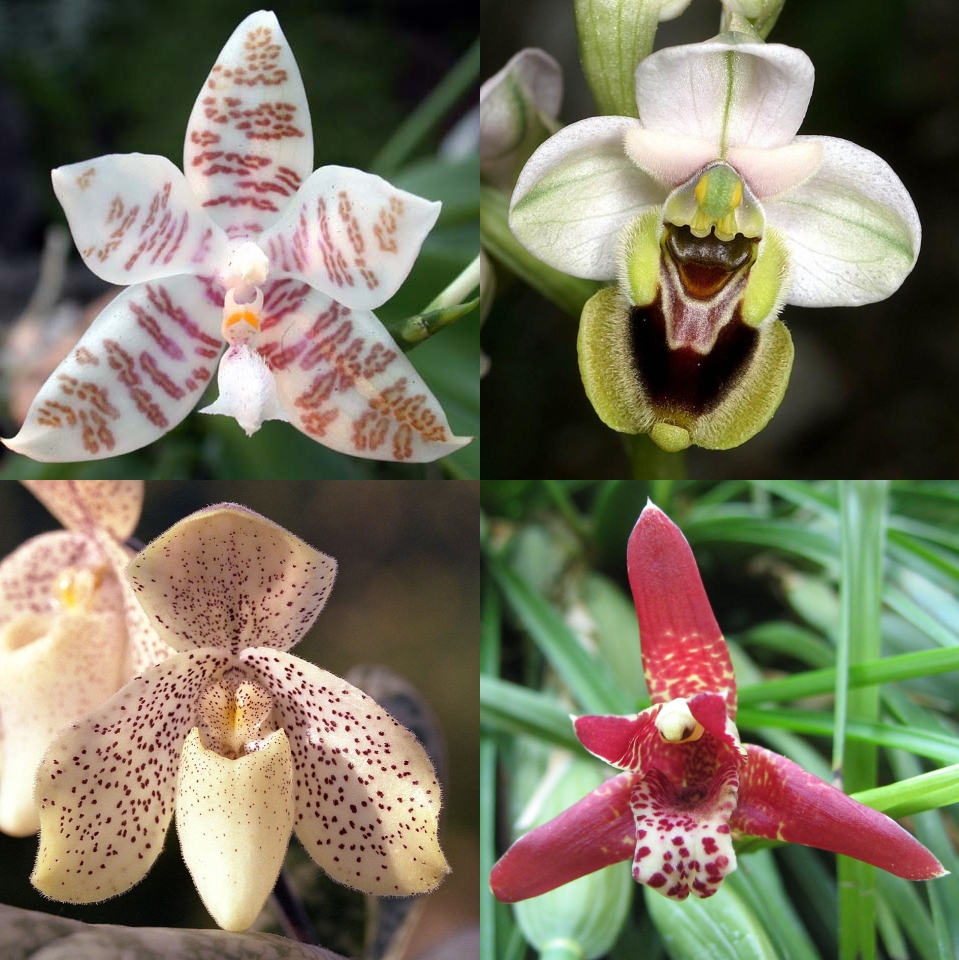 OrchidOrchidaceae
A vast family of colourful, often fragrant flowers found almost everywhere on earth
Orchidaceae · Wildflower
OrchidOrchidaceae
A vast family of colourful, often fragrant flowers found almost everywhere on earth
Orchidaceae · Wildflower
 Vanilla
Climbing orchids with pods used for the world’s most popular flavor
🇲🇽 Mexico and 7 more · Wildflower
Vanilla
Climbing orchids with pods used for the world’s most popular flavor
🇲🇽 Mexico and 7 more · Wildflower
 Orchis
A group of wild orchids with tuberous roots from Europe, North Africa and Asia
🇹🇷 Turkey and 7 more · Wildflower
Orchis
A group of wild orchids with tuberous roots from Europe, North Africa and Asia
🇹🇷 Turkey and 7 more · Wildflower
 Fire star orchidEpidendrum radicans
A bright orange orchid that roots along its whole stem
🇲🇽 Mexico and 7 more · Orchid
Fire star orchidEpidendrum radicans
A bright orange orchid that roots along its whole stem
🇲🇽 Mexico and 7 more · Orchid
More from Ireland
All the flowers of Ireland Common flaxLinum usitatissimum
The slender blue-flowered plant grown for linen and linseed
🇨🇳 China and 7 more · Wildflower
Common flaxLinum usitatissimum
The slender blue-flowered plant grown for linen and linseed
🇨🇳 China and 7 more · Wildflower
 HawthornCrataegus
A thorny shrub or tree with white or pink spring flowers and small edible fruits
🇮🇪 Ireland and 7 more · Wildflower
HawthornCrataegus
A thorny shrub or tree with white or pink spring flowers and small edible fruits
🇮🇪 Ireland and 7 more · Wildflower
 Lily-of-the-valleyConvallaria majalis
A woodland plant with sweet-scented white bell flowers in late spring
🇫🇮 Finland and 4 more · Wildflower
Lily-of-the-valleyConvallaria majalis
A woodland plant with sweet-scented white bell flowers in late spring
🇫🇮 Finland and 4 more · Wildflower
 RapeseedBrassica napus
A yellow-flowered crop grown for its oil-rich seeds and protein meal
🇨🇳 China and 7 more · Wildflower
RapeseedBrassica napus
A yellow-flowered crop grown for its oil-rich seeds and protein meal
🇨🇳 China and 7 more · Wildflower