
Cape marigold
Dimorphotheca, family Asteraceae
A daisy-like flower native to southern Africa's open landscapes
Cape marigold is a group of flowering plants from southern Africa, known for their daisy-like blooms. These plants grow wild in countries like South Africa, Namibia, and Botswana, and are often grown as ornamentals in gardens for their colourful flowers.
- Native to southern Africa, including South Africa and Namibia
- Belongs to the daisy family (Asteraceae)
- Some species hybridize with Osteospermum for garden use
What does Cape marigold look like?
Cape marigold refers to several species in the Dimorphotheca genus. These plants belong to the daisy family and usually have flowers with a central disk and radiating petals, giving them a classic daisy appearance. The flowers are typically bisexual, meaning each flower has both male and female parts. While the sources do not specify flower colours, Cape marigolds are known for their ornamental value and are often grown for their attractive blooms.
Where does Cape marigold come from?
Dimorphotheca is native to southern Africa, with its centre of diversity in this region. Species grow wild in Botswana, Eswatini, Lesotho, Namibia, South Africa, and Zimbabwe. The name comes from Greek words meaning 'two forms' and 'receptacle', referring to the two different shapes of seeds (cypselae) found in the genus. Some species can cross with Osteospermum, leading to hybrids that are sold as ornamental plants.
When and how Cape marigold blooms
Cape marigolds grow naturally in the open landscapes of southern Africa. In gardens, they are cultivated for their daisy-like flowers. The plants are usually grown from seed and thrive in sunny spots. Some cultivated forms are hybrids with related genera, bred for ornamental use.

How Cape marigold is used
People grow Cape marigolds mainly for their decorative flowers in gardens and as ornamentals. The sources do not mention other uses such as food, medicine, or religious practice. Their main value lies in their showy blooms, which brighten up gardens and landscapes.
Kinds of Cape marigold
There are several species within the Dimorphotheca genus, and some can hybridize with Osteospermum. These hybrids are also grown as ornamentals. The genus is part of the Calenduleae tribe, which includes other daisy-like plants.
What Cape marigold means
Cape marigolds are valued in southern Africa for their ornamental qualities. The genus name highlights the unique feature of having two different seed shapes. While not mentioned as a symbol or emblem, these flowers are a familiar sight in their native region and in gardens elsewhere.
Questions people ask about Cape marigold
Where does Cape marigold come from?
Cape marigold, or Dimorphotheca, is native to southern Africa. It grows wild in countries such as South Africa, Namibia, Botswana, Lesotho, Eswatini, and Zimbabwe.
What does Cape marigold look like?
Cape marigold plants have daisy-like flowers with a central disk and radiating petals. The flowers are usually bisexual, containing both male and female parts.
How is Cape marigold used?
Cape marigold is mainly grown as an ornamental plant in gardens. Its colourful, daisy-like flowers are valued for decoration.
Are there different types of Cape marigold?
Yes, Dimorphotheca includes several species. Some can hybridize with Osteospermum, and these hybrids are also grown as ornamentals.
Good reading and sources
- USDA Plants DatabaseUS Department of Agriculture, Article
- Plants of the World OnlineRoyal Botanic Gardens, Kew, Plant database
- Where it has been recordedGBIF, Plant database
- Sightings and photos by naturalistsiNaturalist, Plant database
- Dimorphotheca on WikipediaEncyclopedia
- More photos on Wikimedia CommonsPhotos
- Wikidata recordOpen data
The facts on this page come from the Wikipedia article "Dimorphotheca", written by its contributors and used under the CC BY-SA 4.0 licence, and from its Wikidata record (CC0). Phool rewrote the text in its own words, with AI assistance, and compares every page with the article to make sure no passage is copied. It may be reused under the same CC BY-SA 4.0 licence with a link back.
It may contain mistakes. It is not medical or foraging advice: many flowers are poisonous, and traditional uses are reported, not recommended. If something is wrong, tell us. Last refreshed 2026-10-03.
Others in the family Asteraceae
The whole family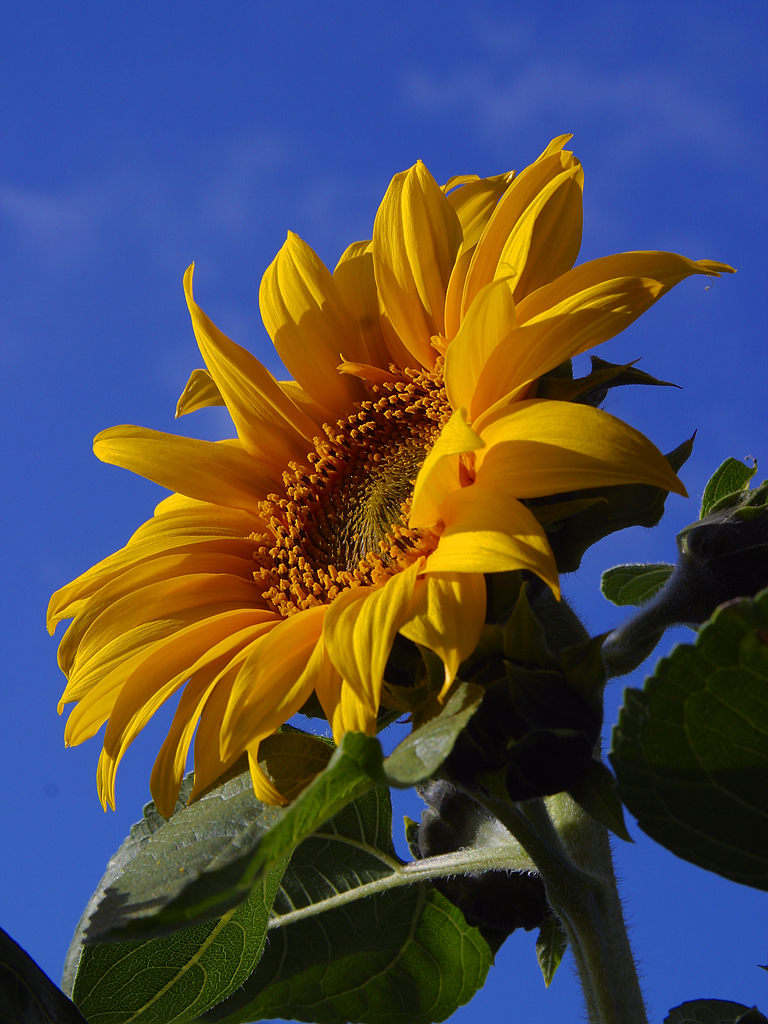 Common sunflowerHelianthus annuus
A tall annual plant grown for its large yellow flower heads and edible seeds
🇨🇦 Canada and 4 more · Wildflower
Common sunflowerHelianthus annuus
A tall annual plant grown for its large yellow flower heads and edible seeds
🇨🇦 Canada and 4 more · Wildflower
 Chrysanthemum菊花
Autumn-blooming flower with thousands of varieties, cherished in East Asia and beyond
🇨🇳 China and 6 more · Wildflower
Chrysanthemum菊花
Autumn-blooming flower with thousands of varieties, cherished in East Asia and beyond
🇨🇳 China and 6 more · Wildflower
 Asteraceae
The vast family of daisies, asters, and sunflowers with star-like flower heads
Asteraceae · Wildflower
Asteraceae
The vast family of daisies, asters, and sunflowers with star-like flower heads
Asteraceae · Wildflower
 DandelionTaraxacum
A yellow-flowered perennial found in fields, lawns, and gardens worldwide
Taraxacum · Wildflower
DandelionTaraxacum
A yellow-flowered perennial found in fields, lawns, and gardens worldwide
Taraxacum · Wildflower
More from Botswana
All the flowers of Botswana Pelargonium
A diverse group of flowering plants often grown as garden and house plants
🇿🇦 South Africa and 7 more · Garden flower
Pelargonium
A diverse group of flowering plants often grown as garden and house plants
🇿🇦 South Africa and 7 more · Garden flower
 Tritonia
Strongly scented yellow to brown flowers from southern Africa
🇿🇦 South Africa and 7 more · Wildflower
Tritonia
Strongly scented yellow to brown flowers from southern Africa
🇿🇦 South Africa and 7 more · Wildflower
 Babianabobbejaantjie
A group of small, colourful flowering plants from southern Africa
🇿🇦 South Africa and 4 more · Wildflower
Babianabobbejaantjie
A group of small, colourful flowering plants from southern Africa
🇿🇦 South Africa and 4 more · Wildflower
 Desert roseAdenium
A succulent with thick stems and bright flowers, grown as a bonsai and houseplant
🇳🇦 Namibia and 7 more · Wildflower
Desert roseAdenium
A succulent with thick stems and bright flowers, grown as a bonsai and houseplant
🇳🇦 Namibia and 7 more · Wildflower