
Babiana
In its own language: bobbejaantjie
A group of small, colourful flowering plants from southern Africa
Babiana is a genus of perennial plants in the iris family, known for their bright, varied flowers and pleated, often hairy leaves. Most species are native to southern Africa, especially South Africa and Namibia, and grow from underground corms that help them survive dry seasons.
- Most Babiana species are found in South Africa and Namibia
- Flowers can be blue, purple, red, pink, white, cream, yellow, or magenta
- Plants grow from corms and survive dry seasons underground
- The name refers to baboons that eat the corms
What does Babiana look like?
Babiana plants grow from corms and appear above ground when in leaf and flower. The leaves are pleated, laterally flattened, and often covered in soft or velvety hairs. Flowers are held close to the ground or slightly above, with six tepals joined at the base to form a tube. The blooms come in a wide range of colours—blue, purple, red, pink, white, cream, yellow, and magenta—often with striking markings. Some species have star-shaped flowers, while others are more mirror-like in symmetry.
Where does Babiana come from?
These plants are native to southern Africa, with most species found in South Africa and Namibia. A few extend into Botswana, Zambia, and Zimbabwe. The name Babiana comes from the Dutch word for baboon, as local baboons dig up and eat the corms. In Afrikaans, the plant is called bobbejaantjie, meaning 'little baboon.' Over 90 species are known, and most are adapted to survive dry summers underground.
When and how Babiana blooms
Babiana species grow from underground corms that sprout leaves and flowers during the growing season, then retreat below ground when conditions become dry. Their leaves emerge with a narrow sheath and pleated blade, and the stems can be upright or even horizontal. Flowers develop close to the ground, each subtended by two bracts, and are adapted to attract different pollinators, with some species producing little or no nectar.


How Babiana is used
There is no mention of Babiana being widely used in gardens, for decoration, or in traditional practices. The genus is mainly noted for its diversity in the wild and its adaptation to local conditions. Some species are grown by plant enthusiasts for their unusual leaves and colourful flowers.
Kinds of Babiana
The genus includes around 93 species, each with its own flower shape and colour pattern. Some, like B. ringens, have unique flowering stems, while others such as B. carminea are known for their vivid carmine flowers. Flower symmetry and colour can differ greatly, with some species displaying star-shaped blooms and others having contrasting markings.
What Babiana means
Babiana is named for the baboons that feed on its corms, a detail reflected in both its scientific and Afrikaans names. The plants are a distinctive part of the southern African flora, but the sources do not mention any special symbolic meaning or use in cultural traditions.
Questions people ask about Babiana
Where does Babiana come from?
Babiana is native to southern Africa, with most species growing in South Africa and Namibia. A few species are also found in Botswana, Zambia, and Zimbabwe.
What do Babiana flowers look like?
Babiana flowers come in many colours, including blue, purple, red, pink, white, cream, yellow, and magenta. The blooms may have striking markings and can be star-shaped or mirror-symmetrical.
Why is it called Babiana?
The name Babiana comes from the Dutch word for baboon, as baboons are known to dig up and eat the plant's corms. The Afrikaans name 'bobbejaantjie' means 'little baboon.'
How do Babiana plants survive dry periods?
Babiana plants grow from corms, which are underground storage organs. During hot, dry summers, the leaves and stems die back, and the plant survives below ground until the next growing season.
Good reading and sources
- Plants of the World OnlineRoyal Botanic Gardens, Kew, Plant database
- Where it has been recordedGBIF, Plant database
- Sightings and photos by naturalistsiNaturalist, Plant database
The facts on this page come from the Wikipedia article "Babiana", written by its contributors and used under the CC BY-SA 4.0 licence, and from its Wikidata record (CC0). Phool rewrote the text in its own words, with AI assistance, and compares every page with the article to make sure no passage is copied. It may be reused under the same CC BY-SA 4.0 licence with a link back.
It may contain mistakes. It is not medical or foraging advice: many flowers are poisonous, and traditional uses are reported, not recommended. If something is wrong, tell us. Last refreshed 2026-10-03.
Others in the family Iridaceae
The whole family Gladiolus
Tall, showy flower spikes grown from corms, known as sword lilies
Gladiolus · Garden flower
Gladiolus
Tall, showy flower spikes grown from corms, known as sword lilies
Gladiolus · Garden flower
 Iris
A large group of perennial flowers with striking, six-lobed blooms
Iris · Wildflower
Iris
A large group of perennial flowers with striking, six-lobed blooms
Iris · Wildflower
 Crocus
Small corm-grown flowers in white, yellow, orange or purple
🇹🇷 Turkey and 7 more · Wildflower
Crocus
Small corm-grown flowers in white, yellow, orange or purple
🇹🇷 Turkey and 7 more · Wildflower
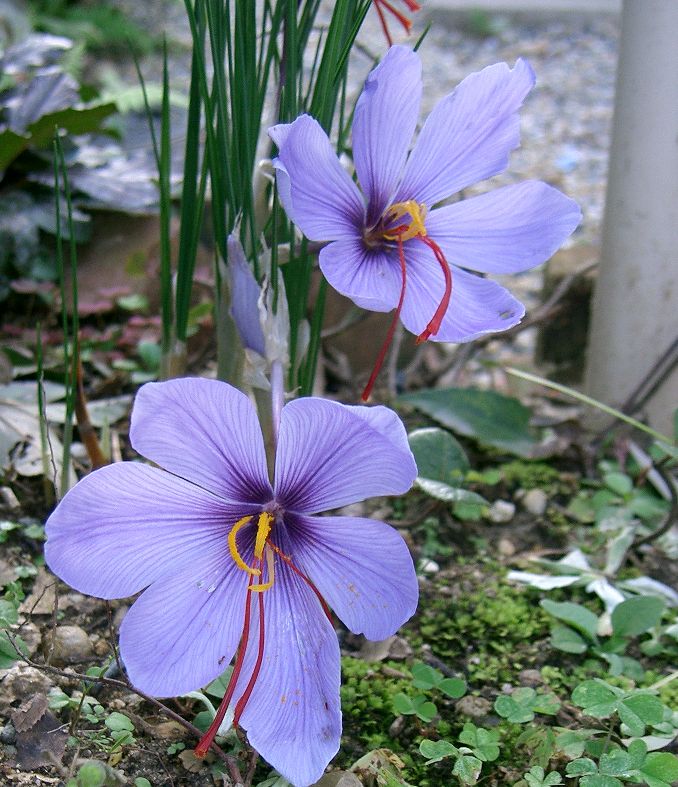 Saffron crocusCrocus sativus
The purple autumn flower whose red stigmas yield the spice saffron
🇨🇳 China and 1 more · Garden flower
Saffron crocusCrocus sativus
The purple autumn flower whose red stigmas yield the spice saffron
🇨🇳 China and 1 more · Garden flower
More from South Africa
All the flowers of South Africa Eucalyptus
The tall, aromatic trees and shrubs known as gum trees or eucalypts
🇦🇺 Australia and 7 more · Flowering tree
Eucalyptus
The tall, aromatic trees and shrubs known as gum trees or eucalypts
🇦🇺 Australia and 7 more · Flowering tree
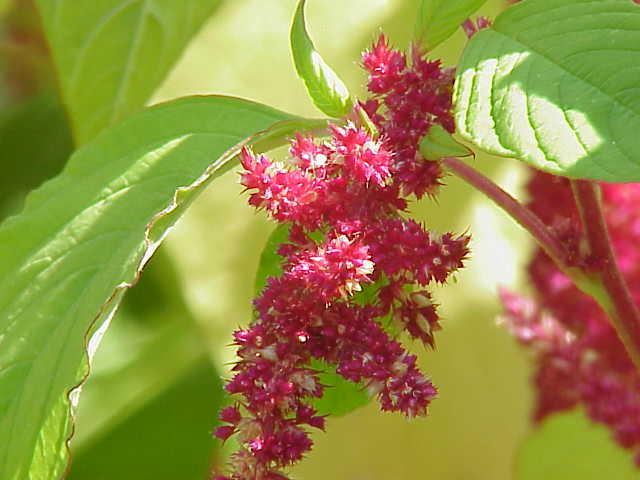 AmaranthAmaranthus
A tall, colourful plant grown for its flowers, leaves and edible seeds
🇲🇽 Mexico and 7 more · Wildflower
AmaranthAmaranthus
A tall, colourful plant grown for its flowers, leaves and edible seeds
🇲🇽 Mexico and 7 more · Wildflower
 Acacia
Shrubs and trees with golden or cream puffball flowers, native mostly to Australia
🇦🇺 Australia and 6 more · Wildflower
Acacia
Shrubs and trees with golden or cream puffball flowers, native mostly to Australia
🇦🇺 Australia and 6 more · Wildflower
 Sensitive PlantMimosa pudica
A touch-sensitive plant whose leaves fold up when disturbed
🇧🇷 Brazil and 8 more · Wildflower
Sensitive PlantMimosa pudica
A touch-sensitive plant whose leaves fold up when disturbed
🇧🇷 Brazil and 8 more · Wildflower