
Disa
A genus of red-flowered orchids from Africa, some grown as ornamentals
Disa is a genus of about 182 orchid species, mostly found across tropical and southern Africa. Its flowers are typically red, formed mainly by large sepals, and range from solitary blooms to racemes; several species are cultivated for their striking appearance, especially Disa uniflora.
- Flowers are mostly red and built from prominent sepals
- Named after a heroine in a Swedish legend
- Disa uniflora is called 'The Pride of Table Mountain'
- Some species don’t need fungi to germinate
- More than 400 hybrids have been created
What does Disa look like?
Disa orchids grow from fleshy tubers and can reach up to 90 cm tall. Their flowers often appear alone or in clusters called racemes. What looks like petals are usually small; the showy part comes from the sepals, which are commonly shades of red, from pale to deep.
Where does Disa come from?
The genus was described in 1767 by P.J. Bergius and named after a figure from Swedish folklore. Most species originate in Africa, especially southern regions, though a few occur on Madagascar, Réunion, and the Arabian Peninsula. One species has become naturalised in Western Australia.
When and how Disa blooms
These orchids bloom at varying times depending on the species and local climate. They grow from underground tubers and require specific mineral-rich, well-drained soils. Some, like those in the Disa uniflora group, grow near streams and have seeds that germinate without fungal help, a rarity among orchids.


How Disa is used
Disa uniflora, known as 'The Pride of Table Mountain,' is prized in horticulture and increasingly used as a cut flower. Other species are grown in gardens, particularly in Africa. They are challenging to cultivate due to precise soil and moisture needs.
Kinds of Disa
Over 180 species are recognised, including Disa uniflora, Disa cardinalis, and Disa aurata. Hybrids number more than 400, often bred from species like Disa racemosa and Disa tripetaloides. The genus includes both summer-rainfall and non-summer-rainfall types.
What Disa means
Disa orchids are notable for their tight relationships with specific pollinators, butterflies, moths, flies, bees, and even sunbirds. This has driven repeated, independent evolution of similar flower shapes in unrelated species, making classification difficult until DNA studies clarified relationships.
Questions people ask about Disa
Where does Disa come from?
Most Disa species are native to tropical and southern Africa, with a few in Madagascar, Réunion, and the Arabian Peninsula.
What do Disa flowers look like?
They are usually red, with large sepals forming the main visual part; true petals and the lip are small. Flowers may be single or in racemes.
How is Disa used by people?
Disa uniflora and related species are grown as ornamental plants and increasingly used as cut flowers, especially in South Africa.
Why are Disa orchids hard to grow?
They need very specific potting soil with the right minerals and are prone to rot if overwatered.
What makes Disa pollination special?
Each species often relies on just one pollinator type, leading to repeated evolution of similar flower forms across unrelated species.
Good reading and sources
- Encyclopaedia BritannicaArticle
- Plants of the World OnlineRoyal Botanic Gardens, Kew, Plant database
- Where it has been recordedGBIF, Plant database
- Sightings and photos by naturalistsiNaturalist, Plant database
The facts on this page come from the Wikipedia article "Disa (plant)", written by its contributors and used under the CC BY-SA 4.0 licence, and from its Wikidata record (CC0). Phool rewrote the text in its own words, with AI assistance, and compares every page with the article to make sure no passage is copied. It may be reused under the same CC BY-SA 4.0 licence with a link back.
It may contain mistakes. It is not medical or foraging advice: many flowers are poisonous, and traditional uses are reported, not recommended. If something is wrong, tell us. Last refreshed 2026-10-03.
Others in the family Orchidaceae
The whole family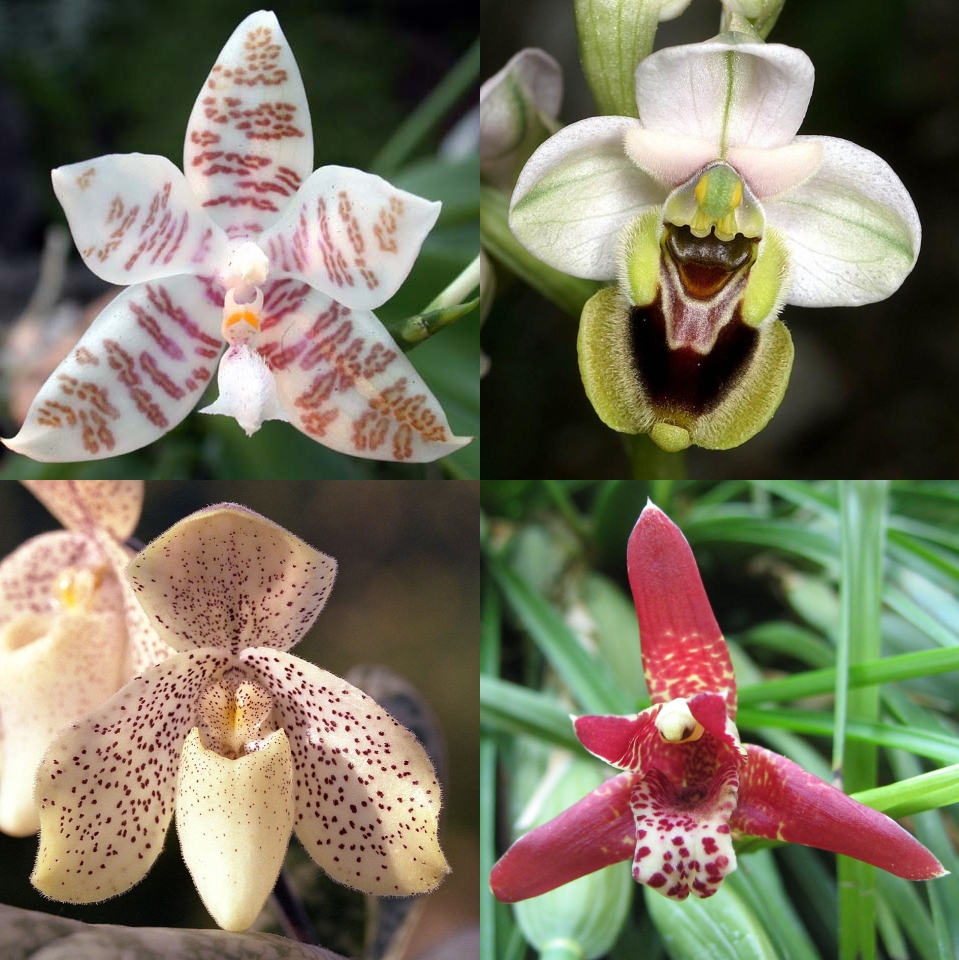 OrchidOrchidaceae
A vast family of colourful, often fragrant flowers found almost everywhere on earth
Orchidaceae · Wildflower
OrchidOrchidaceae
A vast family of colourful, often fragrant flowers found almost everywhere on earth
Orchidaceae · Wildflower
 Vanilla
Climbing orchids with pods used for the world’s most popular flavor
🇲🇽 Mexico and 7 more · Wildflower
Vanilla
Climbing orchids with pods used for the world’s most popular flavor
🇲🇽 Mexico and 7 more · Wildflower
 Orchis
A group of wild orchids with tuberous roots from Europe, North Africa and Asia
🇹🇷 Turkey and 7 more · Wildflower
Orchis
A group of wild orchids with tuberous roots from Europe, North Africa and Asia
🇹🇷 Turkey and 7 more · Wildflower
 Pansy orchidMiltoniopsis
An orchid with flowers that resemble garden pansies
🇨🇷 Costa Rica and 5 more · Orchid
Pansy orchidMiltoniopsis
An orchid with flowers that resemble garden pansies
🇨🇷 Costa Rica and 5 more · Orchid
More from South Africa
All the flowers of South Africa Eucalyptus
The tall, aromatic trees and shrubs known as gum trees or eucalypts
🇦🇺 Australia and 7 more · Flowering tree
Eucalyptus
The tall, aromatic trees and shrubs known as gum trees or eucalypts
🇦🇺 Australia and 7 more · Flowering tree
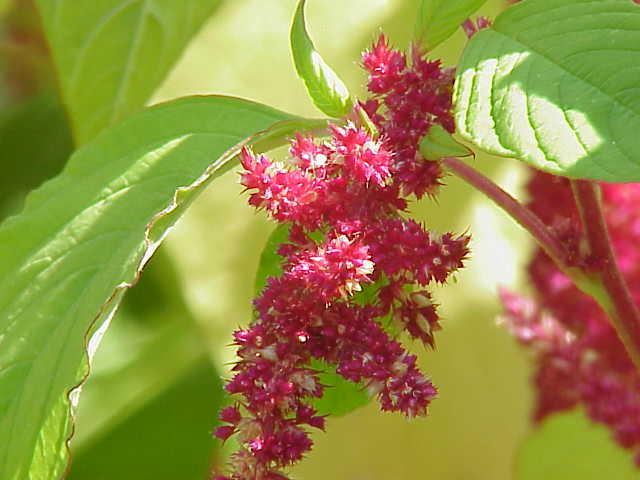 AmaranthAmaranthus
A tall, colourful plant grown for its flowers, leaves and edible seeds
🇲🇽 Mexico and 7 more · Wildflower
AmaranthAmaranthus
A tall, colourful plant grown for its flowers, leaves and edible seeds
🇲🇽 Mexico and 7 more · Wildflower
 Acacia
Shrubs and trees with golden or cream puffball flowers, native mostly to Australia
🇦🇺 Australia and 6 more · Wildflower
Acacia
Shrubs and trees with golden or cream puffball flowers, native mostly to Australia
🇦🇺 Australia and 6 more · Wildflower
 Sensitive PlantMimosa pudica
A touch-sensitive plant whose leaves fold up when disturbed
🇧🇷 Brazil and 8 more · Wildflower
Sensitive PlantMimosa pudica
A touch-sensitive plant whose leaves fold up when disturbed
🇧🇷 Brazil and 8 more · Wildflower