
Donkey orchid
Diuris, family Orchidaceae
Australian orchids with ear-like petals and dangling sepals
Donkey orchids are a genus of over sixty terrestrial orchid species native to Australia, with one species also found in Timor. They have grass-like leaves and bright flowers, often yellow with darker markings, featuring petal shapes that resemble donkey ears and long hanging sepals.
- All but one of over 60 species are endemic to Australia
- Flowers mimic nectar-producing plants but offer no reward
- Most bloom between September and November in Australia
- Some species only flower after a summer bushfire
- Named for their double tail-like sepals and donkey-ear petals
What does Donkey orchid look like?
Donkey orchids are small perennial herbs with one or two tubers and grass-like leaves at the base. Their flowers grow on wiry stalks and are usually yellow with darker markings. Each bloom has two upright, hood-like sepals, two long lateral sepals that hang down like tails, and petal lobes that stick up like donkey ears. The central petal, called the labellum, is folded and often wavy-edged.
Where does Donkey orchid come from?
The genus Diuris was first described in 1798 by James Edward Smith. All but one of its more than sixty species are native to Australia; Diuris fryana also grows wild in Timor. The name comes from Greek words for 'double tail', describing the two hanging sepals. The common name refers to the ear-shaped petals seen in every species.
When and how Donkey orchid blooms
These orchids grow from tubers and appear each year as deciduous plants. Most flower between September and November in Australia, though some bloom as early as June or as late as January. They thrive in varied habitats: in New South Wales they grow among grasses in sclerophyll forests, while in Western Australia they favour moist spots like swamps or granite outcrops. Some species need fire to trigger flowering.


Kinds of Donkey orchid
Over sixty species are accepted, including Diuris brumalis, one of the earliest to bloom, and Diuris monticola, which grows at altitudes up to 1,800 metres. Natural hybrids also occur, such as Diuris × fastidiosa (a cross between D. lanceolata and D. palustris) and Diuris × nebulosa (from D. aurea and D. punctata).
What Donkey orchid means
Donkey orchids do not produce nectar and rarely have scent. Instead, they mimic nectar-rich flowers that bloom at the same time, tricking insects like bees and wasps into visiting them. This deceptive pollination strategy has been confirmed in experiments with Diuris pardina. In fire-prone areas, their tubers survive underground and may only flower after a summer bushfire.
Questions people ask about Donkey orchid
Where do donkey orchids come from?
They are native to Australia, with one species also found in Timor. They grow in all Australian states except the Northern Territory.
Why are they called donkey orchids?
Their petals stick up like donkey ears. The scientific name 'Diuris' means 'double tail', referring to the two hanging sepals.
Do donkey orchids produce nectar?
No. They deceive pollinators by mimicking nectar-rich flowers but offer no food reward, and most have no scent.
When do donkey orchids bloom?
Most flower between September and November in Australia, though some species bloom as early as June or as late as January.
How do fires affect donkey orchids?
Their tubers survive underground during bushfires. Some species, like D. purdiei, only flower after a summer fire.
Good reading and sources
- Encyclopaedia BritannicaArticle
- Plants of the World OnlineRoyal Botanic Gardens, Kew, Plant database
- Where it has been recordedGBIF, Plant database
- Sightings and photos by naturalistsiNaturalist, Plant database
The facts on this page come from the Wikipedia article "Diuris", written by its contributors and used under the CC BY-SA 4.0 licence, and from its Wikidata record (CC0). Phool rewrote the text in its own words, with AI assistance, and compares every page with the article to make sure no passage is copied. It may be reused under the same CC BY-SA 4.0 licence with a link back.
It may contain mistakes. It is not medical or foraging advice: many flowers are poisonous, and traditional uses are reported, not recommended. If something is wrong, tell us. Last refreshed 2026-10-03.
Others in the family Orchidaceae
The whole family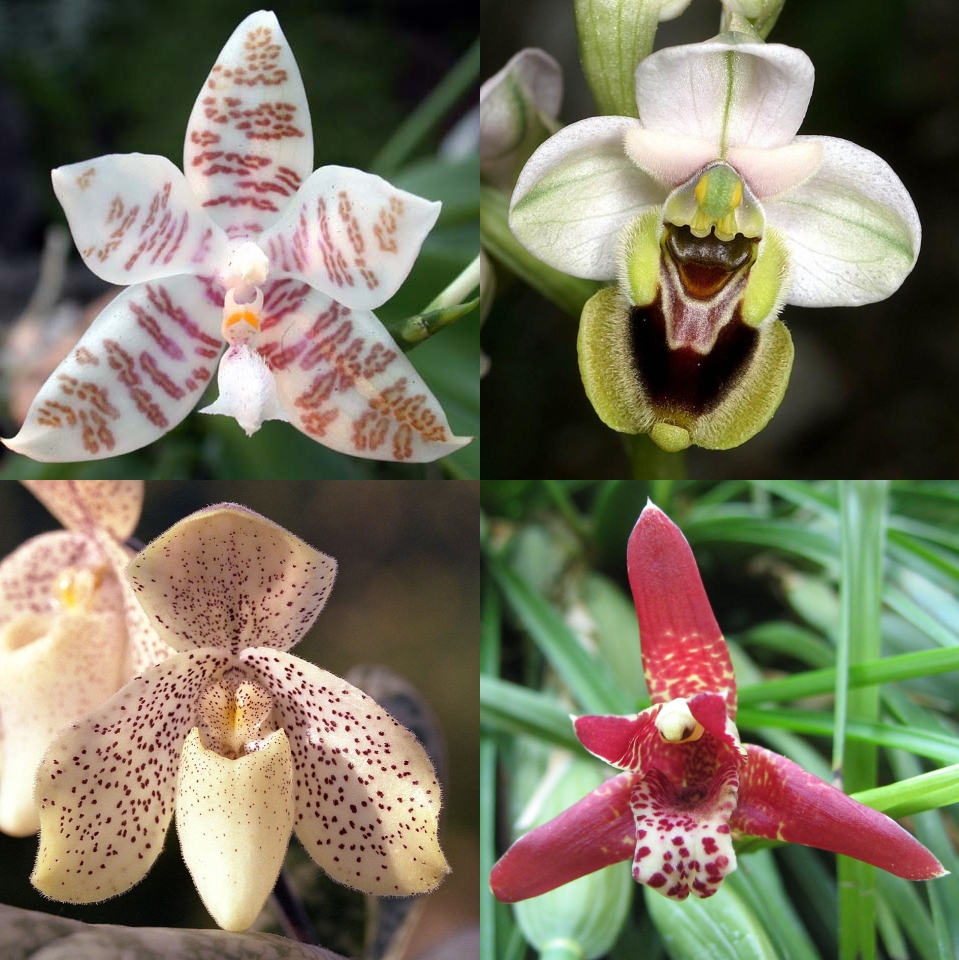 OrchidOrchidaceae
A vast family of colourful, often fragrant flowers found almost everywhere on earth
Orchidaceae · Wildflower
OrchidOrchidaceae
A vast family of colourful, often fragrant flowers found almost everywhere on earth
Orchidaceae · Wildflower
 Vanilla
Climbing orchids with pods used for the world’s most popular flavor
🇲🇽 Mexico and 7 more · Wildflower
Vanilla
Climbing orchids with pods used for the world’s most popular flavor
🇲🇽 Mexico and 7 more · Wildflower
 Orchis
A group of wild orchids with tuberous roots from Europe, North Africa and Asia
🇹🇷 Turkey and 7 more · Wildflower
Orchis
A group of wild orchids with tuberous roots from Europe, North Africa and Asia
🇹🇷 Turkey and 7 more · Wildflower
 Pansy orchidMiltoniopsis
An orchid with flowers that resemble garden pansies
🇨🇷 Costa Rica and 5 more · Orchid
Pansy orchidMiltoniopsis
An orchid with flowers that resemble garden pansies
🇨🇷 Costa Rica and 5 more · Orchid
More from Australia
All the flowers of Australia AlmondPrunus amygdalus
A Mediterranean tree grown for its fragrant spring flowers and edible seeds
🇮🇷 Iran and 6 more · Flowering tree
AlmondPrunus amygdalus
A Mediterranean tree grown for its fragrant spring flowers and edible seeds
🇮🇷 Iran and 6 more · Flowering tree
 FennelFoeniculum vulgare
A tall, aromatic herb with feathery leaves and yellow umbels, used for food and spice
🇨🇳 China and 7 more · Herb or useful flower
FennelFoeniculum vulgare
A tall, aromatic herb with feathery leaves and yellow umbels, used for food and spice
🇨🇳 China and 7 more · Herb or useful flower
 RosemarySalvia rosmarinus
A fragrant evergreen shrub with needle-like leaves and purple, blue, or white flowers
🇪🇸 Spain and 5 more · Flowering shrub
RosemarySalvia rosmarinus
A fragrant evergreen shrub with needle-like leaves and purple, blue, or white flowers
🇪🇸 Spain and 5 more · Flowering shrub
 Eucalyptus
The tall, aromatic trees and shrubs known as gum trees or eucalypts
🇦🇺 Australia and 7 more · Flowering tree
Eucalyptus
The tall, aromatic trees and shrubs known as gum trees or eucalypts
🇦🇺 Australia and 7 more · Flowering tree