
Epacris impressa
A small Australian shrub with tubular red, pink or white flowers
Epacris impressa is a woody shrub from south-eastern Australia, known for its slender, tube-shaped flowers in shades of red, pink, or white. It grows in heathlands and forests, blooms from late autumn to early spring, and is valued as a garden plant and as Victoria’s floral emblem.
- Native to south-eastern Australia, especially Victoria and Tasmania
- Flowers are tubular and come in red, pink, or white
- Pink heath is the floral emblem of Victoria
- Blooms from late autumn to early spring
- Attracts honeyeater birds and butterflies
What does Epacris impressa look like?
Epacris impressa is a woody shrub that usually stands between half a metre and one metre tall, though it can sometimes grow taller. Its branches are stiff, with small, pointed leaves. The flowers are narrow and tubular, about 1–2 cm long, and cluster densely along the stems. They come in red, pink, or white, and often different colours grow side by side. The fruit is a small, round capsule that splits open to release tiny seeds.
Where does Epacris impressa come from?
This plant is native to the coastal and foothill regions of south-eastern Australia, including Victoria, Tasmania, South Australia, and southern New South Wales. It was first collected in Tasmania by Jacques Labillardière in 1793 and formally described in 1805. Over time, botanists described several similar plants as separate species, but these are now all considered forms of Epacris impressa. The plant shows a lot of variation in flower colour and shape across its range.
When and how Epacris impressa blooms
Epacris impressa blooms from late autumn through early spring. It grows in a range of habitats, from heathland and woodland to rocky outcrops, and can be found from sea level up to 1,200 metres. The plant can regenerate after fire by sprouting or from seed. In gardens, it is valued but can be difficult to propagate reliably.


How Epacris impressa is used
People grow Epacris impressa for its attractive flowers and as a garden shrub, though it is not widely used due to propagation challenges. The pink-flowered form is especially significant in Victoria, where it is the state’s floral emblem. Honeyeater birds and insects visit the flowers for nectar, helping pollinate the plant.
Kinds of Epacris impressa
There are several naturally occurring forms, mainly differing in flower colour and length. These include white, pink, and scarlet races, as well as a taller form called Grampians heath. Mixed populations with more than one flower type are common, and genetic studies show a high level of diversity within the species.
What Epacris impressa means
The pink-flowered Epacris impressa is the official floral emblem of Victoria. It has been grown in gardens since the early 19th century, and over seventy named cultivars have been developed, though most are no longer in cultivation. The plant is also important for local wildlife, especially honeyeater birds.
Questions people ask about Epacris impressa
Where does Epacris impressa come from?
Epacris impressa is native to south-eastern Australia, including Victoria, Tasmania, South Australia, and southern New South Wales. It grows in heathlands, woodlands, and rocky areas.
What does Epacris impressa look like?
It is a small, woody shrub with stiff branches and small pointed leaves. The flowers are narrow, tubular, and cluster along the stems, appearing in red, pink, or white.
When does Epacris impressa flower?
The plant usually blooms from late autumn through early spring, with flower clusters appearing along the stems during this period.
Why is Epacris impressa important in Victoria?
The pink-flowered form, known as pink heath, is the floral emblem of Victoria and holds special cultural significance in the state.
How is Epacris impressa used?
It is grown as a garden shrub for its attractive flowers and is valued for its role in supporting local birds and insects. Its use in horticulture is limited by difficulties in propagation.
Good reading and sources
- Victoria - Floral EmblemsAustralian National Botanic Gardens, Article
- Plants of the World OnlineRoyal Botanic Gardens, Kew, Plant database
- Where it has been recordedGBIF, Plant database
- Sightings and photos by naturalistsiNaturalist, Plant database
- Epacris impressa on WikipediaEncyclopedia
- More photos on Wikimedia CommonsPhotos
- Wikidata recordOpen data
The facts on this page come from the Wikipedia article "Epacris impressa", written by its contributors and used under the CC BY-SA 4.0 licence, and from its Wikidata record (CC0). Phool rewrote the text in its own words, with AI assistance, and compares every page with the article to make sure no passage is copied. It may be reused under the same CC BY-SA 4.0 licence with a link back.
It may contain mistakes. It is not medical or foraging advice: many flowers are poisonous, and traditional uses are reported, not recommended. If something is wrong, tell us. Last refreshed 2026-10-03.
Others in the family Ericaceae
The whole family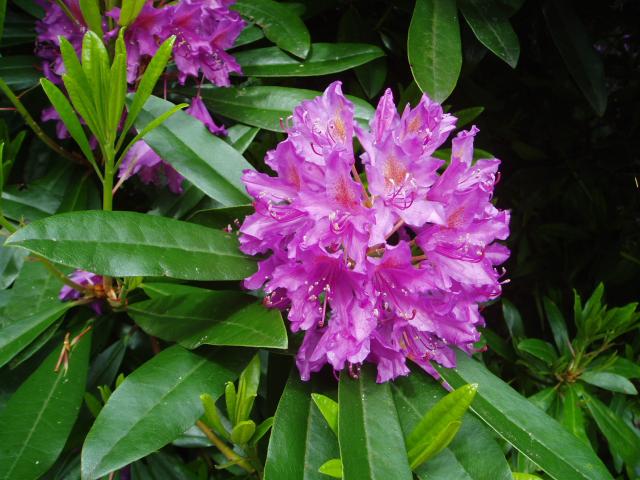 Rhododendron
A vast group of shrubs and trees with showy blooms in many colours
🇳🇵 Nepal and 4 more · Wildflower
Rhododendron
A vast group of shrubs and trees with showy blooms in many colours
🇳🇵 Nepal and 4 more · Wildflower
 Erica
Evergreen shrubs with tiny needle leaves and nodding flowers, known as heaths or heathers
🇿🇦 South Africa and 1 more · Wildflower
Erica
Evergreen shrubs with tiny needle leaves and nodding flowers, known as heaths or heathers
🇿🇦 South Africa and 1 more · Wildflower
 Catawba rosebayRhododendron catawbiense
A spring-flowering rhododendron native to the southern Appalachian Mountains
🇺🇸 United States · Wildflower
Catawba rosebayRhododendron catawbiense
A spring-flowering rhododendron native to the southern Appalachian Mountains
🇺🇸 United States · Wildflower
 Common rhododendronRhododendron ponticum
A dense evergreen shrub with violet-purple flowers from Europe and the Caucasus
🇵🇹 Portugal and 6 more · Flowering shrub
Common rhododendronRhododendron ponticum
A dense evergreen shrub with violet-purple flowers from Europe and the Caucasus
🇵🇹 Portugal and 6 more · Flowering shrub
More from Australia
All the flowers of Australia AlmondPrunus amygdalus
A Mediterranean tree grown for its fragrant spring flowers and edible seeds
🇮🇷 Iran and 6 more · Flowering tree
AlmondPrunus amygdalus
A Mediterranean tree grown for its fragrant spring flowers and edible seeds
🇮🇷 Iran and 6 more · Flowering tree
 FennelFoeniculum vulgare
A tall, aromatic herb with feathery leaves and yellow umbels, used for food and spice
🇨🇳 China and 7 more · Herb or useful flower
FennelFoeniculum vulgare
A tall, aromatic herb with feathery leaves and yellow umbels, used for food and spice
🇨🇳 China and 7 more · Herb or useful flower
 RosemarySalvia rosmarinus
A fragrant evergreen shrub with needle-like leaves and purple, blue, or white flowers
🇪🇸 Spain and 5 more · Flowering shrub
RosemarySalvia rosmarinus
A fragrant evergreen shrub with needle-like leaves and purple, blue, or white flowers
🇪🇸 Spain and 5 more · Flowering shrub
 Eucalyptus
The tall, aromatic trees and shrubs known as gum trees or eucalypts
🇦🇺 Australia and 7 more · Flowering tree
Eucalyptus
The tall, aromatic trees and shrubs known as gum trees or eucalypts
🇦🇺 Australia and 7 more · Flowering tree