
Snake's head fritillary
Fritillaria meleagris, family Liliaceae
A spring bulb with chequered purple or white bell-shaped flowers
Snake's head fritillary is a bulbous perennial from damp meadows in Europe and western Asia. Its nodding flowers show a chequered pattern in purple or sometimes pure white. Once common in wild meadows, it is now mostly grown in gardens and is a symbol in parts of Sweden, Croatia, and England.
- Flowers have a chequered purple or pure white pattern
- Native to damp meadows in Europe and western Asia
- Chosen as the county flower of Oxfordshire, England
- Official flower of Uppland province, Sweden
- All parts of the plant are poisonous
What does Snake's head fritillary look like?
Snake's head fritillary grows 15 to 40 cm tall from a small, button-shaped bulb. Its most striking feature is the nodding, bell-shaped flower, which shows a chequered pattern in shades of purple or, less often, pure white. The plant has slender stems and narrow leaves. The flowers appear in early to mid-spring and are carried singly on each stem. All parts of the plant contain poisonous alkaloids.
Where does Snake's head fritillary come from?
This plant is native to damp grasslands and river meadows across Europe and western Asia, including the floodplains of Xinjiang. It is now rare in the wild in many places, partly due to habitat loss. In the United Kingdom, it is debated whether it is truly native or a long-established garden escapee. The flower is closely tied to ancient meadows and has become a symbol in regions like Uppland in Sweden and parts of Croatia.
When and how Snake's head fritillary blooms
Snake's head fritillary blooms from March to May. It grows best in moist, well-drained soils of grasslands and meadows, often in areas that flood in winter. Gardeners plant the bulbs in autumn, and the plant naturalizes well in lawns, borders, and wildflower meadows. It is sold as a mixture of purple and white forms, including a pure white variety recognized by horticultural societies.


How Snake's head fritillary is used
People grow this fritillary in gardens, borders, containers, and wildflower meadows for its unusual chequered flowers. In the past, it was picked and sold as a cut flower in English markets. It is now a county flower in Oxfordshire and the official flower of Uppland, Sweden. The village of Ducklington in England holds a 'Fritillary Sunday' festival to celebrate its bloom.
Kinds of Snake's head fritillary
The most notable variety is Fritillaria meleagris var. unicolor subvar. alba, which has pure white flowers. Gardeners can find mixtures of purple and white-flowered plants. The species has gained awards for garden merit and is available in several cultivated forms.
What Snake's head fritillary means
The chequered fritillary is a symbol of Uppland, Sweden, and is linked to Croatian national identity. In England, it is the county flower of Oxfordshire and features in local festivals. Its unique pattern inspired the name 'snake's head' and is referenced in literature, such as Shakespeare's 'Venus and Adonis.' The plant is considered endangered in the wild in some areas due to habitat loss.
Questions people ask about Snake's head fritillary
Where does the snake's head fritillary come from?
It is native to damp grasslands and river meadows across Europe and western Asia, including parts of Xinjiang. It is now rare in the wild in many places but is widely grown in gardens.
What does the snake's head fritillary look like?
It grows 15–40 cm tall and has nodding, bell-shaped flowers with a chequered pattern in purple or sometimes pure white. The plant has slender stems and narrow leaves.
Is the snake's head fritillary poisonous?
Yes, all parts of the plant contain poisonous alkaloids. It should not be eaten.
What does the snake's head fritillary symbolise?
It is a symbol of Uppland in Sweden, is associated with Croatian identity, and is the county flower of Oxfordshire, England. Its unique pattern has inspired names and appearances in literature.
How is the snake's head fritillary used?
It is grown as an ornamental bulb in gardens, meadows, and containers. In the past, it was sold as a cut flower. It is also celebrated in festivals and as a regional emblem.
Good reading and sources
- Encyclopaedia BritannicaArticle
- BBC Radio 4 - Mabey in the Wild, Series 1, Snake's Head FritillaryBBC, Article
- Plants of the World OnlineRoyal Botanic Gardens, Kew, Plant database
- Where it has been recordedGBIF, Plant database
- Sightings and photos by naturalistsiNaturalist, Plant database
- Fritillaria meleagris on WikipediaEncyclopedia
- More photos on Wikimedia CommonsPhotos
- Wikidata recordOpen data
The facts on this page come from the Wikipedia article "Fritillaria meleagris", written by its contributors and used under the CC BY-SA 4.0 licence, and from its Wikidata record (CC0). Phool rewrote the text in its own words, with AI assistance, and compares every page with the article to make sure no passage is copied. It may be reused under the same CC BY-SA 4.0 licence with a link back.
It may contain mistakes. It is not medical or foraging advice: many flowers are poisonous, and traditional uses are reported, not recommended. If something is wrong, tell us. Last refreshed 2026-10-03.
Others in the family Liliaceae
The whole family TulipTulipa
Spring-blooming bulbs with showy, cup-shaped flowers in many colours
🇳🇱 Netherlands and 7 more · Wildflower
TulipTulipa
Spring-blooming bulbs with showy, cup-shaped flowers in many colours
🇳🇱 Netherlands and 7 more · Wildflower
 LilyLilium
Tall bulb flowers with large, colourful blooms in many gardens and cultures
Lilium · Wildflower
LilyLilium
Tall bulb flowers with large, colourful blooms in many gardens and cultures
Lilium · Wildflower
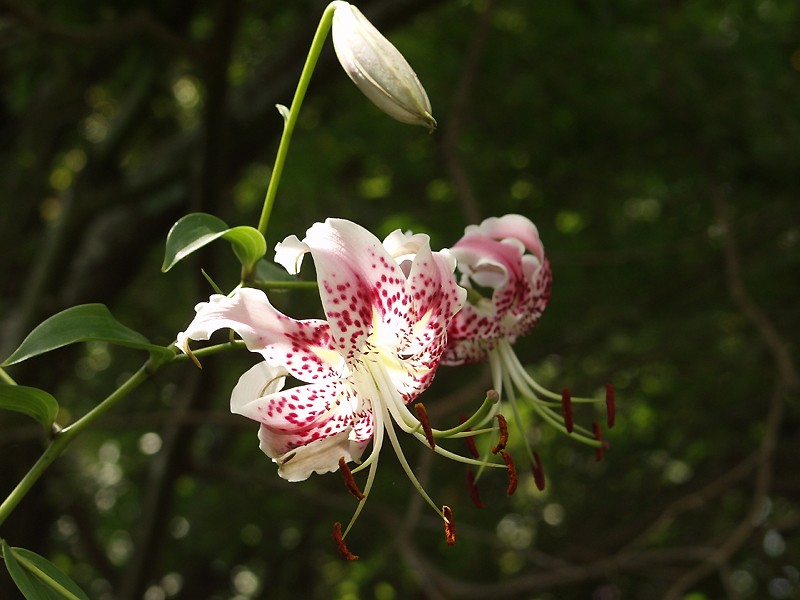 Lilium speciosum
A late-summer lily with fragrant white to pink flowers from East Asia
🇯🇵 Japan and 2 more · Wildflower
Lilium speciosum
A late-summer lily with fragrant white to pink flowers from East Asia
🇯🇵 Japan and 2 more · Wildflower
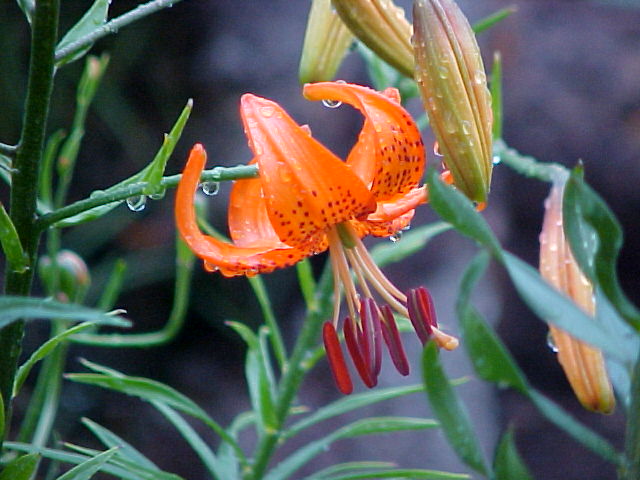 Lilium davidii
A tall Asian lily with edible bulbs and orange recurved flowers
🇨🇳 China and 1 more · Wildflower
Lilium davidii
A tall Asian lily with edible bulbs and orange recurved flowers
🇨🇳 China and 1 more · Wildflower
More from the United Kingdom
All the flowers of the United Kingdom Narcissus
Spring-flowering bulbs with trumpet-shaped blooms in white, yellow, and orange
🇬🇧 United Kingdom and 7 more · Wildflower
Narcissus
Spring-flowering bulbs with trumpet-shaped blooms in white, yellow, and orange
🇬🇧 United Kingdom and 7 more · Wildflower
 HawthornCrataegus
A thorny shrub or tree with white or pink spring flowers and small edible fruits
🇮🇪 Ireland and 7 more · Wildflower
HawthornCrataegus
A thorny shrub or tree with white or pink spring flowers and small edible fruits
🇮🇪 Ireland and 7 more · Wildflower
 BlackthornPrunus spinosa
A spiny shrub with white spring flowers and tart blue-black fruit
🇬🇧 United Kingdom and 7 more · Wildflower
BlackthornPrunus spinosa
A spiny shrub with white spring flowers and tart blue-black fruit
🇬🇧 United Kingdom and 7 more · Wildflower
 Common poppyPapaver rhoeas
The vivid red wildflower of fields and remembrance
🇨🇳 China and 7 more · Wildflower
Common poppyPapaver rhoeas
The vivid red wildflower of fields and remembrance
🇨🇳 China and 7 more · Wildflower