
Rattlesnake plantain
Goodyera, family Orchidaceae
A widespread orchid with patterned leaves and small white flowers
Rattlesnake plantain is a genus of terrestrial orchids with a rosette of asymmetrical, green leaves marked in white or pale green. It produces many small, white, resupinate flowers on a single stem and grows across several continents.
- Leaves are green with white or pale green veining
- Flowers are small, white and resupinate
- Grows from a creeping rhizome
- Found from Europe to the Pacific islands
- First described in 1813 by Robert Brown
What does Rattlesnake plantain look like?
Plants in this group form a loose cluster of leaves close to the ground. The leaves are oval, uneven in shape, and show pale markings against a green background. A single upright stem carries numerous tiny white flowers that twist so the lip faces downward. All parts except the blooms have a faint stickiness from fine hairs.
Where does Rattlesnake plantain come from?
The genus Goodyera was first described scientifically in 1813 by Robert Brown, with the account appearing in William Aiton’s Hortus Kewensis. Its greatest variety occurs in East Asia, though it appears across a vast range including Europe, the Americas, Australia, and many islands from the Indian to the Pacific Ocean.
When and how Rattlesnake plantain blooms
These orchids grow from a fleshy, spreading underground stem called a rhizome. They send up a flowering stalk bearing many small blooms. The dorsal sepal and petals arch together over the central column, while the side sepals stretch outward. The lip lacks lobes but holds a shallow pouch.
Kinds of Rattlesnake plantain
Some botanists argue for a tighter definition of the genus, suggesting certain species might belong elsewhere. It is often confused with Spiranthes orchids, but differs in having rhizomes, patterned leaves, and a pouched lip rather than a flat one.
Questions people ask about Rattlesnake plantain
Where does Goodyera come from?
It has a wide distribution across Europe, Madeira, the Americas, Australia, and islands from the western Indian Ocean to the Pacific, with its highest diversity in East Asia.
What does rattlesnake plantain look like?
It has a basal rosette of asymmetrical, green leaves with pale markings and a tall stem bearing many small white flowers that twist so the lip points downward.
How is Goodyera different from Spiranthes?
Goodyera has rhizomes, patterned leaves, and a pouched lip; Spiranthes lacks rhizomes, has plain green leaves, and a flat, non-pouched lip.
When was the genus Goodyera named?
Robert Brown formally described it in 1813, publishing the description in William Aiton’s Hortus Kewensis.
Good reading and sources
- USDA Plants DatabaseUS Department of Agriculture, Article
- Plants of the World OnlineRoyal Botanic Gardens, Kew, Plant database
- Where it has been recordedGBIF, Plant database
- Sightings and photos by naturalistsiNaturalist, Plant database
The facts on this page come from the Wikipedia article "Goodyera", written by its contributors and used under the CC BY-SA 4.0 licence, and from its Wikidata record (CC0). Phool rewrote the text in its own words, with AI assistance, and compares every page with the article to make sure no passage is copied. It may be reused under the same CC BY-SA 4.0 licence with a link back.
It may contain mistakes. It is not medical or foraging advice: many flowers are poisonous, and traditional uses are reported, not recommended. If something is wrong, tell us. Last refreshed 2026-10-03.
Others in the family Orchidaceae
The whole family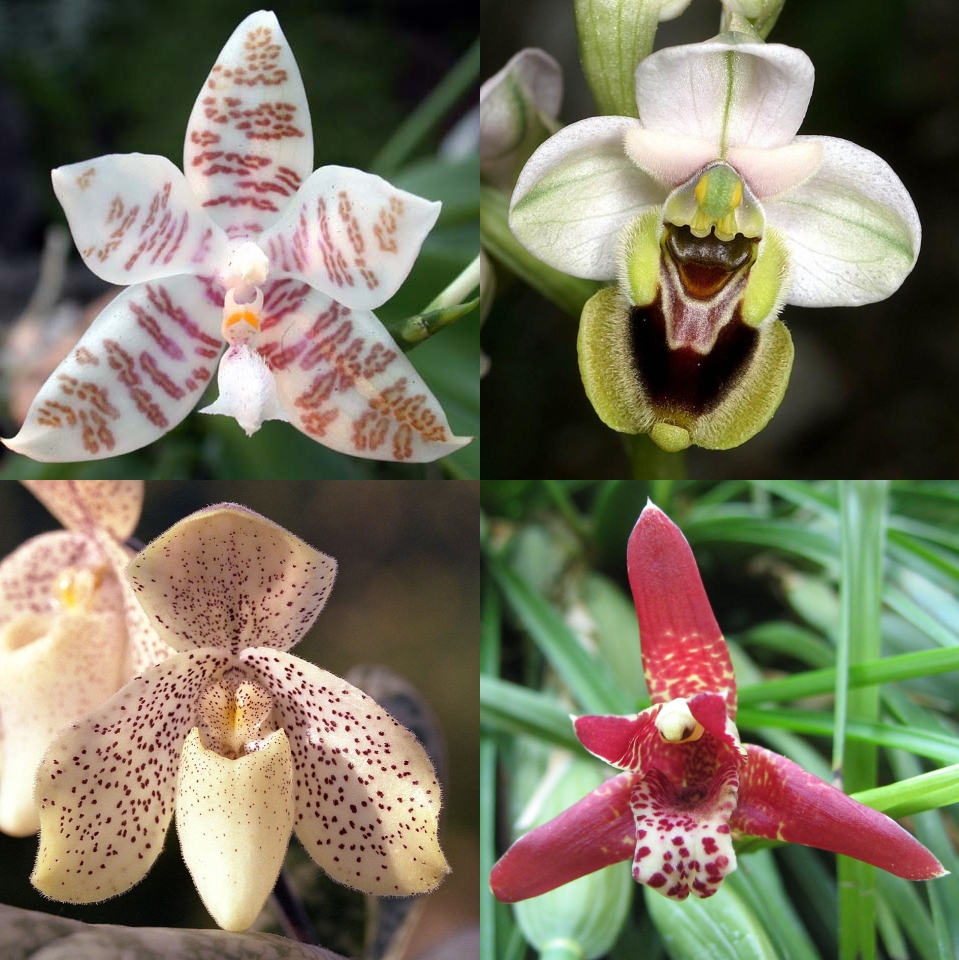 OrchidOrchidaceae
A vast family of colourful, often fragrant flowers found almost everywhere on earth
Orchidaceae · Wildflower
OrchidOrchidaceae
A vast family of colourful, often fragrant flowers found almost everywhere on earth
Orchidaceae · Wildflower
 Vanilla
Climbing orchids with pods used for the world’s most popular flavor
🇲🇽 Mexico and 7 more · Wildflower
Vanilla
Climbing orchids with pods used for the world’s most popular flavor
🇲🇽 Mexico and 7 more · Wildflower
 Orchis
A group of wild orchids with tuberous roots from Europe, North Africa and Asia
🇹🇷 Turkey and 7 more · Wildflower
Orchis
A group of wild orchids with tuberous roots from Europe, North Africa and Asia
🇹🇷 Turkey and 7 more · Wildflower
 Pansy orchidMiltoniopsis
An orchid with flowers that resemble garden pansies
🇨🇷 Costa Rica and 5 more · Orchid
Pansy orchidMiltoniopsis
An orchid with flowers that resemble garden pansies
🇨🇷 Costa Rica and 5 more · Orchid
More from Australia
All the flowers of Australia AlmondPrunus amygdalus
A Mediterranean tree grown for its fragrant spring flowers and edible seeds
🇮🇷 Iran and 6 more · Flowering tree
AlmondPrunus amygdalus
A Mediterranean tree grown for its fragrant spring flowers and edible seeds
🇮🇷 Iran and 6 more · Flowering tree
 FennelFoeniculum vulgare
A tall, aromatic herb with feathery leaves and yellow umbels, used for food and spice
🇨🇳 China and 7 more · Herb or useful flower
FennelFoeniculum vulgare
A tall, aromatic herb with feathery leaves and yellow umbels, used for food and spice
🇨🇳 China and 7 more · Herb or useful flower
 RosemarySalvia rosmarinus
A fragrant evergreen shrub with needle-like leaves and purple, blue, or white flowers
🇪🇸 Spain and 5 more · Flowering shrub
RosemarySalvia rosmarinus
A fragrant evergreen shrub with needle-like leaves and purple, blue, or white flowers
🇪🇸 Spain and 5 more · Flowering shrub
 Eucalyptus
The tall, aromatic trees and shrubs known as gum trees or eucalypts
🇦🇺 Australia and 7 more · Flowering tree
Eucalyptus
The tall, aromatic trees and shrubs known as gum trees or eucalypts
🇦🇺 Australia and 7 more · Flowering tree