
Spanish Bluebell
Hyacinthoides hispanica, family Asparagaceae
A spring bulb with upright blue, pink, or white bell-shaped flowers
Spanish bluebell is a spring-blooming bulb from Portugal and western Spain, grown for its upright stems of bell-shaped flowers in blue, pink, or white. It is popular in gardens and has spread to other regions, sometimes mixing with local bluebell species.
- Native to Portugal and western Spain
- Flowers are blue, pink, or white and stand upright
- Introduced to the UK in the 1600s
- Hybrids with native bluebells can be invasive
- Has little or no scent
What does Spanish Bluebell look like?
Spanish bluebell grows from a bulb and produces upright stems with clusters of bell-shaped flowers. The blooms are usually pale blue, but pink and white forms are also found. Its flowers are larger and stand more upright than those of the common bluebell, and the petals do not all hang to one side. The leaves are broader, and the pollen is blue. Unlike its northern relative, it has little or no fragrance.
Where does Spanish Bluebell come from?
This plant comes from Portugal and western parts of Spain, where it grows wild. It was brought to gardens in Britain in the late 1600s and has since spread to other parts of Europe, North America, and Australia. Over time, it has mixed with the native bluebell in Britain, creating hybrids that are now common and sometimes invasive.
When and how Spanish Bluebell blooms
Spanish bluebell bulbs are planted in autumn and bloom in spring. They prefer well-drained soil and can grow in both sun and partial shade. The plant multiplies by producing new bulbs and by setting seed. Gardeners often grow them for their easy care and showy spring flowers.


How Spanish Bluebell is used
People mainly grow Spanish bluebells in gardens for their spring flowers. They are valued for naturalizing in lawns, under trees, or in borders. In some regions, hybrids with local bluebells have spread beyond gardens and can become invasive, affecting native species.
Kinds of Spanish Bluebell
Besides the typical blue-flowered form, Spanish bluebell also comes in pink and white varieties. Several named cultivars are available for gardens. It is closely related to other bluebells, such as the common bluebell of northwestern Europe and the Italian bluebell from the Mediterranean.
What Spanish Bluebell means
Spanish bluebell is grown mainly for its ornamental value in gardens. In the United Kingdom, its ability to hybridize with the native bluebell has led to concern for the survival of the local species. The hybrids are fertile and can spread widely, sometimes outcompeting native bluebells.
Where to see Spanish Bluebell
Questions people ask about Spanish Bluebell
Where does the Spanish bluebell come from?
Spanish bluebell grows wild in Portugal and western Spain. It has also been introduced to gardens and naturalized in other regions, including the United Kingdom, North America, and Australia.
How does Spanish bluebell differ from the common bluebell?
Spanish bluebell has larger, paler flowers that stand upright, broader leaves, and blue pollen. Unlike the common bluebell, its blooms do not all droop to one side and it has little or no scent.
What colors do Spanish bluebells come in?
The flowers are most often blue, but pink and white forms are also found. Gardeners can choose from several named varieties in these colors.
What is the main use of Spanish bluebell?
People mainly grow Spanish bluebell as a garden plant for its attractive spring flowers. It is valued for naturalizing in lawns and borders.
Does Spanish bluebell have any cultural or symbolic meaning?
The sources do not mention any particular symbolism for Spanish bluebell, but in the United Kingdom, its tendency to hybridize with native bluebells has raised conservation concerns.
Good reading and sources
- Encyclopaedia BritannicaArticle
- Facts about bluebellsNational Trust, Article
- USDA Plants DatabaseUS Department of Agriculture, Article
- Plants of the World OnlineRoyal Botanic Gardens, Kew, Plant database
- Where it has been recordedGBIF, Plant database
- Sightings and photos by naturalistsiNaturalist, Plant database
- Hyacinthoides hispanica on WikipediaEncyclopedia
- More photos on Wikimedia CommonsPhotos
- Wikidata recordOpen data
The facts on this page come from the Wikipedia article "Hyacinthoides hispanica", written by its contributors and used under the CC BY-SA 4.0 licence, and from its Wikidata record (CC0). Phool rewrote the text in its own words, with AI assistance, and compares every page with the article to make sure no passage is copied. It may be reused under the same CC BY-SA 4.0 licence with a link back.
It may contain mistakes. It is not medical or foraging advice: many flowers are poisonous, and traditional uses are reported, not recommended. If something is wrong, tell us. Last refreshed 2026-10-03.
Others in the family Asparagaceae
The whole family Lily-of-the-valleyConvallaria majalis
A woodland plant with sweet-scented white bell flowers in late spring
🇫🇮 Finland and 4 more · Wildflower
Lily-of-the-valleyConvallaria majalis
A woodland plant with sweet-scented white bell flowers in late spring
🇫🇮 Finland and 4 more · Wildflower
 HyacinthHyacinthus
A spring-blooming bulb with fragrant, colourful flower spikes
🇹🇷 Turkey and 7 more · Bulb flower
HyacinthHyacinthus
A spring-blooming bulb with fragrant, colourful flower spikes
🇹🇷 Turkey and 7 more · Bulb flower
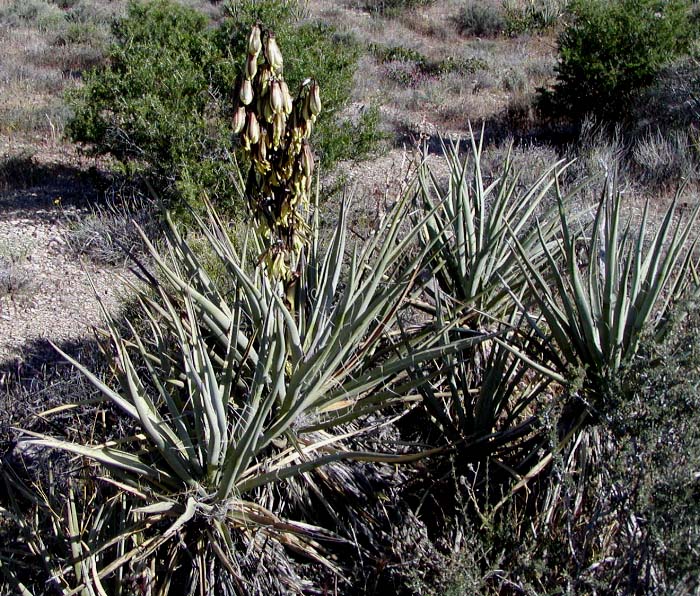 Yucca
Dry-climate plants with pointed leaves and clusters of creamy white flowers
🇲🇽 Mexico and 4 more · Wildflower
Yucca
Dry-climate plants with pointed leaves and clusters of creamy white flowers
🇲🇽 Mexico and 4 more · Wildflower
 Ornithogalum thyrsoides
A white, long-lasting bulb flower from South Africa’s Cape Province
🇿🇦 South Africa · Bulb flower
Ornithogalum thyrsoides
A white, long-lasting bulb flower from South Africa’s Cape Province
🇿🇦 South Africa · Bulb flower
More from Spain
All the flowers of Spain PeachPrunus persica
A flowering fruit tree from China, grown for its pink blossoms and sweet fruit
🇨🇳 China and 7 more · Flowering tree
PeachPrunus persica
A flowering fruit tree from China, grown for its pink blossoms and sweet fruit
🇨🇳 China and 7 more · Flowering tree
 AlmondPrunus amygdalus
A Mediterranean tree grown for its fragrant spring flowers and edible seeds
🇮🇷 Iran and 6 more · Flowering tree
AlmondPrunus amygdalus
A Mediterranean tree grown for its fragrant spring flowers and edible seeds
🇮🇷 Iran and 6 more · Flowering tree
 ApricotPrunus armeniaca
A small fruit tree with early white to pink blossoms and golden-orange fruit
🇨🇳 China and 6 more · Flowering tree
ApricotPrunus armeniaca
A small fruit tree with early white to pink blossoms and golden-orange fruit
🇨🇳 China and 6 more · Flowering tree
 RosemarySalvia rosmarinus
A fragrant evergreen shrub with needle-like leaves and purple, blue, or white flowers
🇪🇸 Spain and 5 more · Flowering shrub
RosemarySalvia rosmarinus
A fragrant evergreen shrub with needle-like leaves and purple, blue, or white flowers
🇪🇸 Spain and 5 more · Flowering shrub