
Bigleaf Hydrangea
Hydrangea macrophylla, family Hydrangeaceae
A Japanese shrub with large pink or blue flower heads that change colour with soil
Bigleaf Hydrangea is a deciduous shrub from Japan, grown for its large, showy flower heads that range from pink to blue depending on soil pH. It blooms from early summer into autumn and is widely cultivated in gardens around the world, with two main forms: mophead and lacecap.
- Flower colour changes with soil pH: blue in acidic, pink in alkaline soils
- Native to coastal Japan, now grown worldwide as an ornamental shrub
- Two main forms: mophead (rounded) and lacecap (flat) flower heads
- Leaves are used in Japan to make a traditional sweet tea called amacha
- All parts of the plant are toxic if eaten
What does Bigleaf Hydrangea look like?
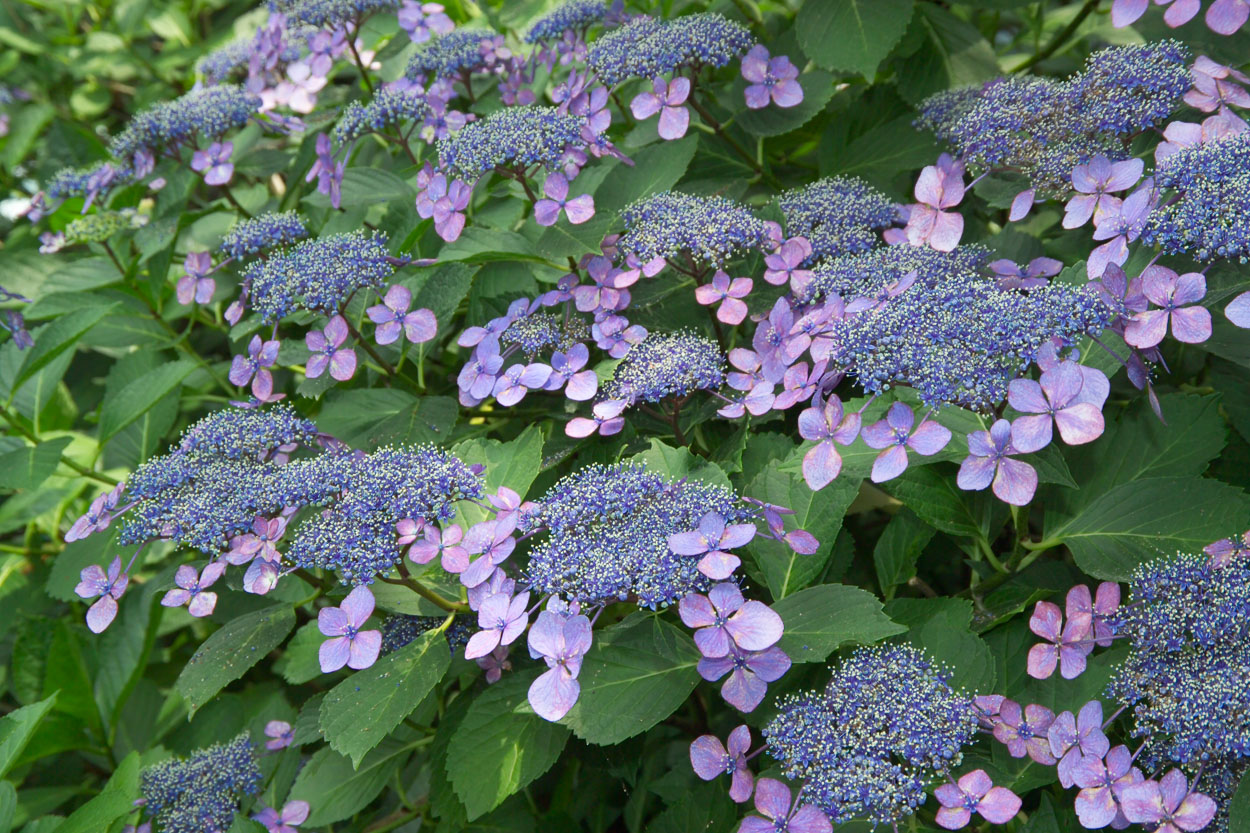
Bigleaf Hydrangea is a leafy shrub that can reach up to 3 meters tall and 2.5 meters wide. Its leaves are large, oval, and have serrated edges. The plant produces rounded or flat clusters of flowers, with colours ranging from blue and purple to pink and red. In wild plants, the flower heads are flat (lacecap), with small fertile flowers in the centre and a ring of larger, showy sterile flowers. Cultivated forms often have globe-shaped (mophead) clusters made up of mostly large, sterile flowers.
Where does Bigleaf Hydrangea come from?
This hydrangea is native and unique to coastal regions of Japan, from Honshu southward. It grows wild in these areas and was later introduced to gardens worldwide. The name 'macrophylla' refers to its large leaves. Over time, it has become naturalised in places like China, Korea, New Zealand, and parts of the Americas. Some forms in the wild were once considered varieties, but today Hydrangea macrophylla is treated as a single species.
When and how Bigleaf Hydrangea blooms
Flowering starts in early summer and can last into early winter. The plant prefers moist, well-drained soil and partial shade. Its flower colour depends on the soil's acidity: acidic soils produce blue flowers, while alkaline soils result in pink or red blooms. Gardeners often select from hundreds of cultivars, mainly in two groups: mophead, with globe-shaped flower heads, and lacecap, with flat flower heads surrounded by showy sterile flowers.


How Bigleaf Hydrangea is used
Bigleaf Hydrangea is mainly grown as an ornamental shrub in gardens and as a cut flower. In Japan, a traditional sweet tea called amacha is made from the fermented leaves of a variety of this plant. The leaves are also processed for use in herbal medicine. However, parts of the plant are toxic if ingested. The shrub is valued for its long season of colourful blooms and is sometimes chosen for fire-safe landscaping.
Kinds of Bigleaf Hydrangea
There are over 500 cultivars of Bigleaf Hydrangea, mainly divided into mophead and lacecap types. Mophead hydrangeas have large, rounded flower heads of mostly sterile flowers, while lacecap types keep the wild form with a flat cluster of small fertile flowers surrounded by larger sterile ones. Some cultivars are hybrids with Hydrangea serrata, bred for cold tolerance or more intense colours.
What Bigleaf Hydrangea means
Bigleaf Hydrangea is a popular garden plant in many countries and is especially associated with Japanese gardens. Its ability to change flower colour with soil pH has made it a subject of gardening interest. The plant is used in Japanese tea ceremonies (amacha) and has been awarded by horticultural societies for its ornamental value. Some regions consider it invasive, so it is managed carefully outside its native range.
Where Bigleaf Hydrangea is used and seen
 Da LatVietnam’s highland city famous for flowers, cool climate, and French villas
 Powell GardensA 970-acre botanical garden near Kansas City, Missouri
 KanzashiTraditional Japanese hair ornaments, often crafted as folded silk flowers
 Cut flowersFresh flowers and buds trimmed for decoration and display
 Flower gardenA garden space planted and arranged for flowering plants and seasonal blooms
 Wojsławice ArboretumA vast botanical garden in southwest Poland with major rhododendron and daylily collections
 Buddha's BirthdayA festival marking the birth of Gautama Buddha, celebrated across Asia in spring
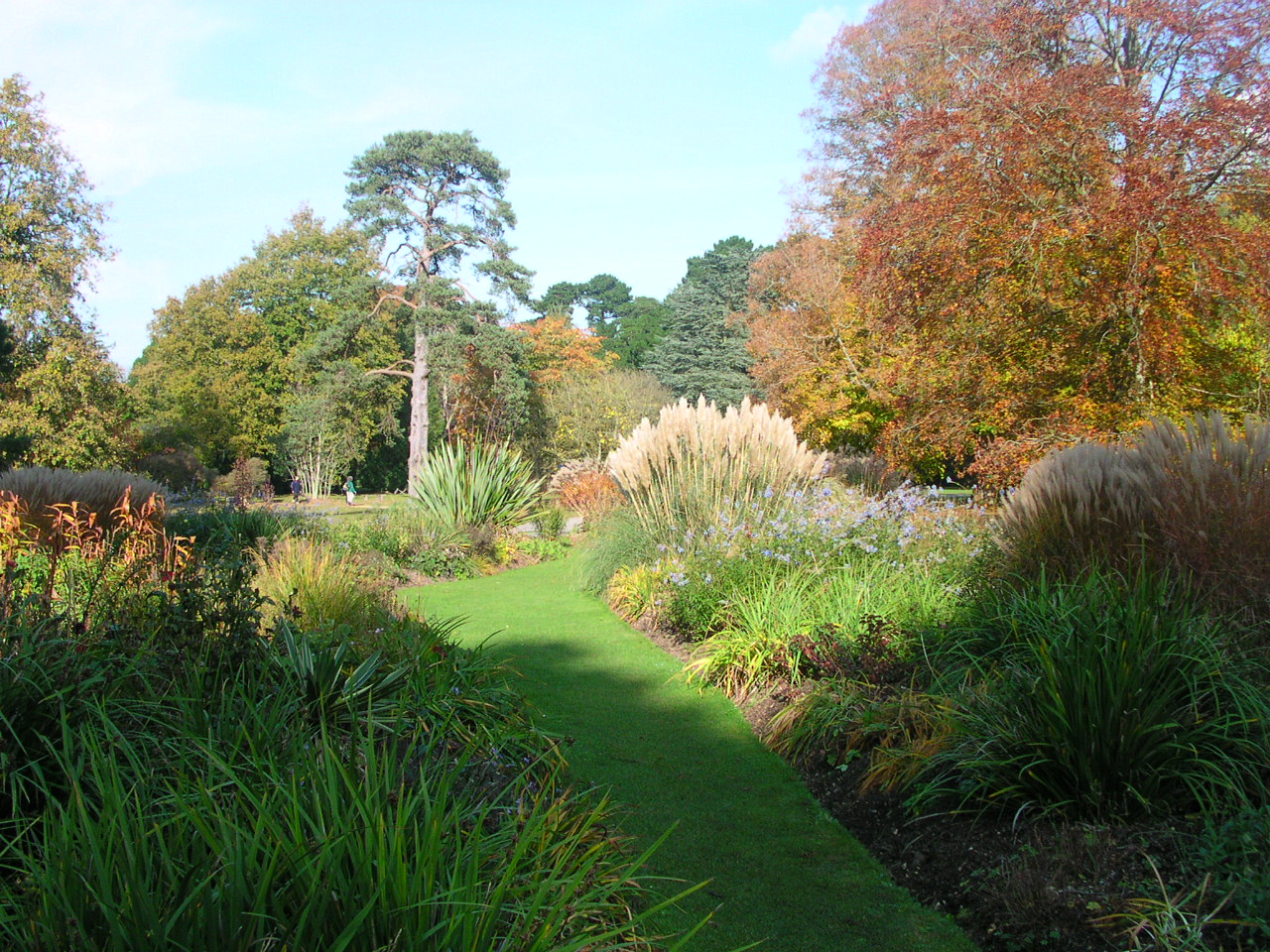 Exbury GardensA woodland garden in Hampshire with famous collections of flowering shrubs
Traditions that use it
Where to see Bigleaf Hydrangea
 🇯🇵 Kyoto · Mar to AprPhilosopher's Path in cherry seasonA canal-side walk of about two kilometres in eastern Kyoto, lined with cherry trees.
 🇯🇵 Kamakura · JuneHydrangea temples of KamakuraIn the rainy season, temple paths in Kamakura are lined with blue and violet hydrangeas.
 🇹🇼 Taipei · Feb to MayYangmingshan flower season and the calla lilies of ZhuzihuCherry and azalea on the mountain above Taipei, then white calla lilies in a farmed valley.
🇻🇳 Da Lat · Jan to DecDa Lat, city of flowersA cool highland town that grows much of Vietnam's cut flowers and holds a flower festival.
🇹🇼 Taipei · Feb to MayYangmingshan flower season and the calla lilies of ZhuzihuCherry and azalea on the mountain above Taipei, then white calla lilies in a farmed valley.
🇻🇳 Da Lat · Jan to DecDa Lat, city of flowersA cool highland town that grows much of Vietnam's cut flowers and holds a flower festival. 🇮🇩 Ubud · All yearMake canang sari in BaliLearn to weave the small palm-leaf and flower offerings that Balinese Hindus lay out every day.
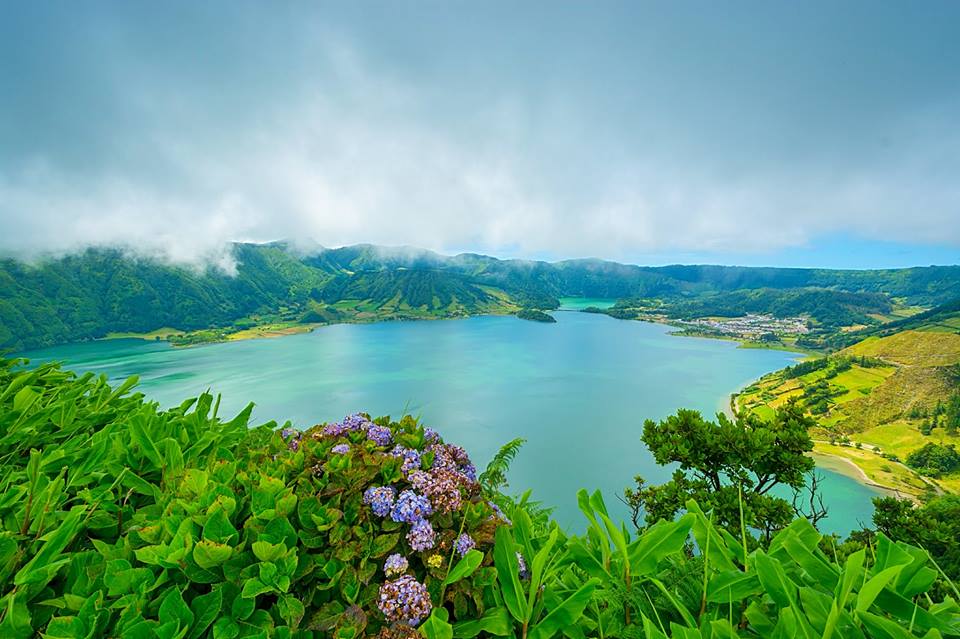 🇵🇹 Ponta Delgada · Jun to AugHydrangea hedges of the AzoresCountry roads on São Miguel and Faial lined for miles with blue hydrangea hedges in the Atlantic summer.
Questions people ask about Bigleaf Hydrangea
Where does Bigleaf Hydrangea come from?
Bigleaf Hydrangea is native to coastal regions of Japan, from Honshu southwards. It has since been introduced and naturalised in other countries, including China, Korea, New Zealand, and parts of the Americas.
Why do the flowers change colour?
The flower colour of Bigleaf Hydrangea depends on the soil's pH. Acidic soils (pH below 7) make the flowers blue, while alkaline soils (pH above 7) turn them pink or red. This is due to changes in the pigments in the presence of certain metal ions.
What are the main types of Bigleaf Hydrangea?
There are two main types: mophead hydrangeas, which have large, rounded flower heads of mostly sterile flowers, and lacecap hydrangeas, which have flat flower heads with a ring of large sterile flowers around small fertile ones.
Is Bigleaf Hydrangea used for anything besides gardens?
Yes, in Japan, the leaves of a variety of Bigleaf Hydrangea are fermented to make a sweet tea called amacha. The leaves are also processed for use in herbal medicine, though the plant itself is toxic if eaten.
Is Bigleaf Hydrangea toxic?
Yes, all parts of the Bigleaf Hydrangea plant are toxic if ingested, so it should not be eaten. Despite this, its leaves are specially processed for traditional uses in Japan.
Good reading and sources
- Encyclopaedia BritannicaArticle
- Plants of the World OnlineRoyal Botanic Gardens, Kew, Plant database
- Where it has been recordedGBIF, Plant database
- Sightings and photos by naturalistsiNaturalist, Plant database
- Hydrangea macrophylla on WikipediaEncyclopedia
- More photos on Wikimedia CommonsPhotos
- Wikidata recordOpen data
The facts on this page come from the Wikipedia article "Hydrangea macrophylla", written by its contributors and used under the CC BY-SA 4.0 licence, and from its Wikidata record (CC0). Phool rewrote the text in its own words, with AI assistance, and compares every page with the article to make sure no passage is copied. It may be reused under the same CC BY-SA 4.0 licence with a link back.
It may contain mistakes. It is not medical or foraging advice: many flowers are poisonous, and traditional uses are reported, not recommended. If something is wrong, tell us. Last refreshed 2026-10-03.
Others in the family Hydrangeaceae
The whole family Hydrangea
Flowering shrubs with large heads that change color with soil pH
🇯🇵 Japan and 2 more · Flowering shrub
Hydrangea
Flowering shrubs with large heads that change color with soil pH
🇯🇵 Japan and 2 more · Flowering shrub
 Deutzia
Shrubs with white or pink spring flowers, grown in gardens and parks
🇯🇵 Japan and 4 more · Flowering shrub
Deutzia
Shrubs with white or pink spring flowers, grown in gardens and parks
🇯🇵 Japan and 4 more · Flowering shrub
 Mountain hydrangeaHydrangea serrata
A compact shrub with blue or pink lacy flower clusters from Korea and Japan
🇯🇵 Japan · Flowering shrub
Mountain hydrangeaHydrangea serrata
A compact shrub with blue or pink lacy flower clusters from Korea and Japan
🇯🇵 Japan · Flowering shrub
 Sweet mock orangePhiladelphus coronarius
A fragrant white-flowered shrub from the Caucasus and Turkey, grown in gardens
🇹🇷 Turkey and 7 more · Flowering shrub
Sweet mock orangePhiladelphus coronarius
A fragrant white-flowered shrub from the Caucasus and Turkey, grown in gardens
🇹🇷 Turkey and 7 more · Flowering shrub
More from Japan
All the flowers of Japan PeachPrunus persica
A flowering fruit tree from China, grown for its pink blossoms and sweet fruit
🇨🇳 China and 7 more · Flowering tree
PeachPrunus persica
A flowering fruit tree from China, grown for its pink blossoms and sweet fruit
🇨🇳 China and 7 more · Flowering tree
 Chrysanthemum菊花
Autumn-blooming flower with thousands of varieties, cherished in East Asia and beyond
🇨🇳 China and 6 more · Wildflower
Chrysanthemum菊花
Autumn-blooming flower with thousands of varieties, cherished in East Asia and beyond
🇨🇳 China and 6 more · Wildflower
 Sacred lotusNelumbo nucifera
The pink aquatic flower sacred in Asia and grown for food, worship and beauty
🇮🇳 India and 7 more · Water flower
Sacred lotusNelumbo nucifera
The pink aquatic flower sacred in Asia and grown for food, worship and beauty
🇮🇳 India and 7 more · Water flower
 Wild cherryPrunus avium
A tall flowering tree native to Europe, grown for its sweet fruit and spring blossom
🇮🇹 Italy and 6 more · Flowering tree
Wild cherryPrunus avium
A tall flowering tree native to Europe, grown for its sweet fruit and spring blossom
🇮🇹 Italy and 6 more · Flowering tree