
Lachenalia
Bulbous perennials from southern Africa, often called Cape cowslips
Lachenalia is a group of perennial plants with bulbs, mainly found in Namibia and South Africa. These plants have a yearly dormancy and are grown for their flowers, with several species used in gardens.
- Lachenalia is native to Namibia and South Africa
- Over 130 species are recognized in the genus
- Some species are grown as garden plants
- Known as Cape cowslip, but not related to true cowslip
What does Lachenalia look like?
Lachenalia plants grow from bulbs and are perennials, meaning they live for several years. They are known for their flowers, though the sources do not describe their shape or color. These plants are sometimes called Cape cowslips, but they are not related to the true cowslip. Each year, they grow new roots after a period of dormancy.
Where does Lachenalia come from?
Lachenalia is native to southern Africa, especially Namibia and South Africa. The genus was named after Werner de Lachenal, a Swiss botanist who lived in the 18th century. While they are sometimes called Cape cowslips, they are unrelated to Primula veris, the true cowslip. Over 130 species are recognized in this group.
When and how Lachenalia blooms
Lachenalia species grow from bulbs and experience a dormant period each year. After dormancy, new roots develop annually. Several species are cultivated as garden plants, and some have received awards for their performance in gardens. They are generally grown for their ornamental value.


How Lachenalia is used
Some Lachenalia species are grown in gardens for their flowers. The sources do not mention other uses such as food, medicine, or rituals. Their main use is as ornamental plants in home and garden settings.
Kinds of Lachenalia
There are over 130 accepted species of Lachenalia, including Lachenalia aloides, Lachenalia bulbifera, and Lachenalia campanulata. Some species have gained recognition from horticultural societies for their garden value. One species, Lachenalia nordenstamii, was once listed as threatened, though its status has changed.
What Lachenalia means
Lachenalia is mainly valued for its ornamental use in gardens. The genus name honors Werner de Lachenal. While sometimes called Cape cowslip, this is a name based on appearance rather than botanical relation. Conservation status has been noted for some species.
Where Lachenalia is used and seen
Traditions that use it
Where to see Lachenalia

Questions people ask about Lachenalia
Where does Lachenalia come from?
Lachenalia is mainly found in Namibia and South Africa, where it grows naturally in the wild.
What is Lachenalia used for?
Several species of Lachenalia are cultivated as ornamental plants in gardens, valued for their flowers.
Is Lachenalia related to the true cowslip?
No, although some species are called Cape cowslip, they are not related to the true cowslip, Primula veris.
How many species of Lachenalia are there?
There are over 130 accepted species of Lachenalia, according to the sources.
Why is it called Lachenalia?
The genus is named after Werner de Lachenal, a Swiss botanist from the 18th century.
Good reading and sources
- Lachenalia 'Rupert' (African Beauty Series)Royal Horticultural Society, Article
- IUCN Red List of Threatened SpeciesIUCN Red List, Article
- USDA Plants DatabaseUS Department of Agriculture, Article
- Plants of the World OnlineRoyal Botanic Gardens, Kew, Plant database
- Where it has been recordedGBIF, Plant database
- Sightings and photos by naturalistsiNaturalist, Plant database
The facts on this page come from the Wikipedia article "Lachenalia", written by its contributors and used under the CC BY-SA 4.0 licence, and from its Wikidata record (CC0). Phool rewrote the text in its own words, with AI assistance, and compares every page with the article to make sure no passage is copied. It may be reused under the same CC BY-SA 4.0 licence with a link back.
It may contain mistakes. It is not medical or foraging advice: many flowers are poisonous, and traditional uses are reported, not recommended. If something is wrong, tell us. Last refreshed 2026-10-03.
Others in the family Asparagaceae
The whole family Lily-of-the-valleyConvallaria majalis
A woodland plant with sweet-scented white bell flowers in late spring
🇫🇮 Finland and 4 more · Wildflower
Lily-of-the-valleyConvallaria majalis
A woodland plant with sweet-scented white bell flowers in late spring
🇫🇮 Finland and 4 more · Wildflower
 HyacinthHyacinthus
A spring-blooming bulb with fragrant, colourful flower spikes
🇹🇷 Turkey and 7 more · Bulb flower
HyacinthHyacinthus
A spring-blooming bulb with fragrant, colourful flower spikes
🇹🇷 Turkey and 7 more · Bulb flower
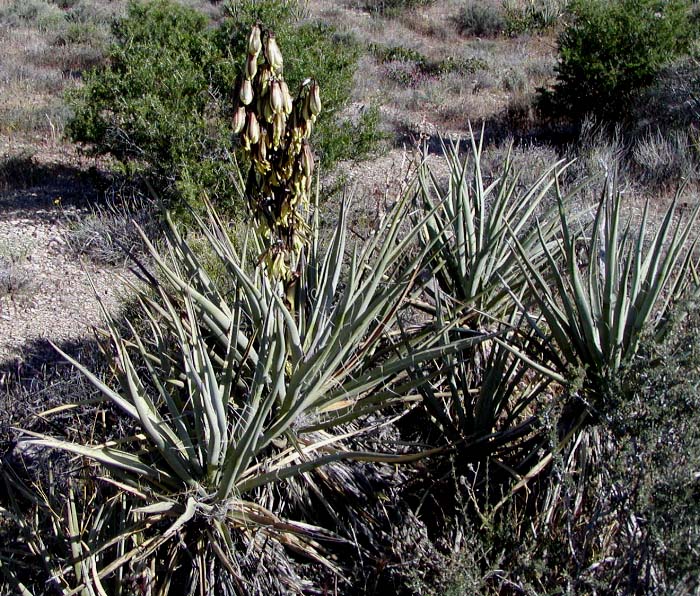 Yucca
Dry-climate plants with pointed leaves and clusters of creamy white flowers
🇲🇽 Mexico and 4 more · Wildflower
Yucca
Dry-climate plants with pointed leaves and clusters of creamy white flowers
🇲🇽 Mexico and 4 more · Wildflower
 Ornithogalum thyrsoides
A white, long-lasting bulb flower from South Africa’s Cape Province
🇿🇦 South Africa · Bulb flower
Ornithogalum thyrsoides
A white, long-lasting bulb flower from South Africa’s Cape Province
🇿🇦 South Africa · Bulb flower
More from Namibia
All the flowers of Namibia Pelargonium
A diverse group of flowering plants often grown as garden and house plants
🇿🇦 South Africa and 7 more · Garden flower
Pelargonium
A diverse group of flowering plants often grown as garden and house plants
🇿🇦 South Africa and 7 more · Garden flower
 Adenium boehmianum
A toxic succulent from arid parts of Namibia and Angola
🇳🇦 Namibia and 1 more · Wildflower
Adenium boehmianum
A toxic succulent from arid parts of Namibia and Angola
🇳🇦 Namibia and 1 more · Wildflower
 Desert roseAdenium
A succulent with thick stems and bright flowers, grown as a bonsai and houseplant
🇳🇦 Namibia and 7 more · Wildflower
Desert roseAdenium
A succulent with thick stems and bright flowers, grown as a bonsai and houseplant
🇳🇦 Namibia and 7 more · Wildflower
 Babianabobbejaantjie
A group of small, colourful flowering plants from southern Africa
🇿🇦 South Africa and 4 more · Wildflower
Babianabobbejaantjie
A group of small, colourful flowering plants from southern Africa
🇿🇦 South Africa and 4 more · Wildflower