
Lantana
Lantana camara, family Verbenaceae
A colourful shrub with clusters of small, changing flowers
Lantana camara is a shrub from Central and South America, now widespread in tropical and subtropical regions worldwide. Its flower heads show a mix of colours—red, yellow, orange, pink, and white—that shift as the blooms age. People have grown it as an ornamental, but it often escapes gardens and becomes invasive, forming dense thickets and crowding out native plants.
- Flowers change colour as they age, often showing several colours at once
- Native to Central and South America but now found across the tropics
- Forms dense thickets that can crowd out other plants
- Toxic to livestock and possibly to humans
- Flowers have a strong, sweet-peppery scent
What does Lantana look like?
Lantana camara is a sprawling or upright shrub that can reach about 2 metres tall, sometimes climbing higher if it finds support. Its leaves are broad, arranged in pairs, and release a pungent smell when crushed. The plant produces clusters of small, tube-shaped flowers with four petals each. These flower heads display several colours at once—such as yellow, orange, pink, red, and white—and the colours change as the flowers mature. The scent is sweet but peppery. Its fruit is a small berry that turns from green to dark purple when ripe, but unripe berries are not safe to eat.
Where does Lantana come from?
Lantana camara comes from Central and South America, where it grows in open, sunny places. Over centuries, people bred many varieties for gardens, and it was introduced to Europe and other continents as an ornamental plant. Birds and animals spread its seeds, helping it escape cultivation and become established in the wild. Today, it is found in tropical and subtropical regions across Africa, Asia, Australia, the United States, and many islands, often thriving in disturbed or cleared land.
When and how Lantana blooms
This shrub flowers throughout the year in areas without frost, especially if the soil is moist. It grows easily from seeds or cuttings and tolerates a wide range of soils, drought, and heat. Lantana can quickly form dense thickets, especially in disturbed ground, forest edges, or abandoned fields. Its berries are spread by birds and other animals, which helps the plant colonize new areas.


How Lantana is used
People have planted Lantana camara in gardens for its colourful and long-lasting flowers. In some regions, it is used as a hedge or ornamental shrub. However, it often escapes gardens and becomes a weed, especially in pastures and farmland, where it can harm livestock and reduce crop yields. Some places consider it a symbol or emblem, but it is mostly known for its impact as an invasive species.
Kinds of Lantana
There are many cultivated forms of Lantana camara, with flower heads showing different mixes of colours. In Australia, for example, five main colour types are seen: pink, white, pink-edged red, red, and orange. These varieties differ in the arrangement and shades of their flower clusters. Local names and forms exist in different countries, reflecting its wide spread and adaptation.
What Lantana means
Lantana camara is listed among the world's most troublesome invasive species, as it can take over natural habitats and farmland. Its dense growth crowds out native plants and slows forest recovery. The plant is toxic to livestock and possibly to humans if berries are eaten. Despite its problems, it is still grown for its bright flowers, and in some places, it is recognized as a regional emblem or has local names reflecting its presence.
Where Lantana is used and seen

Questions people ask about Lantana
Where does Lantana camara come from?
Lantana camara is native to Central and South America. It has spread widely and now grows in many tropical and subtropical regions around the world, often outside its original range.
What does Lantana camara look like?
It is a shrub with broad, rough leaves and clusters of small, tubular flowers. The flower heads show a mix of colours—such as yellow, orange, pink, red, and white—that shift as the blooms mature.
Why is Lantana camara considered invasive?
Lantana camara spreads quickly, forms dense thickets, and can outcompete native plants. It is difficult to control and can reduce biodiversity, especially in disturbed or cleared areas.
Is Lantana camara poisonous?
Yes, the plant is toxic to livestock like cattle, sheep, and goats. Unripe berries can be harmful to humans and animals if eaten.
What is Lantana camara used for?
It is mainly grown as an ornamental shrub for its colourful flowers. In some places, it is used as a hedge or emblem, but it is mostly known for its impact as an invasive species.
Good reading and sources
- Encyclopaedia BritannicaArticle
- BBC - Gardening: Plant FinderBBC, Article
- Plants of the World OnlineRoyal Botanic Gardens, Kew, Plant database
- Where it has been recordedGBIF, Plant database
- Sightings and photos by naturalistsiNaturalist, Plant database
- Lantana camara on WikipediaEncyclopedia
- More photos on Wikimedia CommonsPhotos
- Wikidata recordOpen data
The facts on this page come from the Wikipedia article "Lantana camara", written by its contributors and used under the CC BY-SA 4.0 licence, and from its Wikidata record (CC0). Phool rewrote the text in its own words, with AI assistance, and compares every page with the article to make sure no passage is copied. It may be reused under the same CC BY-SA 4.0 licence with a link back.
It may contain mistakes. It is not medical or foraging advice: many flowers are poisonous, and traditional uses are reported, not recommended. If something is wrong, tell us. Last refreshed 2026-10-03.
Others in the family Verbenaceae
The whole family
More from Brazil
All the flowers of Brazil CactusCactaceae
Succulent plants with spines, native to the Americas
🇲🇽 Mexico and 7 more · Wildflower
CactusCactaceae
Succulent plants with spines, native to the Americas
🇲🇽 Mexico and 7 more · Wildflower
 Eucalyptus
The tall, aromatic trees and shrubs known as gum trees or eucalypts
🇦🇺 Australia and 7 more · Flowering tree
Eucalyptus
The tall, aromatic trees and shrubs known as gum trees or eucalypts
🇦🇺 Australia and 7 more · Flowering tree
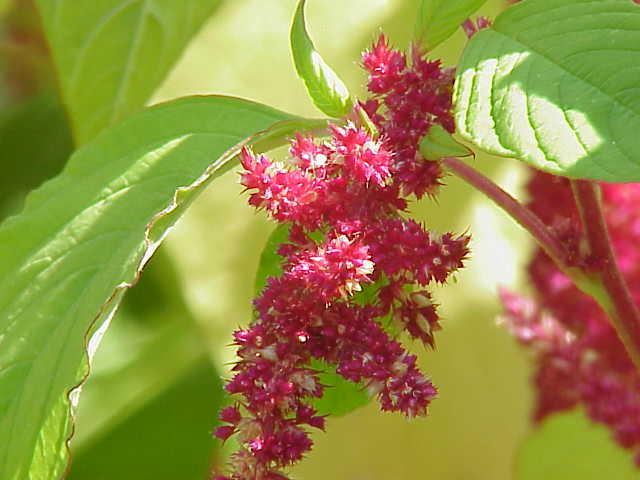 AmaranthAmaranthus
A tall, colourful plant grown for its flowers, leaves and edible seeds
🇲🇽 Mexico and 7 more · Wildflower
AmaranthAmaranthus
A tall, colourful plant grown for its flowers, leaves and edible seeds
🇲🇽 Mexico and 7 more · Wildflower
 Sensitive PlantMimosa pudica
A touch-sensitive plant whose leaves fold up when disturbed
🇧🇷 Brazil and 8 more · Wildflower
Sensitive PlantMimosa pudica
A touch-sensitive plant whose leaves fold up when disturbed
🇧🇷 Brazil and 8 more · Wildflower