
Leucanthemum
White-petalled daisies with yellow centers, native to Eurasia
Leucanthemum is a group of perennial daisies in the aster family, found across much of Europe and Asia. These plants are recognized for their white ray petals and yellow centers, and are often grown as ornamentals or found in the wild.
- Leucanthemum includes about 50 species of perennial daisies
- Flowers have white petals that may turn pink as they age
- Native from Europe across northern and central Asia
- Some species are widely grown as ornamentals
- Shasta daisy is a well-known hybrid in this group
What does Leucanthemum look like?
Leucanthemum plants are perennials with stems that can reach from 40 cm up to over 2 meters in height. The leaves may grow mostly at the base or along the stem, and can be lobed or toothed. Their flower heads are made up of white petals, which sometimes fade to pink as they age, surrounding a cluster of yellow disc florets. Each stem may hold a single flower head or a small group. The fruit is a ribbed, hairless seed.
Where does Leucanthemum come from?
Leucanthemum grows naturally from Europe into parts of northern and central Asia, including regions such as Turkey, Iran, and Siberia. Some species have been introduced to other continents and are now grown widely as garden plants. The genus name comes from Greek, meaning 'white flower.'
When and how Leucanthemum blooms
These daisies grow from rhizomes with reddish tips. They produce upright stems, which may be branched or unbranched, and can be either hairy or smooth. The flowers appear singly or in small groups, with each head surrounded by layers of rough-edged bracts. The plants are usually grown for their attractive blooms.


How Leucanthemum is used
Leucanthemum species are popular in gardens for their classic daisy appearance. Some are used as emblems or symbols, and their flowers attract various insects. The larvae of certain moths feed on these plants. They are also grown as ornamentals in many regions outside their native range.
Kinds of Leucanthemum
There are about 50 recognized species in the genus, along with several hybrids. Notable among these is the Shasta daisy, an artificial hybrid created from several Leucanthemum species. Some plants once included in this group have been reclassified.
What Leucanthemum means
Leucanthemum daisies are often associated with simplicity and are used as symbols in various contexts. The name 'daisy' is shared with other related plants, but Leucanthemum species are especially known for their white and yellow flowers. They have become familiar garden plants in many countries.
Where Leucanthemum is used and seen


Questions people ask about Leucanthemum
Where does Leucanthemum come from?
Leucanthemum species are native to a wide area stretching from Europe through parts of Asia, including regions like Turkey, Iran, and Siberia.
What do Leucanthemum flowers look like?
They have white ray petals surrounding a yellow center, and the petals can sometimes fade to pink as they age. The plants vary in height and leaf shape.
How are Leucanthemum plants used?
They are popular as ornamental garden plants and are sometimes used as emblems or symbols. Some species are also important for certain insect larvae.
Are there different types of Leucanthemum?
Yes, there are about 50 species and several hybrids, including the well-known Shasta daisy, which was created by crossing different species.
What does the name Leucanthemum mean?
The name comes from Greek words meaning 'white flower,' referring to the color of the petals.
Good reading and sources
- USDA Plants DatabaseUS Department of Agriculture, Article
- Plants of the World OnlineRoyal Botanic Gardens, Kew, Plant database
- Where it has been recordedGBIF, Plant database
- Sightings and photos by naturalistsiNaturalist, Plant database
The facts on this page come from the Wikipedia article "Leucanthemum", written by its contributors and used under the CC BY-SA 4.0 licence, and from its Wikidata record (CC0). Phool rewrote the text in its own words, with AI assistance, and compares every page with the article to make sure no passage is copied. It may be reused under the same CC BY-SA 4.0 licence with a link back.
It may contain mistakes. It is not medical or foraging advice: many flowers are poisonous, and traditional uses are reported, not recommended. If something is wrong, tell us. Last refreshed 2026-10-03.
Others in the family Asteraceae
The whole family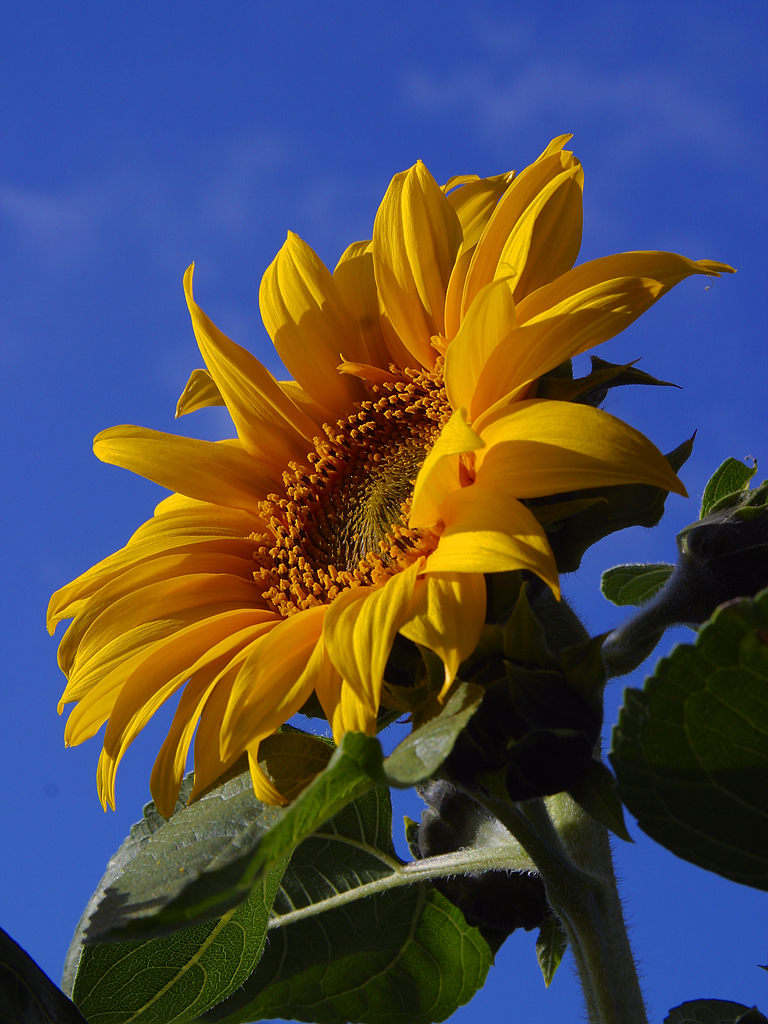 Common sunflowerHelianthus annuus
A tall annual plant grown for its large yellow flower heads and edible seeds
🇨🇦 Canada and 4 more · Wildflower
Common sunflowerHelianthus annuus
A tall annual plant grown for its large yellow flower heads and edible seeds
🇨🇦 Canada and 4 more · Wildflower
 Chrysanthemum菊花
Autumn-blooming flower with thousands of varieties, cherished in East Asia and beyond
🇨🇳 China and 6 more · Wildflower
Chrysanthemum菊花
Autumn-blooming flower with thousands of varieties, cherished in East Asia and beyond
🇨🇳 China and 6 more · Wildflower
 Asteraceae
The vast family of daisies, asters, and sunflowers with star-like flower heads
Asteraceae · Wildflower
Asteraceae
The vast family of daisies, asters, and sunflowers with star-like flower heads
Asteraceae · Wildflower
 DandelionTaraxacum
A yellow-flowered perennial found in fields, lawns, and gardens worldwide
Taraxacum · Wildflower
DandelionTaraxacum
A yellow-flowered perennial found in fields, lawns, and gardens worldwide
Taraxacum · Wildflower