
Cottage garden
An informal English garden style mixing flowers, herbs, and vegetables
The cottage garden is an English garden style known for its informal design, dense plantings, and blend of ornamental and edible plants. Originating in England, it features a relaxed look with old-fashioned flowers, herbs, and vegetables packed into small spaces, and often uses traditional materials for paths and fences.
- Originated in England as practical home gardens
- Mixes flowers, herbs, and vegetables in dense plantings
- Old-fashioned roses and fragrant plants are key features
- Paths and fences use traditional materials like wood and stone
- Influenced by the Arts and Crafts Movement
What is Cottage garden?
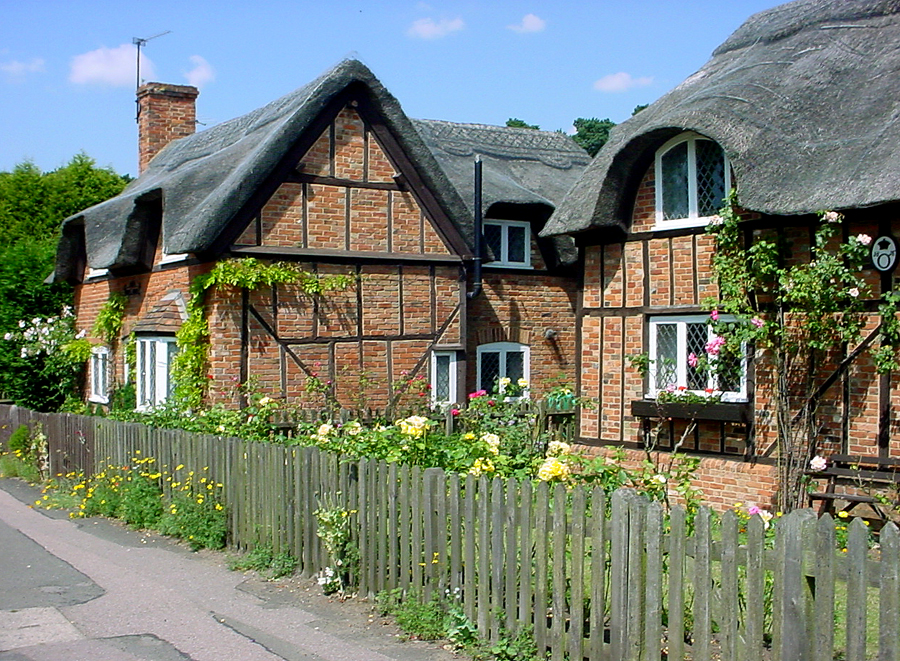
A cottage garden is a densely planted, informal garden style that often surrounds a house or cottage. It mixes a wide variety of flowers, herbs, and vegetables, with plants growing close together and sometimes spilling over paths or fences. Traditional features include fragrant old roses, climbing plants, and a jumble of perennials and annuals. Paths, fences, and arbors are made from wood, stone, or brick, giving a rustic, country feel. The overall look is relaxed and abundant, with flowers and greenery filling every available space.
Where does Cottage garden come from?
Cottage gardens began in England, possibly as early as Elizabethan times, as practical spaces for growing food, herbs, and keeping livestock. Over time, flowers became more prominent, especially those with household uses or pleasant scents. The romanticized version of the cottage garden was popularized in the late 19th century, influenced by writers and designers such as John Claudius Loudon, William Robinson, and Gertrude Jekyll. The style spread beyond England, inspiring gardens in France and the United States, and became associated with the Arts and Crafts Movement.
How Cottage garden is made
Cottage gardens are created by planting a mix of flowers, herbs, and vegetables in close, informal groupings. Paths are laid with brick or stone, and fences or arbors are built from wood or other traditional materials. Gardeners often choose old-fashioned or heirloom varieties of plants, including fragrant roses, primroses, violets, calendulas, and herbs. The design avoids strict symmetry, instead aiming for a natural, overflowing look. Self-sowing annuals and spreading perennials are common, and local plants are often included to suit the climate.


When and where Cottage garden is used
Cottage gardens are mainly for home enjoyment, providing beauty, fragrance, and sometimes food or herbs for the household. They are appreciated for their relaxed, welcoming appearance and are often found around country houses or recreated in urban settings. The style is popular among gardeners who prefer a less formal, more personal approach to planting. Some large estates include cottage garden sections to evoke a sense of intimacy and charm.
Forms of Cottage garden
Regional versions of the cottage garden have developed, such as Monet's garden at Giverny in France, which features rich colors and water gardens. In the United States, adaptations include prairie or chaparral plantings. Modern cottage gardens may use native plants and new varieties of traditional flowers, like disease-resistant roses. The style is flexible, allowing for personal taste and local conditions.
What Cottage garden means
The cottage garden is a symbol of English rural life and simplicity, often associated with grace and charm rather than grandeur. It was popularized by the Arts and Crafts Movement and remains influential in garden design. Artists and writers have celebrated the style, and famous gardens like Sissinghurst and Hidcote Manor are known for their cottage garden sections. The style values informality, abundance, and a harmonious mix of useful and ornamental plants.
The flowers of Cottage garden
 RoseWoody perennial plants with showy, often fragrant flowers in many colours
 ChrysanthemumAutumn-blooming flower with thousands of varieties, cherished in East Asia and beyond
 VioletA large genus of delicate flowers found across temperate regions worldwide
 DianthusA group of frilled, often pink, flowers grown in gardens and bouquets worldwideCarnationA fragrant flower with ruffled petals, grown worldwide for decoration and meaning
 PrimulaA large genus of spring-blooming wild and garden flowers from cool and mountain regions
 CalendulaGolden daisy-like flowers used in food, dye, and rituals
 Primula auriculaA yellow-flowered perennial from the mountains of central Europe
Traditions that use it
Questions people ask about Cottage garden
Where did the cottage garden style come from?
The cottage garden style originated in England, with roots in practical home gardens from Elizabethan times. It became popular as a romanticized, informal garden style in the late 19th century.
What plants are typical in a cottage garden?
Cottage gardens feature a mix of flowers, herbs, and vegetables. Common plants include old-fashioned roses, primroses, violets, calendulas, daisies, hollyhocks, sweet william, and various herbs.
How is a cottage garden different from a formal garden?
A cottage garden is informal, with plants growing close together in a seemingly casual way. It avoids strict symmetry and uses traditional materials, unlike formal gardens with geometric layouts and mass plantings.
What does a cottage garden symbolize?
The cottage garden symbolizes English rural life, simplicity, and charm. It is associated with abundance, informality, and a harmonious blend of useful and ornamental plants.
Are cottage gardens found outside England?
Yes, the cottage garden style has inspired gardens in other countries, including France and the United States, often adapted to local plants and conditions.
Good reading and sources
- Cottage garden on WikipediaEncyclopedia
- More photos on Wikimedia CommonsPhotos
- Wikidata recordOpen data
The facts on this page come from the Wikipedia article "Cottage garden", written by its contributors and used under the CC BY-SA 4.0 licence, and from its Wikidata record (CC0). Phool rewrote the text in its own words, with AI assistance, and compares every page with the article to make sure no passage is copied. It may be reused under the same CC BY-SA 4.0 licence with a link back.
It may contain mistakes. If something is wrong, tell us. Last refreshed 2026-10-03.
More of the same kind
 Decoration
Korean garden
A natural garden style shaped by rocks, ponds, and harmony with the land
🇰🇷 South Korea and 5 more · Garden style
Decoration
Korean garden
A natural garden style shaped by rocks, ponds, and harmony with the land
🇰🇷 South Korea and 5 more · Garden style
 Decoration
Islamic garden
A walled garden of water, shade and scent inspired by paradise
🇮🇷 Iran and 5 more · Garden style
Decoration
Islamic garden
A walled garden of water, shade and scent inspired by paradise
🇮🇷 Iran and 5 more · Garden style
 Decoration
Mughal garden
A formal garden style of pools, canals, and symmetry from the Mughal era
🇮🇳 India and 3 more · Garden style
Decoration
Mughal garden
A formal garden style of pools, canals, and symmetry from the Mughal era
🇮🇳 India and 3 more · Garden style
 Decoration
Bonsai盆栽
The Japanese art of shaping miniature trees in shallow pots
🇯🇵 Japan and 7 more · Art or design
Decoration
Bonsai盆栽
The Japanese art of shaping miniature trees in shallow pots
🇯🇵 Japan and 7 more · Art or design
More from the United Kingdom
All the flowers of the United Kingdom Decoration
Herbaceous border
A garden bed of perennial, non-woody plants arranged for colour and form
🇬🇧 United Kingdom · Garden style
Decoration
Herbaceous border
A garden bed of perennial, non-woody plants arranged for colour and form
🇬🇧 United Kingdom · Garden style
 Decoration
Conservatory
A glass-walled room or building for growing and displaying plants
🇬🇧 United Kingdom and 5 more · Garden style
Decoration
Conservatory
A glass-walled room or building for growing and displaying plants
🇬🇧 United Kingdom and 5 more · Garden style
 Decoration
English garden
A garden style of rolling lawns, lakes, and naturalistic landscapes from 18th-century England
🇬🇧 United Kingdom and 4 more · Garden style
Decoration
English garden
A garden style of rolling lawns, lakes, and naturalistic landscapes from 18th-century England
🇬🇧 United Kingdom and 4 more · Garden style
 Decoration
Walled garden
A garden sheltered by high walls for warmth, privacy and growing tender plants
🇬🇧 United Kingdom and 3 more · Garden style
Decoration
Walled garden
A garden sheltered by high walls for warmth, privacy and growing tender plants
🇬🇧 United Kingdom and 3 more · Garden style