
Dianthus
A group of frilled, often pink, flowers grown in gardens and bouquets worldwide
Dianthus is a large group of flowering plants with frilled petals, mostly found in Europe and Asia but with some species in Africa and North America. These flowers, often pink or red, are grown in gardens, used in bouquets, and valued for their spicy scent and decorative blooms.
- Dianthus includes about 340 species of flowering plants.
- Most species have frilled, pink or red petals with a spicy fragrance.
- The Cheddar pink is Somerset's county flower in England.
- Dianthus superbus is part of the term Yamato nadeshiko in Japan.
- Many varieties are popular in gardens and as cut flowers.
What does Dianthus look like?
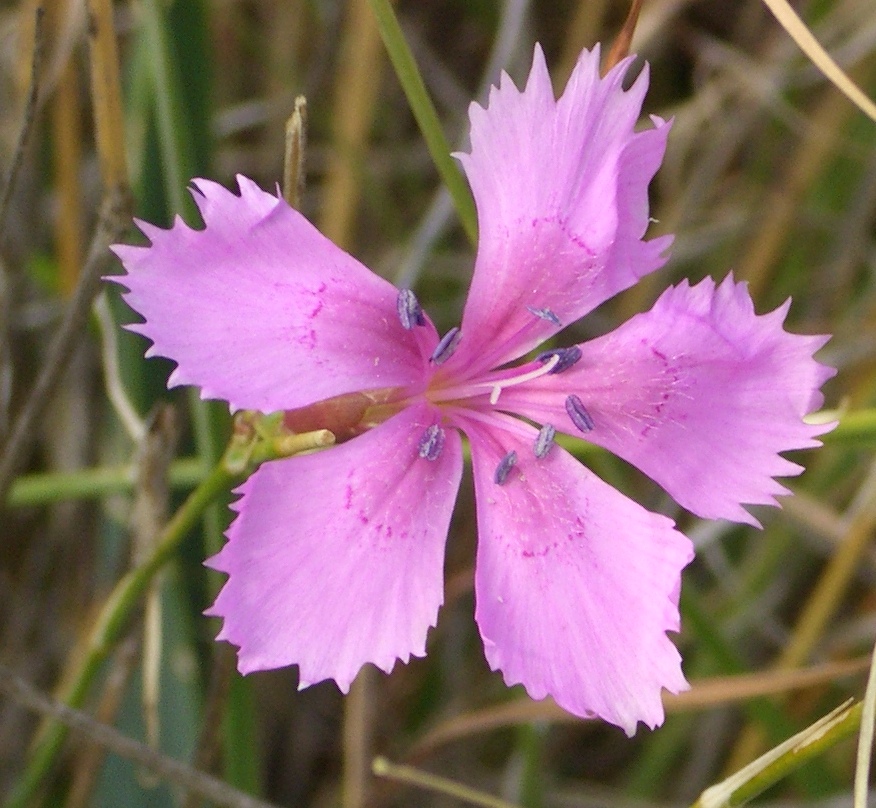
Dianthus includes about 340 species, most with slender, blue-green leaves and five-petalled flowers. The petals often have a jagged or fringed edge, giving them a delicate look. While pink is the most common colour, blooms can also be white, red, or yellow, sometimes with contrasting centres. Many types have a strong, spicy fragrance. Plants vary from low, mat-forming perennials to taller, upright stems, and some have woody bases.
Where does Dianthus come from?
Most Dianthus species grow wild in Europe and Asia, with a few native to northern and southern Africa and one found in arctic North America. Some, like Dianthus armeria and Dianthus deltoides, have been introduced to North America. The name 'Dianthus' comes from Greek, meaning 'flower of Zeus', and was first used by the ancient botanist Theophrastus. Over time, these flowers have been bred and spread widely for gardens and floristry.
When and how Dianthus blooms
Dianthus plants are mainly perennials, though some are annuals or biennials. They bloom in a range of seasons, depending on the variety. Gardeners have bred many types for different uses: border carnations for outdoor beds, perpetual carnations for year-round flowers in greenhouses, and alpine pinks for rock gardens. Most are grown from seed or cuttings and thrive in well-drained soil with plenty of sunlight.



How Dianthus is used
People grow Dianthus for garden borders, rockeries, and as cut flowers for arrangements. Some varieties are chosen for their scent, especially those with a clove-like aroma. In Somerset, the Cheddar pink is a local emblem, while in Japan, certain types are symbols for cities and cultural ideals. The flowers are also important to some moth and butterfly larvae.
Kinds of Dianthus
Notable types include border carnations, perpetual flowering carnations, Malmaison carnations, old-fashioned pinks, modern pinks, and alpine pinks. Each group has its own growth habit, flower size, and blooming period. Some, like D. knappii, stand out for unusual colours, such as yellow with a purple centre. Many cultivars have won awards for their garden performance.
What Dianthus means
Dianthus has a place in the language of flowers, where pink varieties stand for boldness. The Cheddar pink represents Somerset in England, and Dianthus japonicus is the official flower of Hiratsuka in Japan. In Japanese culture, Dianthus superbus is linked to the idea of the ideal woman. The genus is also important in horticulture, with many varieties recognised for their beauty and scent.
Where Dianthus is used and seen
 Flower powerA 1960s protest style using flowers as symbols of peace and resistance
 KeukenhofA vast Dutch flower garden famous for its spring tulip displays
 CorsageA small bouquet worn on the dress or wrist for formal events
 BoutonnièreA single flower worn on a suit or tuxedo lapel for formal occasions
 Cut flowersFresh flowers and buds trimmed for decoration and display
 Flower gardenA garden space planted and arranged for flowering plants and seasonal blooms
 LeiA garland or necklace of flowers, leaves, or shells given to honor or celebrate
 Mother's DayA day to honor mothers and motherhood around the world
Traditions that use it
Questions people ask about Dianthus
Where does Dianthus come from?
Most Dianthus species are native to Europe and Asia, with some found in northern and southern Africa and one in arctic North America. Several species have also been introduced to other regions, including North America.
What does Dianthus look like?
Dianthus plants usually have slender, blue-green leaves and flowers with five frilled petals. The blooms are most often pink, but can also be white, red, or yellow, and many have a strong, spicy scent.
What are common uses for Dianthus?
Dianthus is widely grown in gardens, used in floral arrangements, and chosen for its fragrance. Some types are local emblems, and the flowers are also important to certain butterfly and moth species.
Are there different types of Dianthus?
Yes, there are many groups, including border carnations, perpetual flowering carnations, Malmaison carnations, old-fashioned pinks, modern pinks, and alpine pinks, each with unique growth and flower features.
What does Dianthus symbolise?
In the language of flowers, pink Dianthus stands for boldness. Some species are also used as emblems for regions or cities, such as Somerset in England and Hiratsuka in Japan.
Good reading and sources
- Encyclopaedia BritannicaArticle
- Plants of the World OnlineRoyal Botanic Gardens, Kew, Plant database
- Where it has been recordedGBIF, Plant database
- Sightings and photos by naturalistsiNaturalist, Plant database
The facts on this page come from the Wikipedia article "Dianthus", written by its contributors and used under the CC BY-SA 4.0 licence, and from its Wikidata record (CC0). Phool rewrote the text in its own words, with AI assistance, and compares every page with the article to make sure no passage is copied. It may be reused under the same CC BY-SA 4.0 licence with a link back.
It may contain mistakes. It is not medical or foraging advice: many flowers are poisonous, and traditional uses are reported, not recommended. If something is wrong, tell us. Last refreshed 2026-10-03.
Others in the family Caryophyllaceae
The whole family
CarnationDianthus caryophyllus
A fragrant flower with ruffled petals, grown worldwide for decoration and meaning
🇨🇳 China and 7 more · Garden flower
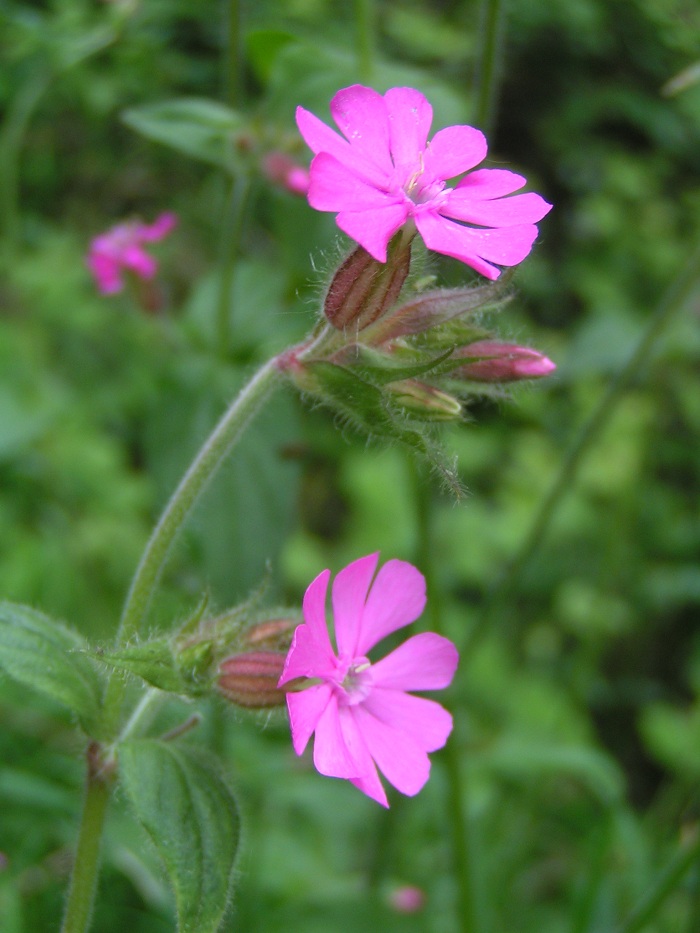 Red campionSilene dioica
A wild pink-red flower of woods and roadsides in northern and central Europe
🇮🇪 Ireland and 4 more · Wildflower
Red campionSilene dioica
A wild pink-red flower of woods and roadsides in northern and central Europe
🇮🇪 Ireland and 4 more · Wildflower
 Fringed pinkDianthus superbus
A wild pink flower with deeply fringed petals and a sweet scent
🇫🇷 France and 6 more · Wildflower
Fringed pinkDianthus superbus
A wild pink flower with deeply fringed petals and a sweet scent
🇫🇷 France and 6 more · Wildflower
 Baby's breathGypsophila paniculata
A cloud of tiny white summer flowers used in bouquets and gardens
🇨🇳 China and 4 more · Herb or useful flower
Baby's breathGypsophila paniculata
A cloud of tiny white summer flowers used in bouquets and gardens
🇨🇳 China and 4 more · Herb or useful flower