
Spring snowflake
Leucojum vernum, family Amaryllidaceae
A white spring bulb with green or yellow-tipped flowers from central Europe
Spring snowflake is a bulbous plant that produces nodding white flowers marked with green or yellow at the tips. Native to damp woodlands in central and southern Europe, it is grown in gardens for its early spring bloom. All parts of the plant are toxic if eaten.
- Produces nodding white flowers with green or yellow tips in early spring
- Native to moist woodlands from Belgium to Ukraine
- All parts of the plant are poisonous if eaten
- Grown in gardens and has received a horticultural award
- Varieties differ in flower markings and blooming time
What does Spring snowflake look like?
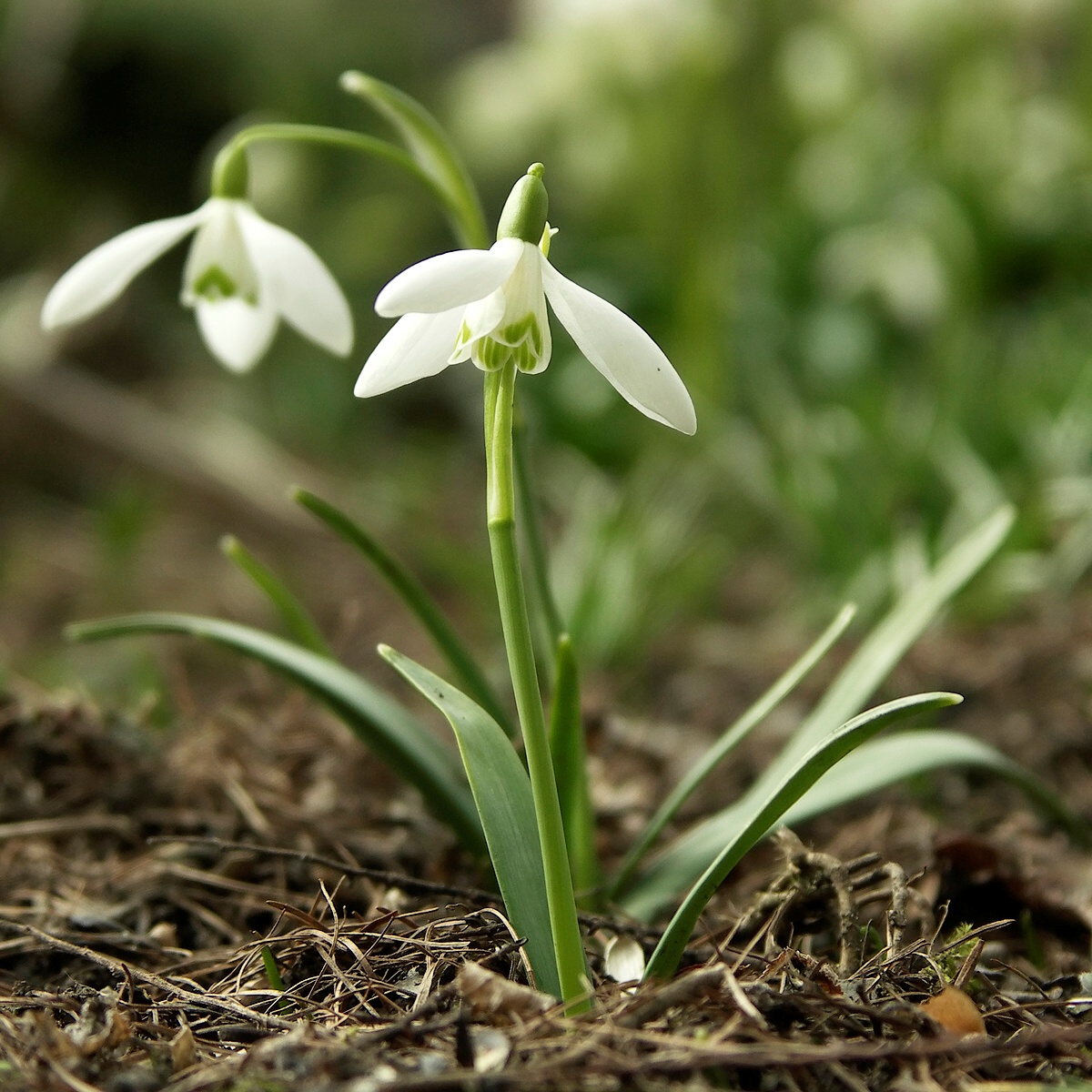
Spring snowflake grows from a bulb and reaches 12 to 35 cm in height. Its leaves are long and narrow, appearing with the flowers and continuing to grow as it blooms. Each stem usually holds a single, drooping white flower, sometimes two, with six petals marked near the tip in green or yellow. The flowers appear early in the year, often while snow is still on the ground.
Where does Spring snowflake come from?
This plant is found naturally in moist, shady woods across central and southern Europe, from Belgium through Ukraine. It has also spread to other parts of Europe and to the southeastern United States, where it can be seen in the wild. Carl Linnaeus first described the species in 1753, and its Latin name refers to its springtime flowering.
When and how Spring snowflake blooms
Spring snowflake blooms in early spring, often before many other plants. It prefers moist soil and can grow in sun or partial shade. Gardeners plant the bulbs in autumn, and over time, the plants can form dense clumps if conditions are right. It is considered easy to grow and is valued for its early flowers.


How Spring snowflake is used
Gardeners grow spring snowflake for its delicate, early flowers, which brighten up shady spots and grassy areas. It is not used for food or medicine, as all parts are poisonous. In some regions, it is a symbol of spring and is recognized as an emblematic plant.
Kinds of Spring snowflake
There are two main varieties: var. vernum and var. carpathicum. The latter, found in the Carpathian Mountains, is known for its yellow-tipped petals. Some sources mention a third, var. vagneri, which flowers earlier and may have two flowers per stem. Many garden cultivars exist, offering different flower sizes, markings, and forms.
What Spring snowflake means
Spring snowflake is linked to the arrival of spring in many parts of Europe. It is sometimes called St. Agnes' flower, after the patron saint of virgins. The plant has received recognition for its value in gardens. Because it is toxic, it is not used in traditional remedies or cooking.
Questions people ask about Spring snowflake
Where does the spring snowflake come from?
Spring snowflake is native to central and southern Europe, growing wild from Belgium to Ukraine in damp, shady woods. It has also established itself in other parts of Europe and in some areas of the United States.
What does the spring snowflake look like?
It is a small bulbous plant with narrow leaves and one or two nodding white flowers per stem. Each flower has six petals, each marked with green or yellow near the tip.
Is the spring snowflake poisonous?
Yes, all parts of the plant contain toxic alkaloids, so it should not be eaten or used in medicine.
How is the spring snowflake used?
It is mainly grown as an ornamental plant in gardens for its early spring flowers. It is not used for food or traditional medicine due to its toxicity.
Are there different types of spring snowflake?
Yes, there are several varieties and many garden forms. Some have yellow markings instead of green, and some bloom earlier or have more than one flower per stem.
Good reading and sources
- Leucojum vernumRoyal Horticultural Society, Article
- USDA Plants DatabaseUS Department of Agriculture, Article
- IUCN Red List of Threatened SpeciesIUCN Red List, Article
- Plants of the World OnlineRoyal Botanic Gardens, Kew, Plant database
- Where it has been recordedGBIF, Plant database
- Sightings and photos by naturalistsiNaturalist, Plant database
- Leucojum vernum on WikipediaEncyclopedia
- More photos on Wikimedia CommonsPhotos
- Wikidata recordOpen data
The facts on this page come from the Wikipedia article "Leucojum vernum", written by its contributors and used under the CC BY-SA 4.0 licence, and from its Wikidata record (CC0). Phool rewrote the text in its own words, with AI assistance, and compares every page with the article to make sure no passage is copied. It may be reused under the same CC BY-SA 4.0 licence with a link back.
It may contain mistakes. It is not medical or foraging advice: many flowers are poisonous, and traditional uses are reported, not recommended. If something is wrong, tell us. Last refreshed 2026-10-03.
Others in the family Amaryllidaceae
The whole family Narcissus
Spring-flowering bulbs with trumpet-shaped blooms in white, yellow, and orange
🇬🇧 United Kingdom and 7 more · Wildflower
Narcissus
Spring-flowering bulbs with trumpet-shaped blooms in white, yellow, and orange
🇬🇧 United Kingdom and 7 more · Wildflower
 Allium
The genus of onions, garlic, leeks, chives and their wild relatives
Allium · Wildflower
Allium
The genus of onions, garlic, leeks, chives and their wild relatives
Allium · Wildflower
 Wild GarlicAllium ursinum
A wild woodland plant with star-shaped white flowers and edible leaves
🇮🇪 Ireland · Wildflower
Wild GarlicAllium ursinum
A wild woodland plant with star-shaped white flowers and edible leaves
🇮🇪 Ireland · Wildflower
 SnowdropGalanthus
White bell-shaped flowers that bloom at the end of winter
🇹🇷 Turkey and 7 more · Wildflower
SnowdropGalanthus
White bell-shaped flowers that bloom at the end of winter
🇹🇷 Turkey and 7 more · Wildflower
More from Belgium
All the flowers of Belgium Chrysanthemum菊花
Autumn-blooming flower with thousands of varieties, cherished in East Asia and beyond
🇨🇳 China and 6 more · Wildflower
Chrysanthemum菊花
Autumn-blooming flower with thousands of varieties, cherished in East Asia and beyond
🇨🇳 China and 6 more · Wildflower
 LindenTilia
Tall, broad-leaved trees with fragrant yellow flowers and heart-shaped leaves
🇨🇳 China and 7 more · Flowering tree
LindenTilia
Tall, broad-leaved trees with fragrant yellow flowers and heart-shaped leaves
🇨🇳 China and 7 more · Flowering tree
 Sour cherryPrunus cerasus
The small, tart cherry tree grown for its sour red fruit
🇹🇷 Turkey and 7 more · Flowering tree
Sour cherryPrunus cerasus
The small, tart cherry tree grown for its sour red fruit
🇹🇷 Turkey and 7 more · Flowering tree
 Greater Pasque FlowerPulsatilla grandis
A violet spring flower of open meadows and hillsides in central Europe
🇫🇷 France and 7 more · Wildflower
Greater Pasque FlowerPulsatilla grandis
A violet spring flower of open meadows and hillsides in central Europe
🇫🇷 France and 7 more · Wildflower