
Shirui lily
Lilium mackliniae, family Liliaceae
In its own language: Kashong Timrawon
A rare lily found only in the hills of Manipur, India
The Shirui lily is a rare flowering plant that grows wild only in the hills of Manipur, India, near the Myanmar border. Its trumpet-shaped flowers hang down and show pale blue-pink petals, sometimes with ivory or reddish-purple tones. Locals celebrate its bloom each May and June, and it is the state flower of Manipur.
- Found only in Manipur's hills, India
- Blooms from mid-May to early June
- State flower of Manipur
- Endangered due to habitat loss
- Celebrated at the Shirui Lily Festival
What does Shirui lily look like?
The Shirui lily grows to about 1 to 3 feet tall, with each stem bearing up to seven flowers. Its blossoms are trumpet-shaped and hang downward. The petals are mostly pale blue-pink, with some flowers showing ivory or soft pink inside and reddish-purple outside. Under a microscope, the petals reveal seven different colors. This lily prefers shade and moist, humus-rich soil.
Where does Shirui lily come from?
This lily is native only to the hills of Manipur, India, close to the Myanmar border. It was first recorded by Western botanists Jean and Frank Kingdon-Ward in 1946, who named it after Frank's wife. Local legends tell of a princess or a goddess whose story is tied to the flower, and it is believed to bring kindness and prosperity. The plant has resisted attempts to grow it outside its home hills, adding to its mystique.
When and how Shirui lily blooms
The Shirui lily blooms in the wild from mid-May to early June, thriving in cool, moist, shaded slopes. It can be grown from bulbs or seeds, but seeds need a cool period to germinate and should not be exposed to artificial heat. In cultivation, they are started in small pots and later moved outdoors. The plant's native region has wet summers and cold, dry winters.
How Shirui lily is used
Locally, the Shirui lily is valued for its beauty and is used in traditional medicine for skin and stomach ailments. It is celebrated each year during the Shirui Lily Festival in Manipur, which draws visitors and helps raise awareness for its conservation. The flower is also a symbol of the state of Manipur and appears on Indian postage stamps.
Kinds of Shirui lily
The Shirui lily is a single species, but its flowers can vary in color from pale blue-pink to ivory and reddish-purple. Under magnification, the petals show a spectrum of seven colors. No cultivated varieties are mentioned, but conservation projects have used micropropagation to grow new plants for reintroduction.
What Shirui lily means
The Shirui lily is deeply woven into local folklore, with stories of princesses and goddesses linked to its origin. It stands for protection, happiness, and prosperity. As Manipur's state flower, it is an emblem of regional pride. Conservation efforts, including a national park and annual festival, aim to protect this endangered species from threats like tourism and invasive plants.
Where to see Shirui lily
Questions people ask about Shirui lily
Where does the Shirui lily grow naturally?
The Shirui lily grows wild only in the hills of Manipur, India, near the border with Myanmar. It is not found anywhere else in the world.
What does the Shirui lily look like?
This lily has trumpet-shaped flowers that hang downward. The petals are usually pale blue-pink, sometimes ivory or reddish-purple, and can show seven colors under a microscope.
When does the Shirui lily bloom?
It blooms in the wild from mid-May to early June, with the peak flowering season between May 15 and June 5.
What does the Shirui lily symbolise?
Local traditions say the lily stands for kindness, protection, prosperity, and a happy life. It is also the official state flower of Manipur.
Why is the Shirui lily endangered?
The plant faces threats from tourism, waste, plucking, and invasive species. Conservation efforts include habitat protection and replanting.
Good reading and sources
- Lilium mackliniae (IXc/a)Royal Horticultural Society, Article
- Plants of the World OnlineRoyal Botanic Gardens, Kew, Plant database
- Where it has been recordedGBIF, Plant database
- Sightings and photos by naturalistsiNaturalist, Plant database
- Lilium mackliniae on WikipediaEncyclopedia
- More photos on Wikimedia CommonsPhotos
- Wikidata recordOpen data
The facts on this page come from the Wikipedia article "Lilium mackliniae", written by its contributors and used under the CC BY-SA 4.0 licence, and from its Wikidata record (CC0). Phool rewrote the text in its own words, with AI assistance, and compares every page with the article to make sure no passage is copied. It may be reused under the same CC BY-SA 4.0 licence with a link back.
It may contain mistakes. It is not medical or foraging advice: many flowers are poisonous, and traditional uses are reported, not recommended. If something is wrong, tell us. Last refreshed 2026-10-03.
Others in the family Liliaceae
The whole family LilyLilium
Tall bulb flowers with large, colourful blooms in many gardens and cultures
Lilium · Wildflower
LilyLilium
Tall bulb flowers with large, colourful blooms in many gardens and cultures
Lilium · Wildflower
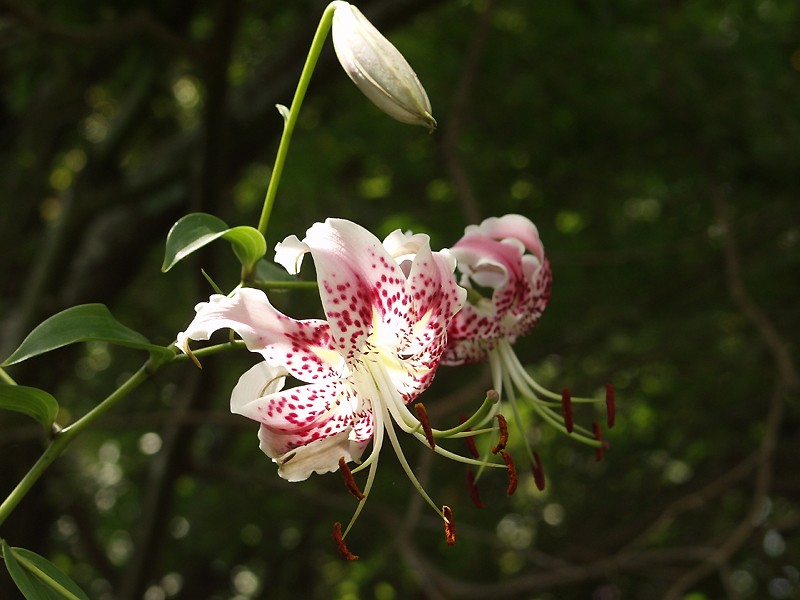 Lilium speciosum
A late-summer lily with fragrant white to pink flowers from East Asia
🇯🇵 Japan and 2 more · Wildflower
Lilium speciosum
A late-summer lily with fragrant white to pink flowers from East Asia
🇯🇵 Japan and 2 more · Wildflower
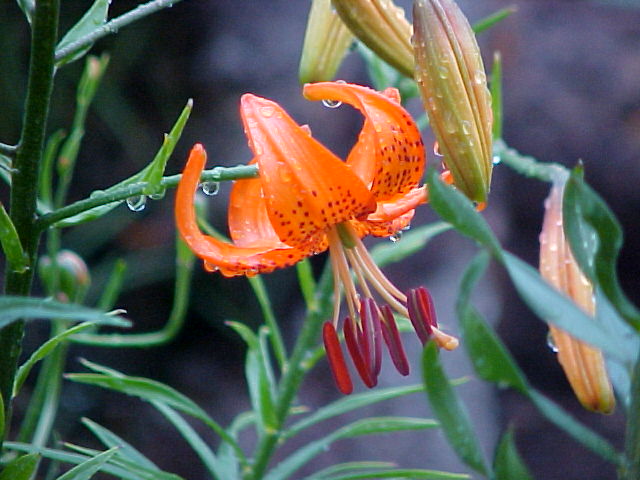 Lilium davidii
A tall Asian lily with edible bulbs and orange recurved flowers
🇨🇳 China and 1 more · Wildflower
Lilium davidii
A tall Asian lily with edible bulbs and orange recurved flowers
🇨🇳 China and 1 more · Wildflower
 Fritillaria
Bell-shaped spring flowers from the lily family grown for gardens and tradition
Fritillaria · Wildflower
Fritillaria
Bell-shaped spring flowers from the lily family grown for gardens and tradition
Fritillaria · Wildflower
More from India
All the flowers of India PeachPrunus persica
A flowering fruit tree from China, grown for its pink blossoms and sweet fruit
🇨🇳 China and 7 more · Flowering tree
PeachPrunus persica
A flowering fruit tree from China, grown for its pink blossoms and sweet fruit
🇨🇳 China and 7 more · Flowering tree
 PomegranatePunica granatum
A shrub with bright red flowers and a fruit full of edible seeds
🇮🇷 Iran and 9 more · Flowering shrub
PomegranatePunica granatum
A shrub with bright red flowers and a fruit full of edible seeds
🇮🇷 Iran and 9 more · Flowering shrub
 TulipTulipa
Spring-blooming bulbs with showy, cup-shaped flowers in many colours
🇳🇱 Netherlands and 7 more · Wildflower
TulipTulipa
Spring-blooming bulbs with showy, cup-shaped flowers in many colours
🇳🇱 Netherlands and 7 more · Wildflower
 FennelFoeniculum vulgare
A tall, aromatic herb with feathery leaves and yellow umbels, used for food and spice
🇨🇳 China and 7 more · Herb or useful flower
FennelFoeniculum vulgare
A tall, aromatic herb with feathery leaves and yellow umbels, used for food and spice
🇨🇳 China and 7 more · Herb or useful flower