White Himalayan lily
Lilium polyphyllum, family Liliaceae
A rare white or pink lily from the high Himalayas, used in temple offerings
The White Himalayan lily (Lilium polyphyllum) grows in the high mountains of northern India, Pakistan, Nepal, and Tibet. Its tall stems bear white or pale pink flowers with dark spots and large yellow-orange anthers. Locals use it for temple offerings and home decoration, though its strong smell limits its use indoors.
- Found in the Himalayas at 1,800–3,700 meters elevation
- Flowers are white or pale pink with dark spots and large yellow-orange anthers
- Used for temple offerings and home decoration in northern India
- Has a strong, unpleasant smell
- Rare and limited to a few regions in India, Pakistan, Nepal, and Tibet
What does White Himalayan lily look like?
The White Himalayan lily is a tall plant, reaching 2 to 4 feet, with stiff stems and small, lance-shaped leaves. Its flowers are trumpet-shaped, white or pale pink, and marked with dark pink or purple spots. The anthers are large and range from yellow to orange. The bulb is long, narrow, and white, with deep-growing roots. The flower gives off a strong, unpleasant smell.
Where does White Himalayan lily come from?
Lilium polyphyllum is native to the high elevations of the Himalayas, found in northern India, Pakistan, Nepal, and Tibet. It grows wild between 1,800 and 3,700 meters, especially in valleys like Hunza and Wanga. The species was first discovered in northern India by Dr. Royle in 1839 and later recorded in Pakistan and the wider Himalayan region.
When and how White Himalayan lily blooms
This lily blooms in early summer, mainly June and July, at high mountain elevations. It grows from a bulb that sends roots deep into the soil, often up to 60 cm. The plant prefers montane environments and is rare in the wild. It can be grown in gardens at suitable altitudes, but is not common outside its native range.
How White Himalayan lily is used
Local people in northern India use the White Himalayan lily for temple offerings and for decorating homes for a day. Its strong, unpleasant smell means it is not kept indoors overnight. The flowers and bulbs are also used in traditional medicine by people in the region.
Kinds of White Himalayan lily
Lilium polyphyllum is also known as the many-leaved lily. It has synonyms such as Lilium punctatum and Lilium polyphyllum var. uniflorum. The species is rare, with only a few wild habitats in its native range.
What White Himalayan lily means
The White Himalayan lily is valued locally for religious offerings and home decoration, despite its scent. It has been recorded in botanical gardens in the United Kingdom since the 19th century. Its rarity and striking appearance make it notable among Himalayan wildflowers.
Questions people ask about White Himalayan lily
Where does the White Himalayan lily come from?
It is native to the high mountains of the Himalayas, especially in northern India, Pakistan, Nepal, and Tibet, growing at elevations between 1,800 and 3,700 meters.
What does the White Himalayan lily look like?
It has tall, stiff stems, small lance-shaped leaves, and trumpet-shaped flowers that are white or pale pink with dark spots and large yellow-orange anthers.
How is the White Himalayan lily used?
People in northern India use it for temple offerings and to decorate homes for a day, but its strong smell keeps it from being kept indoors overnight. Its flowers and bulbs are also used in traditional medicine.
When does the White Himalayan lily bloom?
It flowers mainly in June and July, during the summer season in the Himalayas.
Why is the White Himalayan lily considered rare?
Its wild habitats are limited to a few regions in the Himalayas, with only a narrow number of lilies found in these areas, making it a rare species.
Good reading and sources
- IUCN Red List of Threatened SpeciesIUCN Red List, Article
- Plants of the World OnlineRoyal Botanic Gardens, Kew, Plant database
- Where it has been recordedGBIF, Plant database
- Sightings and photos by naturalistsiNaturalist, Plant database
- Lilium polyphyllum on WikipediaEncyclopedia
- More photos on Wikimedia CommonsPhotos
- Wikidata recordOpen data
The facts on this page come from the Wikipedia article "Lilium polyphyllum", written by its contributors and used under the CC BY-SA 4.0 licence, and from its Wikidata record (CC0). Phool rewrote the text in its own words, with AI assistance, and compares every page with the article to make sure no passage is copied. It may be reused under the same CC BY-SA 4.0 licence with a link back.
It may contain mistakes. It is not medical or foraging advice: many flowers are poisonous, and traditional uses are reported, not recommended. If something is wrong, tell us. Last refreshed 2026-10-03.
Others in the family Liliaceae
The whole family LilyLilium
Tall bulb flowers with large, colourful blooms in many gardens and cultures
Lilium · Wildflower
LilyLilium
Tall bulb flowers with large, colourful blooms in many gardens and cultures
Lilium · Wildflower
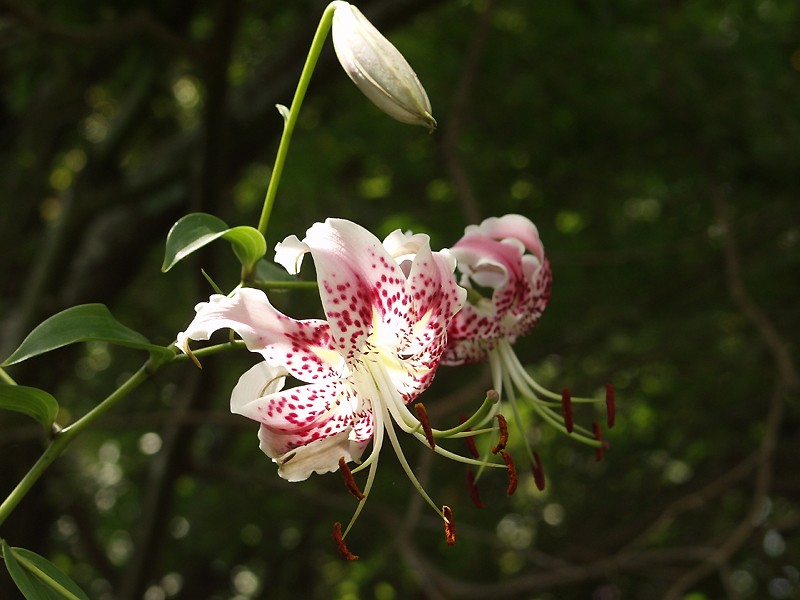 Lilium speciosum
A late-summer lily with fragrant white to pink flowers from East Asia
🇯🇵 Japan and 2 more · Wildflower
Lilium speciosum
A late-summer lily with fragrant white to pink flowers from East Asia
🇯🇵 Japan and 2 more · Wildflower
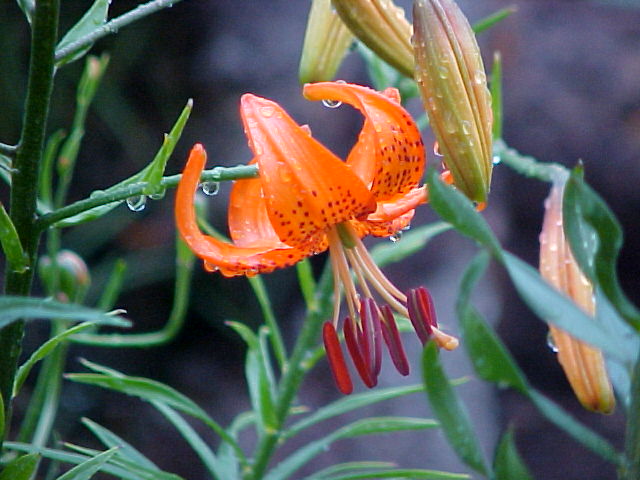 Lilium davidii
A tall Asian lily with edible bulbs and orange recurved flowers
🇨🇳 China and 1 more · Wildflower
Lilium davidii
A tall Asian lily with edible bulbs and orange recurved flowers
🇨🇳 China and 1 more · Wildflower
 Fritillaria
Bell-shaped spring flowers from the lily family grown for gardens and tradition
Fritillaria · Wildflower
Fritillaria
Bell-shaped spring flowers from the lily family grown for gardens and tradition
Fritillaria · Wildflower
More from India
All the flowers of India PeachPrunus persica
A flowering fruit tree from China, grown for its pink blossoms and sweet fruit
🇨🇳 China and 7 more · Flowering tree
PeachPrunus persica
A flowering fruit tree from China, grown for its pink blossoms and sweet fruit
🇨🇳 China and 7 more · Flowering tree
 PomegranatePunica granatum
A shrub with bright red flowers and a fruit full of edible seeds
🇮🇷 Iran and 9 more · Flowering shrub
PomegranatePunica granatum
A shrub with bright red flowers and a fruit full of edible seeds
🇮🇷 Iran and 9 more · Flowering shrub
 TulipTulipa
Spring-blooming bulbs with showy, cup-shaped flowers in many colours
🇳🇱 Netherlands and 7 more · Wildflower
TulipTulipa
Spring-blooming bulbs with showy, cup-shaped flowers in many colours
🇳🇱 Netherlands and 7 more · Wildflower
 FennelFoeniculum vulgare
A tall, aromatic herb with feathery leaves and yellow umbels, used for food and spice
🇨🇳 China and 7 more · Herb or useful flower
FennelFoeniculum vulgare
A tall, aromatic herb with feathery leaves and yellow umbels, used for food and spice
🇨🇳 China and 7 more · Herb or useful flower