
Lilium rhodopeum
A rare lily native to the Rhodopi mountains of Bulgaria and Greece
Lilium rhodopeum is a wild lily that grows only in the Rhodopi mountains, spanning parts of Bulgaria and Greece. This critically endangered plant lives in high mountain grasslands and slopes, and is recognised for its limited range and conservation status.
- Found only in the Rhodopi mountains of Bulgaria and Greece
- Critically endangered according to the IUCN Red List
- A wild lily unique to the Balkan region
What does Lilium rhodopeum look like?
Lilium rhodopeum is a species of lily that grows in the wild, known only from a specific mountain range in southeastern Europe. It is a perennial plant, meaning it returns each year, and is part of the lily family. The plant is adapted to life at higher elevations, where it grows among grasses and other alpine plants. Details about its flower shape, size, and colour are not given in the sources.
Where does Lilium rhodopeum come from?
This lily is native to the Rhodopi mountains, a range that stretches across parts of Bulgaria and Greece. The species does not naturally occur anywhere else in the world. Its name comes from the region where it was first identified. Over time, its habitat has remained very limited, and it has not spread beyond these mountains.
When and how Lilium rhodopeum blooms
Lilium rhodopeum grows in open grasslands and on slopes at higher altitudes. It survives in the wild rather than being cultivated in gardens. The sources do not describe how it is grown or propagated, but it is known to return each year from its roots, typical of perennial lilies.
How Lilium rhodopeum is used
There is no information in the sources about people using this lily for decoration, gardening, or any other purpose. Its main significance is its rarity and its presence in the natural mountain landscape.
Kinds of Lilium rhodopeum
No varieties, subspecies, or cultivated forms of Lilium rhodopeum are mentioned in the sources. It is known only as a wild species restricted to its native mountain region.
What Lilium rhodopeum means
Lilium rhodopeum is recognised for its conservation status. It is listed as critically endangered by the International Union for Conservation of Nature (IUCN). Its survival is threatened, and it is valued mainly for its unique presence in the Balkans and its limited distribution.
Questions people ask about Lilium rhodopeum
Where does Lilium rhodopeum come from?
This lily is native to the Rhodopi mountains, which are located in Bulgaria and Greece. It does not grow naturally outside this region.
Why is Lilium rhodopeum important?
It is important because it is a rare species found only in a small area and is critically endangered, making it a focus for conservation efforts.
Is Lilium rhodopeum used in gardens or for decoration?
There is no information in the sources about this lily being grown in gardens or used for decoration. It is known only as a wild plant.
What does Lilium rhodopeum symbolise?
The sources do not mention any symbolic meaning for this species. Its main significance is its rarity and conservation status.
Good reading and sources
- IUCN Red List of Threatened SpeciesIUCN Red List, Article
- Plants of the World OnlineRoyal Botanic Gardens, Kew, Plant database
- Where it has been recordedGBIF, Plant database
- Sightings and photos by naturalistsiNaturalist, Plant database
- Lilium rhodopeum on WikipediaEncyclopedia
- More photos on Wikimedia CommonsPhotos
- Wikidata recordOpen data
The facts on this page come from the Wikipedia article "Lilium rhodopeum", written by its contributors and used under the CC BY-SA 4.0 licence, and from its Wikidata record (CC0). Phool rewrote the text in its own words, with AI assistance, and compares every page with the article to make sure no passage is copied. It may be reused under the same CC BY-SA 4.0 licence with a link back.
It may contain mistakes. It is not medical or foraging advice: many flowers are poisonous, and traditional uses are reported, not recommended. If something is wrong, tell us. Last refreshed 2026-10-03.
Others in the family Liliaceae
The whole family TulipTulipa
Spring-blooming bulbs with showy, cup-shaped flowers in many colours
🇳🇱 Netherlands and 7 more · Wildflower
TulipTulipa
Spring-blooming bulbs with showy, cup-shaped flowers in many colours
🇳🇱 Netherlands and 7 more · Wildflower
 LilyLilium
Tall bulb flowers with large, colourful blooms in many gardens and cultures
Lilium · Wildflower
LilyLilium
Tall bulb flowers with large, colourful blooms in many gardens and cultures
Lilium · Wildflower
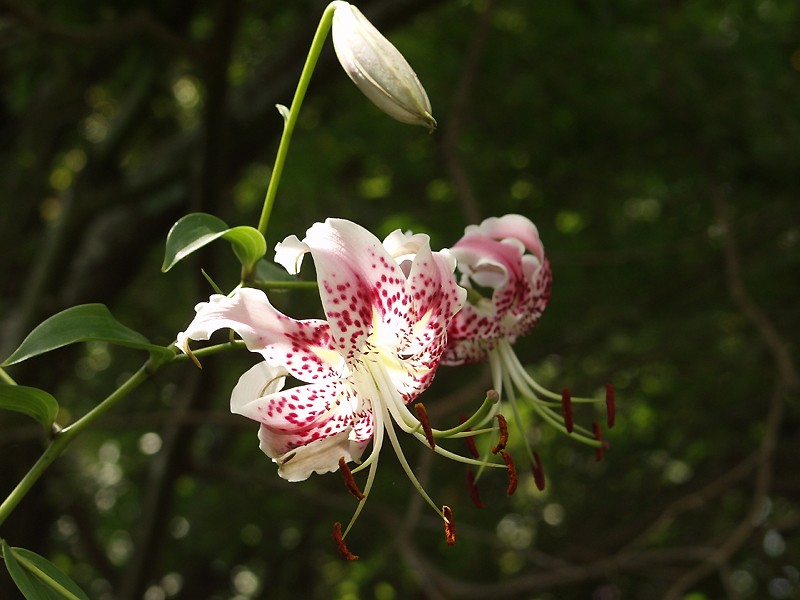 Lilium speciosum
A late-summer lily with fragrant white to pink flowers from East Asia
🇯🇵 Japan and 2 more · Wildflower
Lilium speciosum
A late-summer lily with fragrant white to pink flowers from East Asia
🇯🇵 Japan and 2 more · Wildflower
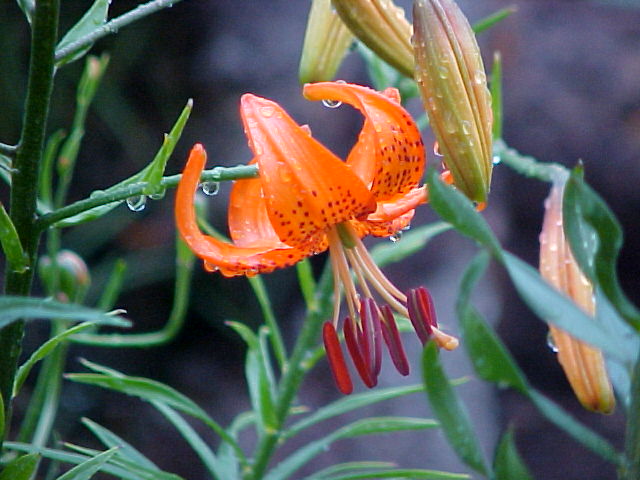 Lilium davidii
A tall Asian lily with edible bulbs and orange recurved flowers
🇨🇳 China and 1 more · Wildflower
Lilium davidii
A tall Asian lily with edible bulbs and orange recurved flowers
🇨🇳 China and 1 more · Wildflower
More from Bulgaria
All the flowers of Bulgaria BlackthornPrunus spinosa
A spiny shrub with white spring flowers and tart blue-black fruit
🇬🇧 United Kingdom and 7 more · Wildflower
BlackthornPrunus spinosa
A spiny shrub with white spring flowers and tart blue-black fruit
🇬🇧 United Kingdom and 7 more · Wildflower
 Dog roseRosa canina
A wild climbing rose with pale pink flowers and bright red hips
🇮🇪 Ireland and 7 more · Wildflower
Dog roseRosa canina
A wild climbing rose with pale pink flowers and bright red hips
🇮🇪 Ireland and 7 more · Wildflower
 Horse-chestnutAesculus hippocastanum
A large flowering tree known for its white spring blooms and shiny brown conkers
🇦🇱 Albania and 7 more · Flowering tree
Horse-chestnutAesculus hippocastanum
A large flowering tree known for its white spring blooms and shiny brown conkers
🇦🇱 Albania and 7 more · Flowering tree
 EdelweissLeontopodium nivale
A woolly white star-shaped flower of the European mountains
🇦🇹 Austria and 5 more · Wildflower
EdelweissLeontopodium nivale
A woolly white star-shaped flower of the European mountains
🇦🇹 Austria and 5 more · Wildflower