
Meconopsis grandis
A blue-flowered poppy from the Himalayas grown for its striking blooms
Meconopsis grandis is a perennial poppy with large blue flowers, native to the Himalayas in Bhutan, northeast India, Nepal, and parts of China. It is grown for its vivid blossoms but needs cool, moist, and shaded conditions, making it a challenge for many gardeners.
- Native to the Himalayas, including Bhutan, Nepal, and northeast India
- Produces large blue flowers with yellow centres in late spring
- Prefers cool, shaded, and moist conditions with acidic soil
- Some cultivars are recognised for their garden value
What does Meconopsis grandis look like?
Meconopsis grandis is a perennial plant that forms a rosette of toothed leaves at its base. It can reach about a metre in height and width. The flowers are a vivid blue, each up to 15 centimetres across, with a noticeable yellow centre. These blooms appear above the foliage in late spring, making the plant stand out in shaded garden spots.
Where does Meconopsis grandis come from?
This species is native to the Himalayan region, including Bhutan, Nepal, northeast India, and the Yunnan area of China. It grows wild in cool, mountainous areas. Over time, it has been brought into gardens for its unique blue flowers, though it remains a challenge to cultivate outside its native environment due to its specific needs.
When and how Meconopsis grandis blooms
Meconopsis grandis flowers in late spring. It prefers cool, shaded places with acidic soil that stays moist but not waterlogged. The plant is usually grown from seed or young plants, but even then, it can be short-lived. Gardeners often struggle to keep it thriving unless they can match its natural, cool mountain conditions.

How Meconopsis grandis is used
People mainly grow this poppy for its decorative value in gardens, especially in areas where the climate is cool and moist. Its striking blue flowers make it a favourite among enthusiasts, though its demanding requirements mean it is not common in most gardens.
Kinds of Meconopsis grandis
There are cultivated forms such as 'Bobby Masterson' (also known as 'Betty Sherriff's Dream Poppy') and 'Mrs Jebb', which have been recognised for their garden performance. These cultivars are selected for their reliable blooms and ornamental qualities.
What Meconopsis grandis means
Meconopsis grandis is admired for its rare blue flowers, a colour not often seen in garden poppies. It is grown as an ornamental plant in temperate gardens, especially by collectors and those interested in Himalayan flora. Its cultivation is seen as a mark of gardening skill due to its particular needs.
Where Meconopsis grandis is used and seen

Questions people ask about Meconopsis grandis
Where does Meconopsis grandis come from?
It is native to the Himalayan region, including Bhutan, Nepal, northeast India, and the Yunnan province of China.
What does the Himalayan blue poppy look like?
It has large, pure blue flowers up to 15 cm wide with a yellow centre, and forms a rosette of toothed leaves.
Is Meconopsis grandis easy to grow in gardens?
This plant is known for being difficult to grow outside its native cool, moist, and shaded mountain habitats.
What is Meconopsis grandis used for?
It is mainly grown as an ornamental plant for its striking blue flowers in gardens.
Are there any special varieties of this poppy?
Yes, cultivars like 'Bobby Masterson' and 'Mrs Jebb' have been recognised for their ornamental qualities.
Good reading and sources
- Meconopsis grandis 'Betty Sherriff's Dream Poppy'Royal Horticultural Society, Article
- Plants of the World OnlineRoyal Botanic Gardens, Kew, Plant database
- Where it has been recordedGBIF, Plant database
- Sightings and photos by naturalistsiNaturalist, Plant database
- Meconopsis grandis on WikipediaEncyclopedia
- More photos on Wikimedia CommonsPhotos
- Wikidata recordOpen data
The facts on this page come from the Wikipedia article "Meconopsis grandis", written by its contributors and used under the CC BY-SA 4.0 licence, and from its Wikidata record (CC0). Phool rewrote the text in its own words, with AI assistance, and compares every page with the article to make sure no passage is copied. It may be reused under the same CC BY-SA 4.0 licence with a link back.
It may contain mistakes. It is not medical or foraging advice: many flowers are poisonous, and traditional uses are reported, not recommended. If something is wrong, tell us. Last refreshed 2026-10-03.
Others in the family Papaveraceae
The whole family Opium poppyPapaver somniferum
A tall annual poppy grown for seeds, opium, and striking garden flowers
🇨🇳 China and 2 more · Wildflower
Opium poppyPapaver somniferum
A tall annual poppy grown for seeds, opium, and striking garden flowers
🇨🇳 China and 2 more · Wildflower
 Common poppyPapaver rhoeas
The vivid red wildflower of fields and remembrance
🇨🇳 China and 7 more · Wildflower
Common poppyPapaver rhoeas
The vivid red wildflower of fields and remembrance
🇨🇳 China and 7 more · Wildflower
 PoppyPapaver
A group of colourful wild and garden flowers with capsule fruits and many seeds
Papaver · Wildflower
PoppyPapaver
A group of colourful wild and garden flowers with capsule fruits and many seeds
Papaver · Wildflower
 Meconopsis gakyidianaཚེར་སྔོན་མེ་ཏོག
A blue poppy from Bhutan’s high mountain slopes, now its national flower
🇧🇹 Bhutan · Wildflower
Meconopsis gakyidianaཚེར་སྔོན་མེ་ཏོག
A blue poppy from Bhutan’s high mountain slopes, now its national flower
🇧🇹 Bhutan · Wildflower
More from Bhutan
All the flowers of Bhutan Iris tectorum鸢尾
A blue or white iris once grown on rooftops in China and Japan
🇨🇳 China and 5 more · Wildflower
Iris tectorum鸢尾
A blue or white iris once grown on rooftops in China and Japan
🇨🇳 China and 5 more · Wildflower
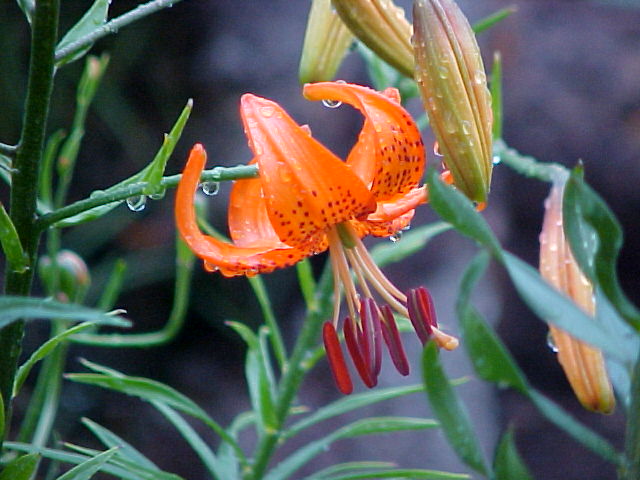 Lilium davidii
A tall Asian lily with edible bulbs and orange recurved flowers
🇨🇳 China and 1 more · Wildflower
Lilium davidii
A tall Asian lily with edible bulbs and orange recurved flowers
🇨🇳 China and 1 more · Wildflower
 StelleraStellera chamaejasme
A poisonous alpine flower of Central and East Asia, grown for its showy heads
🇨🇳 China and 5 more · Wildflower
StelleraStellera chamaejasme
A poisonous alpine flower of Central and East Asia, grown for its showy heads
🇨🇳 China and 5 more · Wildflower
 Prickly blue poppyMeconopsis horridula
A spiny blue poppy from the high Himalayas and western China
🇮🇳 India and 4 more · Wildflower
Prickly blue poppyMeconopsis horridula
A spiny blue poppy from the high Himalayas and western China
🇮🇳 India and 4 more · Wildflower