
Metrosideros
A Pacific genus of trees and shrubs with vivid flowers
Metrosideros is a group of about 60 trees, shrubs and vines native to islands across the Pacific. Known for their bright red blooms, species like pōhutukawa in New Zealand and ʻōhiʻa lehua in Hawaii are grown as ornamentals and hold cultural importance.
- Seeds can float in salt water for 30 days and still sprout
- Absent from mainland Australia despite ancient fossils there
- Pōhutukawa is a symbol of New Zealand summer
- ʻŌhiʻa lehua is endemic to Hawaii
- Grows as far south as the Auckland Islands at 50°S
What does Metrosideros look like?
Metrosideros plants range from small shrubs to large trees. Their flowers are showy, usually red, with many stamens that give them a brush-like appearance. Some cultivated forms produce orange, yellow or white blooms instead.
Where does Metrosideros come from?
The genus likely originated in Australia, based on Oligocene fossils found in Tasmania. Though absent from mainland Australia today, it spread widely across the Pacific, reaching islands from New Guinea to Hawaii and even South America and South Africa.
When and how Metrosideros blooms
These plants grow in diverse settings, often as first colonisers on lava flows or mountain ridges. Their tiny seeds travel far on the wind and can survive freezing and weeks at sea in salt water, aiding their wide island distribution.

How Metrosideros is used
People plant Metrosideros as street trees and in gardens for their striking flowers. In New Zealand and Hawaii, certain species are culturally significant and used in ceremonies or as national symbols.
Kinds of Metrosideros
New Caledonia hosts 21 species, New Zealand 12, and Hawaii five. Well-known types include pōhutukawa (M. excelsa), northern and southern rātā (M. robusta, M. umbellata), and Hawaiian ʻōhiʻa lehua (M. polymorpha).
What Metrosideros means
In New Zealand, pōhutukawa is linked to summer and remembrance. In Hawaii, ʻōhiʻa lehua features in legends and is sacred in some traditions. The genus name means 'iron heartwood', reflecting its tough timber.
Questions people ask about Metrosideros
Where does Metrosideros come from?
It is native to Pacific islands including New Zealand, Hawaii, New Caledonia, and Fiji, with one species each in South America and South Africa.
What do Metrosideros flowers look like?
They are typically bright red with dense clusters of stamens, resembling bottlebrushes. Cultivars may have orange, yellow or white flowers.
Why is it found on so many islands?
Its lightweight seeds disperse easily by wind and can survive long ocean journeys, allowing colonization of distant islands.
Is it used in culture or ceremony?
Yes. In New Zealand, pōhutukawa is tied to summer and remembrance. In Hawaii, ʻōhiʻa lehua appears in stories and is considered sacred.
Can it grow in cold climates?
Metrosideros umbellata, from the subantarctic Auckland Islands, is the hardiest and has been grown in Scotland.
Good reading and sources
- BBC - Gardening: Plant FinderBBC, Article
- USDA Plants DatabaseUS Department of Agriculture, Article
- Plants of the World OnlineRoyal Botanic Gardens, Kew, Plant database
- Where it has been recordedGBIF, Plant database
- Sightings and photos by naturalistsiNaturalist, Plant database
The facts on this page come from the Wikipedia article "Metrosideros", written by its contributors and used under the CC BY-SA 4.0 licence, and from its Wikidata record (CC0). Phool rewrote the text in its own words, with AI assistance, and compares every page with the article to make sure no passage is copied. It may be reused under the same CC BY-SA 4.0 licence with a link back.
It may contain mistakes. It is not medical or foraging advice: many flowers are poisonous, and traditional uses are reported, not recommended. If something is wrong, tell us. Last refreshed 2026-10-03.
Others in the family Myrtaceae
The whole family Eucalyptus
The tall, aromatic trees and shrubs known as gum trees or eucalypts
🇦🇺 Australia and 7 more · Flowering tree
Eucalyptus
The tall, aromatic trees and shrubs known as gum trees or eucalypts
🇦🇺 Australia and 7 more · Flowering tree
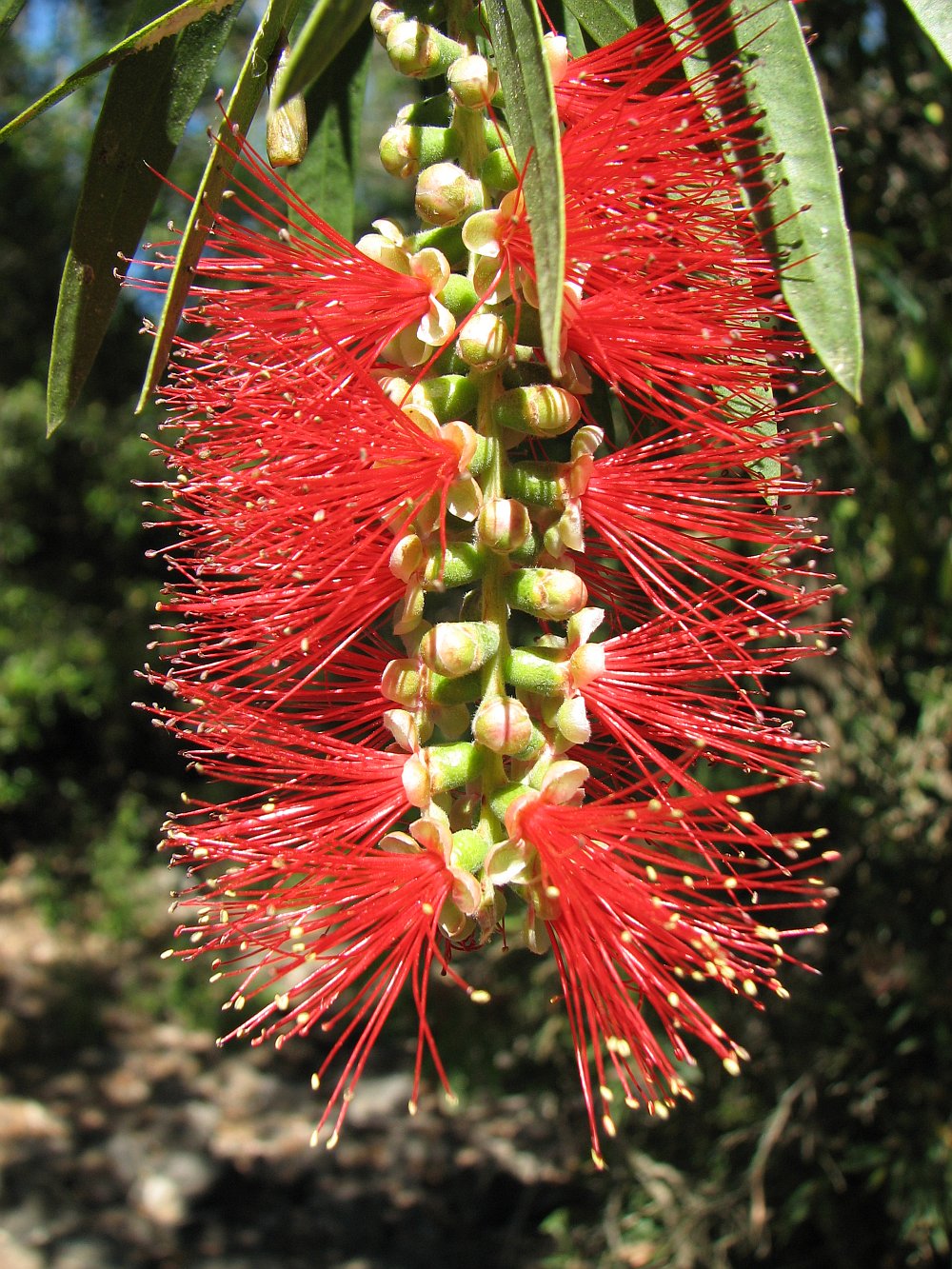 BottlebrushCallistemon
Shrubs with brush-shaped flowers native to Australia
🇦🇺 Australia · Flowering shrub
BottlebrushCallistemon
Shrubs with brush-shaped flowers native to Australia
🇦🇺 Australia · Flowering shrub
 Darwinia
Australian shrubs with bell-like flowers wrapped in colourful bracts
🇦🇺 Australia · Flowering shrub
Darwinia
Australian shrubs with bell-like flowers wrapped in colourful bracts
🇦🇺 Australia · Flowering shrub
 Weeping bottlebrushMelaleuca viminalis
A red-flowered Australian tree with weeping branches and bottlebrush blooms
🇦🇺 Australia and 5 more · Flowering tree
Weeping bottlebrushMelaleuca viminalis
A red-flowered Australian tree with weeping branches and bottlebrush blooms
🇦🇺 Australia and 5 more · Flowering tree
More from New Zealand
All the flowers of New Zealand Wild cherryPrunus avium
A tall flowering tree native to Europe, grown for its sweet fruit and spring blossom
🇮🇹 Italy and 6 more · Flowering tree
Wild cherryPrunus avium
A tall flowering tree native to Europe, grown for its sweet fruit and spring blossom
🇮🇹 Italy and 6 more · Flowering tree
 YarrowAchillea millefolium
A wild, fern-leaved plant with flat clusters of white or pink flowers and a spicy scent
🇨🇳 China and 6 more · Wildflower
YarrowAchillea millefolium
A wild, fern-leaved plant with flat clusters of white or pink flowers and a spicy scent
🇨🇳 China and 6 more · Wildflower
 Common poppyPapaver rhoeas
The vivid red wildflower of fields and remembrance
🇨🇳 China and 7 more · Wildflower
Common poppyPapaver rhoeas
The vivid red wildflower of fields and remembrance
🇨🇳 China and 7 more · Wildflower
 Dog roseRosa canina
A wild climbing rose with pale pink flowers and bright red hips
🇮🇪 Ireland and 7 more · Wildflower
Dog roseRosa canina
A wild climbing rose with pale pink flowers and bright red hips
🇮🇪 Ireland and 7 more · Wildflower