
Odontoglossum
A cool-growing cloud forest orchid genus, now folded into Oncidium
Odontoglossum is a former orchid genus, named in 1816, that is now treated as a synonym of Oncidium. Its several hundred species grow in humid cloud forest at high elevations from Central America and western South America to Guyana, mostly in the northern Andes, and growers prized their ruffled, colourful flowers.
- Named in 1816 by Karl Sigismund Kunth; the name means tooth and tongue in Greek.
- Once held more than 400 species; now treated as a synonym of Oncidium.
- Grows cool in humid cloud forest, from Central and West South America to Guyana.
- High altitude species can carry up to 150 flowers on a single spike.
- The horticultural trade abbreviation for the genus is Odm.
What does Odontoglossum look like?
Most of these orchids grow on other plants, and a few grow on the ground. Each new shoot carries compact pseudobulbs, thickened stems with leaf-like bracts at their base, and one to three leaves at the top. The flower spike rises from the base and arches, sometimes standing upright. Sepals and petals are ruffled and spread wide. The lip, the flower's lower petal, is complex, held upright or alongside the long column, and is either whole or split into three lobes. Blooms can be white, red, purple, brown or yellow, and some are blotched with several colours at once. Species from high ground may carry 150 flowers on one spike.
Where does Odontoglossum come from?
The genus was named in 1816 by Karl Sigismund Kunth. Its name comes from Greek: odon for tooth and glossa for tongue, after two tooth-like calluses at the lip's base. Everything once placed here, more than 400 species, has since been moved out, and Odontoglossum is now treated as a synonym of Oncidium. Many went to Oncidium itself. Others were put in Aspasia, Cyrtochilum, Gomesa, Miltonia, Otoglossum, Rhynchostele and Rossioglossum, among other genera. The plants are cool to cold growers, found on open spots in damp cloud forest at high elevation, from Central America and western South America to Guyana; the northern Andes hold most of them.
When and how Odontoglossum blooms
These are orchids of cool, humid, high altitude cloud forest, growing in open, airy places rather than deep shade. They are epiphytes, meaning they hold on to trees instead of rooting in soil; a few are terrestrial, growing on the ground. Growth is sympodial: a new shoot starts from the base of the last, making its own pseudobulbs, leaves and flower spike. Altitude shapes the flowering. Plants from the highest, coldest places have long spikes with as many as 150 blooms, as Odontoglossum cirrhosum does. Lower altitude plants have shorter spikes, with up to about 20 flowers.

How Odontoglossum is used
Orchid lovers prize these plants for their showy, flamboyant flowers, and the horticultural trade gave the genus the short label Odm. Growers crossed them with related orchids to raise intergeneric hybrids. Nearly every hybrid with red colouring descends from a cross with species then placed in Cochlioda, above all Oncidium noezlianum, once named Cochlioda noezliana. A nothogenus is a name for a hybrid between two genera. With Odontoglossum and Cochlioda both merged into Oncidium, most of those old hybrid names are now obsolete.
Kinds of Odontoglossum
The former genus was large and varied. Over 400 species sat in it, and they now lie across Oncidium and several other genera: Aspasia, Cuitlauzina, Cyrtochilum, Gomesa, Miltonia, Oliveriana, Otoglossum, Rhynchostele and Rossioglossum. These moved plants came from climates outside the Andes. The flowers vary as much as the names, in white, yellow, red and purple, in brown, or blotched with a striking mix. Spike size runs from roughly 20 blooms at low altitude to 150 at the highest.
What Odontoglossum means
The sources tie no festival, emblem or rite to these orchids. Their importance is horticultural. For growers, the genus and its relatives formed a large breeding group, and many hybrids carry a form of its name, such as Odontioda or Odontocidium. Those names, called nothogenera, record crosses between genera, and most are no longer in use.
Questions people ask about Odontoglossum
Where does Odontoglossum come from?
Its species grow in humid cloud forest at higher elevations, from Central America and western South America to Guyana, with most of them around the northern Andes. They are cool to cold growing orchids, found on open spots rather than in deep shade.
Is Odontoglossum still a genus?
No. It was first named in 1816 and long accepted, but it is now regarded as a synonym of Oncidium. Its species, more than 400 of them, have been moved to Oncidium and to other genera such as Miltonia, Gomesa and Rhynchostele.
What do the flowers look like?
Spikes are arching and carry ruffled, spreading sepals and petals around a complex lip, either whole or three-lobed. Colours include white, red, purple, brown and yellow, and some flowers are blotched with several colours. High altitude kinds can have up to 150 flowers per spike.
What does the name mean?
It comes from Greek: odon for tooth and glossa for tongue. The name refers to the two tooth-like calluses at the base of the lip, the lower petal of the orchid flower.
Why do growers value them?
Orchid lovers prize their spectacular, flamboyant flowers, and the genus was widely used in breeding. Hybrids with red colouring nearly all trace back to a cross with species then placed in Cochlioda, especially Oncidium noezlianum.
Good reading and sources
- Encyclopaedia BritannicaArticle
- USDA Plants DatabaseUS Department of Agriculture, Article
- Plants of the World OnlineRoyal Botanic Gardens, Kew, Plant database
- Where it has been recordedGBIF, Plant database
- Sightings and photos by naturalistsiNaturalist, Plant database
- Odontoglossum on WikipediaEncyclopedia
- More photos on Wikimedia CommonsPhotos
- Wikidata recordOpen data
The facts on this page come from the Wikipedia article "Odontoglossum", written by its contributors and used under the CC BY-SA 4.0 licence, and from its Wikidata record (CC0). Phool rewrote the text in its own words, with AI assistance, and compares every page with the article to make sure no passage is copied. It may be reused under the same CC BY-SA 4.0 licence with a link back.
It may contain mistakes. It is not medical or foraging advice: many flowers are poisonous, and traditional uses are reported, not recommended. If something is wrong, tell us. Last refreshed 2026-10-03.
Others in the family Orchidaceae
The whole family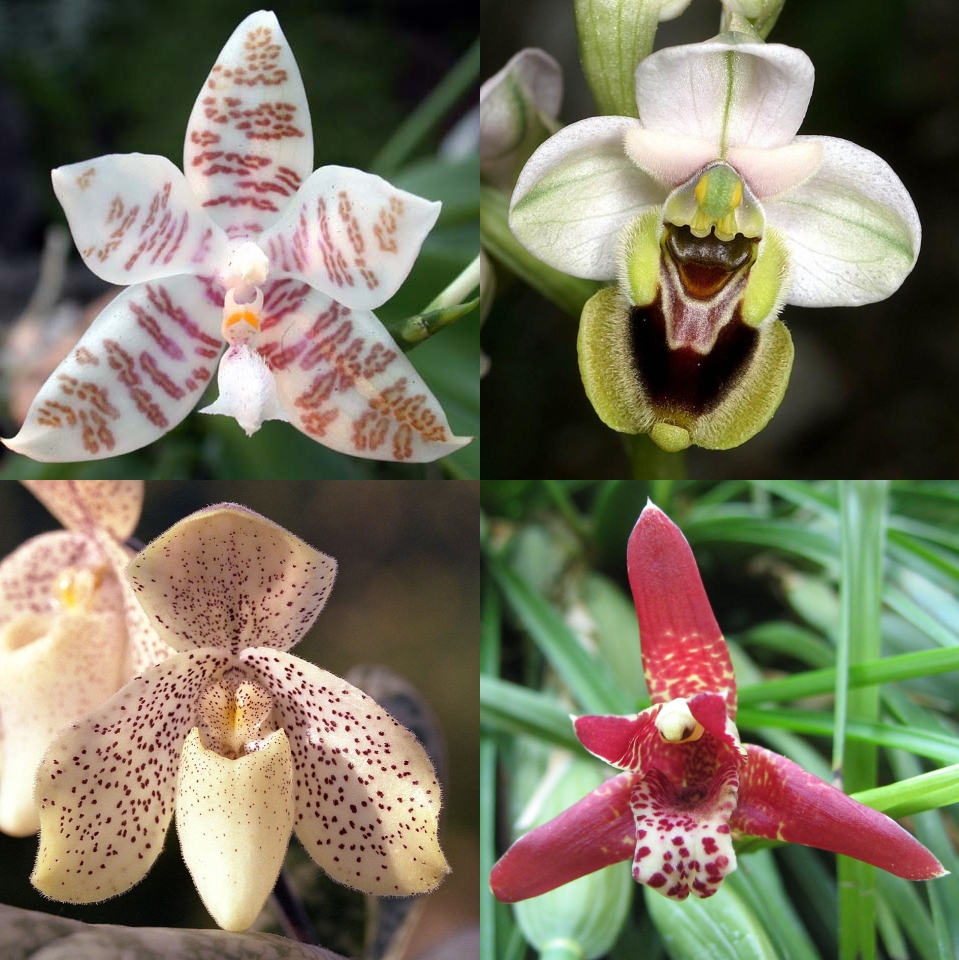 OrchidOrchidaceae
A vast family of colourful, often fragrant flowers found almost everywhere on earth
Orchidaceae · Wildflower
OrchidOrchidaceae
A vast family of colourful, often fragrant flowers found almost everywhere on earth
Orchidaceae · Wildflower
 Vanilla
Climbing orchids with pods used for the world’s most popular flavor
🇲🇽 Mexico and 7 more · Wildflower
Vanilla
Climbing orchids with pods used for the world’s most popular flavor
🇲🇽 Mexico and 7 more · Wildflower
 Orchis
A group of wild orchids with tuberous roots from Europe, North Africa and Asia
🇹🇷 Turkey and 7 more · Wildflower
Orchis
A group of wild orchids with tuberous roots from Europe, North Africa and Asia
🇹🇷 Turkey and 7 more · Wildflower
 Pansy orchidMiltoniopsis
An orchid with flowers that resemble garden pansies
🇨🇷 Costa Rica and 5 more · Orchid
Pansy orchidMiltoniopsis
An orchid with flowers that resemble garden pansies
🇨🇷 Costa Rica and 5 more · Orchid
More from Guyana
All the flowers of Guyana Mexican flamevinePseudogynoxys chenopodioides
A climbing vine with bright orange daisy-like flowers from Central and South America
🇲🇽 Mexico and 7 more · Climber
Mexican flamevinePseudogynoxys chenopodioides
A climbing vine with bright orange daisy-like flowers from Central and South America
🇲🇽 Mexico and 7 more · Climber
 Amazon water-lilyVictoria amazonica
The enormous floating lily of the Amazon, with leaves up to 3 metres wide
🇧🇷 Brazil and 2 more · Water flower
Amazon water-lilyVictoria amazonica
The enormous floating lily of the Amazon, with leaves up to 3 metres wide
🇧🇷 Brazil and 2 more · Water flower
 Parakeet flowerHeliconia psittacorum
A tropical plant with upright red and yellow flowers
🇧🇷 Brazil and 6 more · Wildflower
Parakeet flowerHeliconia psittacorum
A tropical plant with upright red and yellow flowers
🇧🇷 Brazil and 6 more · Wildflower
 Catasetum
A genus of unusual, showy epiphytic orchids from the Americas
🇧🇷 Brazil and 7 more · Wildflower
Catasetum
A genus of unusual, showy epiphytic orchids from the Americas
🇧🇷 Brazil and 7 more · Wildflower