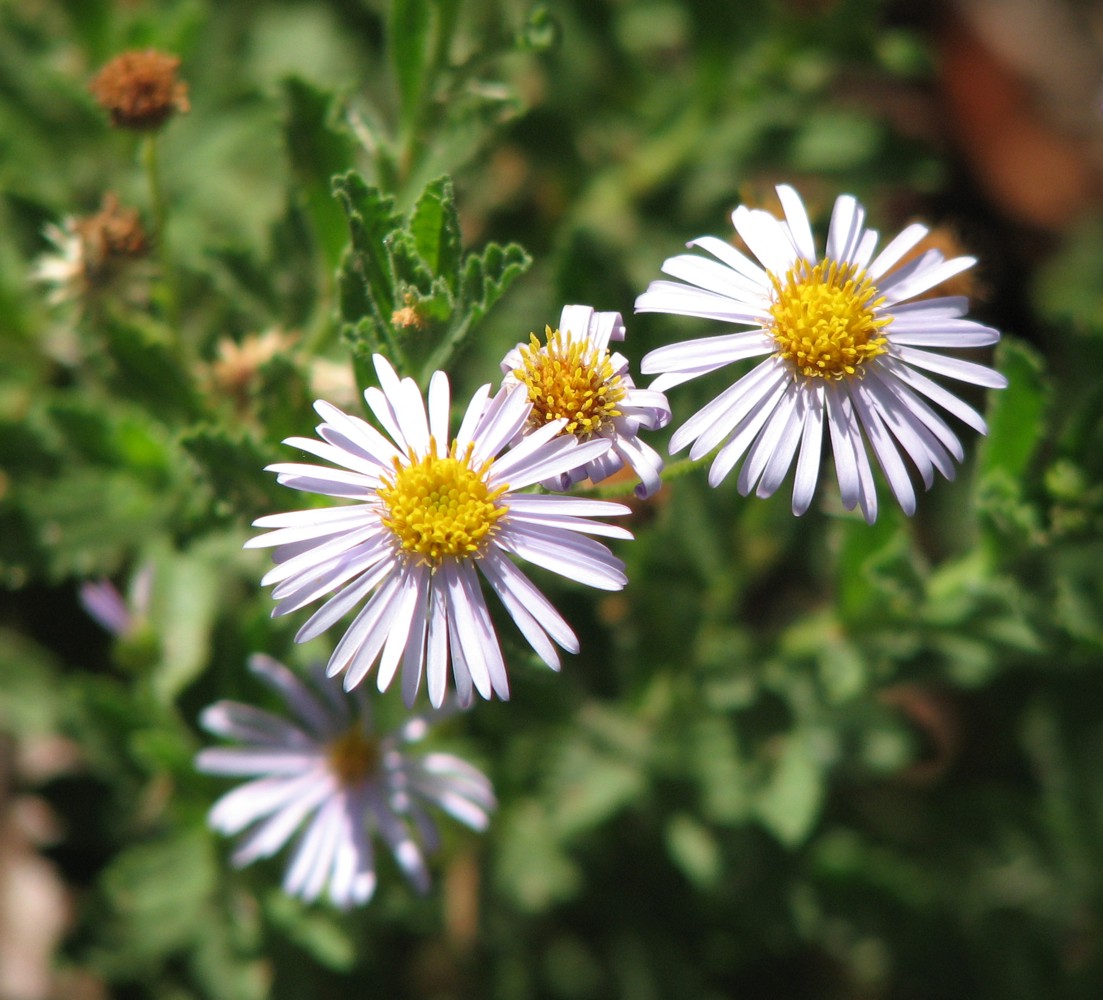
Daisy bush
Olearia, family Asteraceae
A shrub or small tree with daisy-like flowers in white, pink, mauve or purple
Olearia is a genus of flowering shrubs and small trees found across Australia, New Guinea and New Zealand. Its plants bear classic daisy-shaped flower heads and include both garden ornamentals and wild species, some of which grow as trees, a rarity in the daisy family.
- Includes rare tree forms in the daisy family
- Found in Australia, New Zealand and New Guinea
- Over 130 species are native to Australia
- Some garden varieties are frost-hardy to −10°C
- Formerly larger genus split into new genera in 2020
What does Daisy bush look like?
Plants in this group are mostly shrubs, though some grow as small trees, unusual for the daisy family. Their flowers look like typical daisies, with a central disc surrounded by a single ring of petals in white, pink, mauve or purple. Leaves vary: they may be smooth or sticky, arranged opposite or alternately, with edges that are either whole or lobed.
Where does Daisy bush come from?
The genus was named in 1802 after Johann Gottfried Olearius, a German botanist. Originally thought to be one large group, genetic studies later showed it included unrelated plants. In 2020, several species were moved into new genera such as Landerolaria and Shawia based on updated classification.
When and how Daisy bush blooms
These plants grow naturally across Australia, New Guinea and New Zealand, appearing in all Australian states. Some species are cultivated in gardens for their daisy-like blooms. They typically need full sun and a sheltered spot, and many can survive temperatures down to −10 °C.


How Daisy bush is used
Several kinds are grown as ornamental garden plants, valued for their hardiness and daisy flowers. A few have received recognition from horticultural societies for garden performance. In New Zealand, the tree forms are known locally as tree daisies and are part of the native landscape.
Kinds of Daisy bush
Over 130 species are accepted in Australia alone, with many found nowhere else. Notable forms include the coastal tree daisy (Shawia solandri) and musk daisy-bush (Shawia argophylla). Some former Olearia species are now placed in genera like Walsholaria and Neolaria following taxonomic revision.
What Daisy bush means
While not tied to specific religious rites, certain species serve as regional emblems or garden favourites. The group’s reclassification reflects modern efforts to align plant names with evolutionary relationships, moving away from older systems based only on appearance.
Questions people ask about Daisy bush
Where does Olearia come from?
It grows naturally in Australia, New Guinea and New Zealand, with over 130 species endemic to Australia alone.
What do Olearia flowers look like?
They have classic daisy-shaped heads with a central disc and a single ring of petals in white, pink, mauve or purple.
Are any Olearia used in gardens?
Yes, several species and hybrids are grown as ornamental shrubs and have received horticultural awards for garden merit.
Is Olearia related to common daisies?
Yes, it belongs to the Asteraceae family, the same large family that includes daisies, sunflowers and asters.
Why were some species moved out of Olearia?
Genetic studies showed the original genus was polyphyletic, so 29 species were reassigned to ten new genera in 2020.
Good reading and sources
- Olearia macrodontaRoyal Horticultural Society, Article
- Common Names of Australian PlantsAustralian National Botanic Gardens, Article
- USDA Plants DatabaseUS Department of Agriculture, Article
- Plants of the World OnlineRoyal Botanic Gardens, Kew, Plant database
- Where it has been recordedGBIF, Plant database
- Sightings and photos by naturalistsiNaturalist, Plant database
The facts on this page come from the Wikipedia article "Olearia", written by its contributors and used under the CC BY-SA 4.0 licence, and from its Wikidata record (CC0). Phool rewrote the text in its own words, with AI assistance, and compares every page with the article to make sure no passage is copied. It may be reused under the same CC BY-SA 4.0 licence with a link back.
It may contain mistakes. It is not medical or foraging advice: many flowers are poisonous, and traditional uses are reported, not recommended. If something is wrong, tell us. Last refreshed 2026-10-03.
Others in the family Asteraceae
The whole family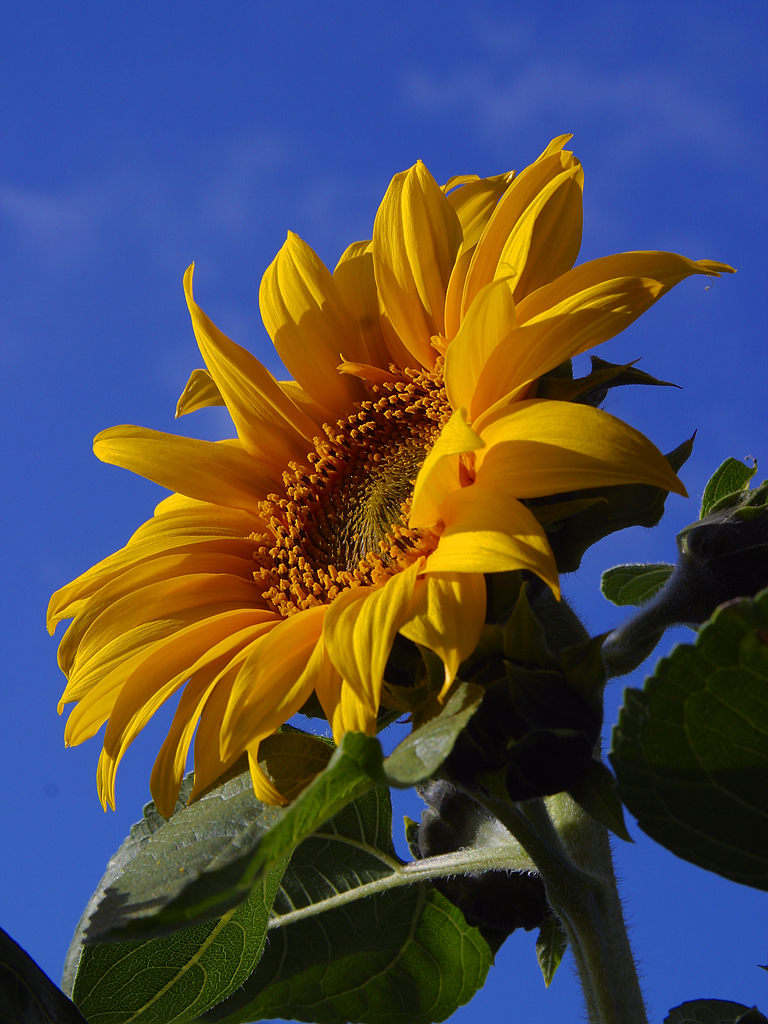 Common sunflowerHelianthus annuus
A tall annual plant grown for its large yellow flower heads and edible seeds
🇨🇦 Canada and 4 more · Wildflower
Common sunflowerHelianthus annuus
A tall annual plant grown for its large yellow flower heads and edible seeds
🇨🇦 Canada and 4 more · Wildflower
 Chrysanthemum菊花
Autumn-blooming flower with thousands of varieties, cherished in East Asia and beyond
🇨🇳 China and 6 more · Wildflower
Chrysanthemum菊花
Autumn-blooming flower with thousands of varieties, cherished in East Asia and beyond
🇨🇳 China and 6 more · Wildflower
 Asteraceae
The vast family of daisies, asters, and sunflowers with star-like flower heads
Asteraceae · Wildflower
Asteraceae
The vast family of daisies, asters, and sunflowers with star-like flower heads
Asteraceae · Wildflower
 DandelionTaraxacum
A yellow-flowered perennial found in fields, lawns, and gardens worldwide
Taraxacum · Wildflower
DandelionTaraxacum
A yellow-flowered perennial found in fields, lawns, and gardens worldwide
Taraxacum · Wildflower
More from Australia
All the flowers of Australia AlmondPrunus amygdalus
A Mediterranean tree grown for its fragrant spring flowers and edible seeds
🇮🇷 Iran and 6 more · Flowering tree
AlmondPrunus amygdalus
A Mediterranean tree grown for its fragrant spring flowers and edible seeds
🇮🇷 Iran and 6 more · Flowering tree
 FennelFoeniculum vulgare
A tall, aromatic herb with feathery leaves and yellow umbels, used for food and spice
🇨🇳 China and 7 more · Herb or useful flower
FennelFoeniculum vulgare
A tall, aromatic herb with feathery leaves and yellow umbels, used for food and spice
🇨🇳 China and 7 more · Herb or useful flower
 RosemarySalvia rosmarinus
A fragrant evergreen shrub with needle-like leaves and purple, blue, or white flowers
🇪🇸 Spain and 5 more · Flowering shrub
RosemarySalvia rosmarinus
A fragrant evergreen shrub with needle-like leaves and purple, blue, or white flowers
🇪🇸 Spain and 5 more · Flowering shrub
 Eucalyptus
The tall, aromatic trees and shrubs known as gum trees or eucalypts
🇦🇺 Australia and 7 more · Flowering tree
Eucalyptus
The tall, aromatic trees and shrubs known as gum trees or eucalypts
🇦🇺 Australia and 7 more · Flowering tree