
Curled Oncidium
Oncidium alexandrae, family Orchidaceae
A cool-growing Colombian orchid with crisped white or rose flowers
Oncidium alexandrae is an epiphytic orchid from the high forests of Colombia. It bears gracefully arching sprays of 6 to 24 wide, flat flowers that range from pure white to pale rose, often spotted with brown and marked by a yellow lip callus.
- Grows as an epiphyte on oak trunks in Colombian cloud forests
- Flowers vary from pure white to rose, often with brown spots
- Needs cool temperatures: days 19–21°C, nights 10–12°C
- Named after Princess Alexandra of Denmark
- Up to 80 small flowers appear on one variant from Nariño
What does Curled Oncidium look like?
This orchid grows on trees and has smooth, oval pseudobulbs topped by two long, narrow leaves. Its flower spike arches gently and carries up to two dozen wide, flat blossoms. Each bloom shows crisped or wavy edges on its sepals and petals, usually in white or soft rose, often with reddish spots. A yellow callus sits at the base of the lip, sometimes lined with red.
Where does Curled Oncidium come from?
First found in 1841 near Pacho, Colombia, by Karl Theodor Hartweg, it was named Odontoglossum crispum in 1845 for its crimped petals. Later, another name, alexandrae, honoured Princess Alexandra of Denmark. Both names referred to the same plant, and in 2008 it was moved into the genus Oncidium, keeping the name Oncidium alexandrae because the alternative was already taken.
When and how Curled Oncidium blooms
It blooms year-round in cool, humid mountain forests between 1,800 and 3,000 metres elevation. Days stay around 19–21°C and nights 10–12°C, with steady moisture from rain, mist and dew. In cultivation, it needs cool temperatures, shade, and high humidity. Early European growers failed until they cooled their greenhouses with water on glass and dripping curtains.


How Curled Oncidium is used
Valued since Victorian times for its elegant, variable flowers, it became a prized greenhouse plant and fetched high prices at auction. It is grown as an ornamental and used to breed hybrids that inherit its large, well-formed blooms. It remains a collector’s choice for cool-climate orchid enthusiasts.
Kinds of Curled Oncidium
Flower colour ranges from pure white to rose or mauve, with or without brown spotting. Plants from Pacho show broad, round white forms; those from Vélez are rose-tinted; Fusagasugá yields stellate mauve-white types; and Nariño produces plants with up to 80 smaller flowers on branched spikes. Over 100 named varieties were once listed, though none are formally accepted today.
What Curled Oncidium means
During the height of orchid mania, collectors felled whole trees in Colombia to harvest specimens, as locals would not climb or handle plants carefully. One account estimated three trees cut per surviving plant sent to Europe. Despite this, it became iconic in Victorian horticulture and appears in dozens of John Day’s illustrated orchid scrapbooks from the 1860s to 1880s.
Where Curled Oncidium is used and seen

Questions people ask about Curled Oncidium
Where does Oncidium alexandrae come from?
It is native to the montane forests of Colombia, growing between 1,800 and 3,000 metres in regions like Cundinamarca, Boyacá, Cauca, Putumayo and Nariño.
What do the flowers look like?
They are wide, flat and 8–10 cm across, mostly white or pale rose, often spotted with brown. The sepals and petals have crisped, wavy or toothed edges.
Why was it hard to grow in Victorian England?
Growers first kept it too warm, assuming Colombian tropics were hot. It only thrived once they cooled greenhouses using water on glass and misting systems.
Is it still used in breeding?
Yes, it is regularly used in hybridization because it passes on large, well-shaped flowers to its offspring.
What is its conservation status in the wild?
The sources describe historical over-collection, trees were felled to reach plants, but do not state a current IUCN status or legal protection.
Good reading and sources
- Plants of the World OnlineRoyal Botanic Gardens, Kew, Plant database
- Where it has been recordedGBIF, Plant database
- Sightings and photos by naturalistsiNaturalist, Plant database
- Oncidium alexandrae on WikipediaEncyclopedia
- More photos on Wikimedia CommonsPhotos
- Wikidata recordOpen data
The facts on this page come from the Wikipedia article "Oncidium alexandrae", written by its contributors and used under the CC BY-SA 4.0 licence, and from its Wikidata record (CC0). Phool rewrote the text in its own words, with AI assistance, and compares every page with the article to make sure no passage is copied. It may be reused under the same CC BY-SA 4.0 licence with a link back.
It may contain mistakes. It is not medical or foraging advice: many flowers are poisonous, and traditional uses are reported, not recommended. If something is wrong, tell us. Last refreshed 2026-10-03.
Others in the family Orchidaceae
The whole family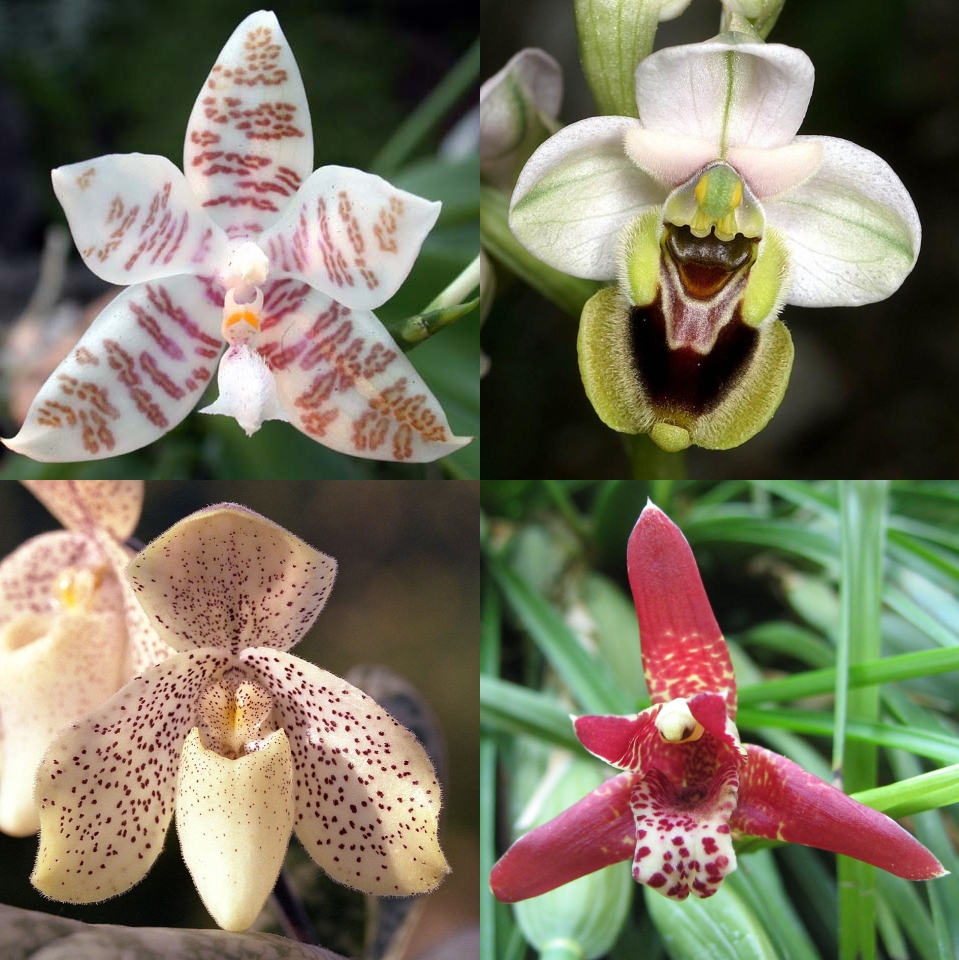 OrchidOrchidaceae
A vast family of colourful, often fragrant flowers found almost everywhere on earth
Orchidaceae · Wildflower
OrchidOrchidaceae
A vast family of colourful, often fragrant flowers found almost everywhere on earth
Orchidaceae · Wildflower
 Vanilla
Climbing orchids with pods used for the world’s most popular flavor
🇲🇽 Mexico and 7 more · Wildflower
Vanilla
Climbing orchids with pods used for the world’s most popular flavor
🇲🇽 Mexico and 7 more · Wildflower
 Orchis
A group of wild orchids with tuberous roots from Europe, North Africa and Asia
🇹🇷 Turkey and 7 more · Wildflower
Orchis
A group of wild orchids with tuberous roots from Europe, North Africa and Asia
🇹🇷 Turkey and 7 more · Wildflower
 Pansy orchidMiltoniopsis
An orchid with flowers that resemble garden pansies
🇨🇷 Costa Rica and 5 more · Orchid
Pansy orchidMiltoniopsis
An orchid with flowers that resemble garden pansies
🇨🇷 Costa Rica and 5 more · Orchid
More from Colombia
All the flowers of Colombia BromeliadsBromeliaceae
A family of tropical flowering plants from the Americas, including the pineapple
🇨🇱 Chile and 7 more · Wildflower
BromeliadsBromeliaceae
A family of tropical flowering plants from the Americas, including the pineapple
🇨🇱 Chile and 7 more · Wildflower
 Flamingo FlowerAnthurium andraeanum
A tropical plant with heart-shaped leaves and vivid red or pink spathes
🇨🇴 Colombia and 2 more · Garden flower
Flamingo FlowerAnthurium andraeanum
A tropical plant with heart-shaped leaves and vivid red or pink spathes
🇨🇴 Colombia and 2 more · Garden flower
 Black-eyed Susan vineThunbergia alata
A fast-growing climbing plant with bright flowers and a dark centre
🇨🇳 China and 7 more · Garden flower
Black-eyed Susan vineThunbergia alata
A fast-growing climbing plant with bright flowers and a dark centre
🇨🇳 China and 7 more · Garden flower
 Browallia
A small genus of blue and violet-flowered plants from the Americas
🇨🇴 Colombia and 3 more · Wildflower
Browallia
A small genus of blue and violet-flowered plants from the Americas
🇨🇴 Colombia and 3 more · Wildflower