
Early spider-orchid
Ophrys sphegodes, family Orchidaceae
A wild orchid with spider-like flowers found across Europe and the Middle East
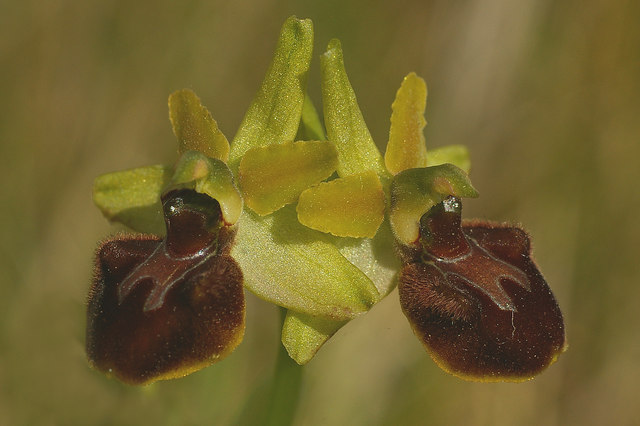
The early spider-orchid is a wild orchid that grows in meadows and open land from Britain through southern Europe to Iran. Its flowers look like small spiders, with green sepals and a dark, velvety lip marked with silvery-blue. This orchid is pollinated by bees and forms partnerships with soil fungi.
- Flowers mimic spiders to attract bee pollinators
- Blooms from March to May in most of its range
- Rare in the UK but widespread across Europe and the Middle East
- Forms a partnership with soil fungi for growth
- Many subspecies found in different regions
What does Early spider-orchid look like?
Early spider-orchid plants can be anywhere from 20 cm tall in northern areas to 70 cm in the south. Each stem may carry a few to over a dozen flowers. The flowers have greenish sepals and a broad, dark lip that is covered in fine hairs and marked with a silvery-blue pattern. This lip gives the flower a spider-like look, which is where its name comes from.
Where does Early spider-orchid come from?
This orchid is native to a wide area stretching from Britain and Portugal across southern and central Europe to Iran. It grows in places with alkaline soils, such as meadows, grassy banks, and the edges of woods. In the UK, it is rare and found only in a few southern counties, but it can form large groups where it does occur. The genus name Ophrys comes from Greek, meaning eyebrow, likely referring to the flower's hairy lip.
When and how Early spider-orchid blooms
The early spider-orchid blooms from March to May, with flowering starting later in the north. It grows best in open, undisturbed grassland with chalky or limestone soils. The plant relies on a partnership with certain soil fungi to grow. Pollination is carried out by bees, which are attracted by the flower's mimicry.


How Early spider-orchid is used
This orchid is valued for its unusual appearance and is listed in the British Red Data Book due to its rarity in the UK. It is not commonly used in gardens or as a cut flower, but it is important for conservation and is a symbol of wildflower diversity in some regions.
Kinds of Early spider-orchid
There are many subspecies and forms of Ophrys sphegodes, each found in different parts of Europe and the Mediterranean. Some are named for their regions, such as those from Crete, Malta, or the Balkans. These subspecies may differ in flower shape, size, or the pollinators they attract.
What Early spider-orchid means
Ophrys sphegodes is significant as one of the first orchids to flower in spring and is a sign of healthy, undisturbed grassland. It is protected in the UK and appears in conservation lists. The plant's mimicry of insects has long fascinated botanists and naturalists.
Questions people ask about Early spider-orchid
Where does the early spider-orchid come from?
It is native to Europe and the Middle East, growing from Britain and Portugal eastward to Iran, mostly in grasslands and open areas with alkaline soils.
What does the early spider-orchid look like?
The plant has greenish sepals and a broad, velvety lip that is dark red-brown with a silvery-blue marking, giving the flower a spider-like appearance.
How is the early spider-orchid pollinated?
It is pollinated by bees, especially the miner bee Andrena nigroaenea in the UK, which are attracted by the flower's mimicry of female insects.
Is the early spider-orchid endangered?
Globally, it is not considered threatened, but in the UK it is rare and listed in the British Red Data Book, making it a focus for conservation.
Are there different types of early spider-orchid?
Yes, there are many subspecies and forms found in different parts of Europe and the Mediterranean, each with slight differences in appearance and pollinators.
Good reading and sources
- Climate change threatens rare British orchid that tricks bees into matingThe Guardian, Article
- Plants of the World OnlineRoyal Botanic Gardens, Kew, Plant database
- Where it has been recordedGBIF, Plant database
- Sightings and photos by naturalistsiNaturalist, Plant database
- Ophrys sphegodes on WikipediaEncyclopedia
- More photos on Wikimedia CommonsPhotos
- Wikidata recordOpen data
The facts on this page come from the Wikipedia article "Ophrys sphegodes", written by its contributors and used under the CC BY-SA 4.0 licence, and from its Wikidata record (CC0). Phool rewrote the text in its own words, with AI assistance, and compares every page with the article to make sure no passage is copied. It may be reused under the same CC BY-SA 4.0 licence with a link back.
It may contain mistakes. It is not medical or foraging advice: many flowers are poisonous, and traditional uses are reported, not recommended. If something is wrong, tell us. Last refreshed 2026-10-03.
Others in the family Orchidaceae
The whole family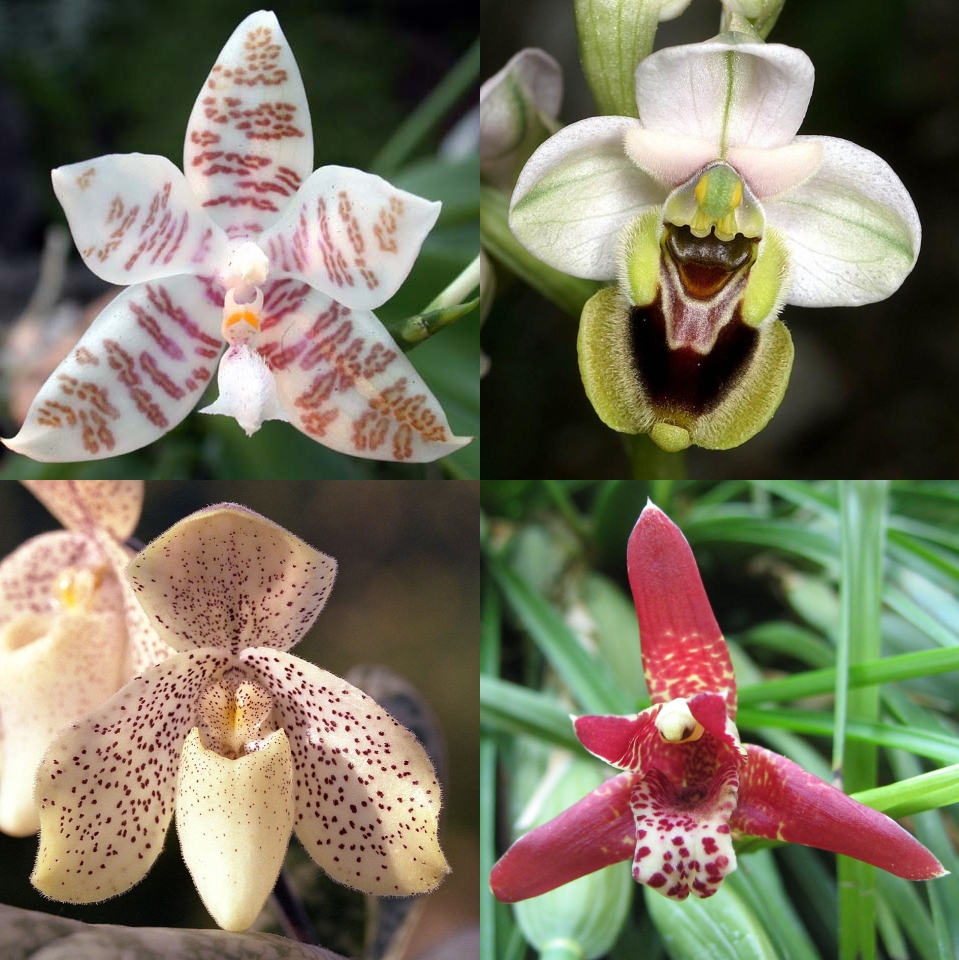 OrchidOrchidaceae
A vast family of colourful, often fragrant flowers found almost everywhere on earth
Orchidaceae · Wildflower
OrchidOrchidaceae
A vast family of colourful, often fragrant flowers found almost everywhere on earth
Orchidaceae · Wildflower
 Vanilla
Climbing orchids with pods used for the world’s most popular flavor
🇲🇽 Mexico and 7 more · Wildflower
Vanilla
Climbing orchids with pods used for the world’s most popular flavor
🇲🇽 Mexico and 7 more · Wildflower
 Orchis
A group of wild orchids with tuberous roots from Europe, North Africa and Asia
🇹🇷 Turkey and 7 more · Wildflower
Orchis
A group of wild orchids with tuberous roots from Europe, North Africa and Asia
🇹🇷 Turkey and 7 more · Wildflower
 Pansy orchidMiltoniopsis
An orchid with flowers that resemble garden pansies
🇨🇷 Costa Rica and 5 more · Orchid
Pansy orchidMiltoniopsis
An orchid with flowers that resemble garden pansies
🇨🇷 Costa Rica and 5 more · Orchid
More from Spain
All the flowers of Spain AlmondPrunus amygdalus
A Mediterranean tree grown for its fragrant spring flowers and edible seeds
🇮🇷 Iran and 6 more · Flowering tree
AlmondPrunus amygdalus
A Mediterranean tree grown for its fragrant spring flowers and edible seeds
🇮🇷 Iran and 6 more · Flowering tree
 Narcissus
Spring-flowering bulbs with trumpet-shaped blooms in white, yellow, and orange
🇬🇧 United Kingdom and 7 more · Wildflower
Narcissus
Spring-flowering bulbs with trumpet-shaped blooms in white, yellow, and orange
🇬🇧 United Kingdom and 7 more · Wildflower
 HawthornCrataegus
A thorny shrub or tree with white or pink spring flowers and small edible fruits
🇮🇪 Ireland and 7 more · Wildflower
HawthornCrataegus
A thorny shrub or tree with white or pink spring flowers and small edible fruits
🇮🇪 Ireland and 7 more · Wildflower
 OleanderNerium oleander
A showy, evergreen shrub with clusters of pink, white or red flowers
🇲🇦 Morocco and 8 more · Flowering shrub
OleanderNerium oleander
A showy, evergreen shrub with clusters of pink, white or red flowers
🇲🇦 Morocco and 8 more · Flowering shrub