
Paphiopedilum glaucophyllum
A Southeast Asian slipper orchid with blue-green leaves and striped flowers
Paphiopedilum glaucophyllum is a terrestrial orchid native to Indonesia, found in Java and Sumatra. It has waxy blue-green leaves and striking flowers with green and purple stripes, twisted petals, and a pouch-like lip. The plant blooms for much of the year, often producing two flowers in succession.
- Native to volcanic slopes and limestone cliffs in Java and Sumatra
- Flowers have a green and purple-striped sepal and twisted, hairy petals
- Blooms repeatedly from spring through winter
- Leaves are waxy, narrow, and blue-green
- The lip of the flower resembles a slipper or bag
What does Paphiopedilum glaucophyllum look like?
Paphiopedilum glaucophyllum grows up to 45 cm tall, with narrow, waxy, blue-green leaves about 30 cm long. Its flowers are 8–11 cm wide, featuring a green and purple-striped upper sepal, twisted and hairy purple-mottled petals, and a white pouch-shaped lip with pink-purple dots. The flower’s lip resembles a slipper or bag, which is where the common name 'lady's-slipper' comes from.
Where does Paphiopedilum glaucophyllum come from?
This orchid is native to Southeast Asia, specifically Indonesia, where it is found on the volcanic slopes and limestone cliffs of East and Southwest Java (including Mount Semeru and Lumajang) and in Central Sumatra. It grows at elevations between 200 and 700 metres. The species is closely related to Paphiopedilum liemianum, but can be distinguished by its clearer blue-green leaves.
When and how Paphiopedilum glaucophyllum blooms
Paphiopedilum glaucophyllum blooms repeatedly, often with two flowers at a time. When one flower fades, another appears, allowing the plant to flower from spring through winter. It thrives in moist, calcareous soils with mosses, preferring sun to partial shade. The orchid is adapted to the humid, rainy conditions of volcanic and limestone habitats.


How Paphiopedilum glaucophyllum is used
There is no mention of traditional or ceremonial uses for Paphiopedilum glaucophyllum in the sources. It is primarily known as a wild orchid, valued for its unique appearance and long flowering period.
Kinds of Paphiopedilum glaucophyllum
Paphiopedilum glaucophyllum is very similar to Paphiopedilum liemianum, which has more intensely green leaves. Both belong to the same genus, but their leaf color and some floral details help distinguish them.
What Paphiopedilum glaucophyllum means
The flower’s pouch-like shape has inspired its common name, 'lady's-slipper.' While it is not noted as a symbol or emblem, its striking form and long blooming season make it notable among orchid enthusiasts. There are no references to cultural or religious significance in the sources.
Questions people ask about Paphiopedilum glaucophyllum
Where does Paphiopedilum glaucophyllum come from?
This orchid is native to Indonesia, specifically found on volcanic slopes and limestone cliffs in East and Southwest Java and Central Sumatra.
What does the flower of Paphiopedilum glaucophyllum look like?
Its flowers are 8–11 cm wide, with a green and purple-striped upper sepal, twisted purple-mottled petals, and a white pouch-shaped lip dotted with pink-purple.
How long does Paphiopedilum glaucophyllum bloom?
The plant has a long flowering period, blooming repeatedly from spring through winter, often with two flowers in succession.
What kind of habitat does Paphiopedilum glaucophyllum prefer?
It grows in moist, calcareous soils with mosses on rainy volcanic mountain slopes and limestone cliffs, at elevations of 200–700 metres.
Is Paphiopedilum glaucophyllum used in any traditional practices?
The sources do not mention any traditional, ceremonial, or medicinal uses for this orchid. It is mainly valued for its unique appearance.
Good reading and sources
- IUCN Red List of Threatened SpeciesIUCN Red List, Article
- Plants of the World OnlineRoyal Botanic Gardens, Kew, Plant database
- Where it has been recordedGBIF, Plant database
- Sightings and photos by naturalistsiNaturalist, Plant database
- Paphiopedilum glaucophyllum on WikipediaEncyclopedia
- More photos on Wikimedia CommonsPhotos
- Wikidata recordOpen data
The facts on this page come from the Wikipedia article "Paphiopedilum glaucophyllum", written by its contributors and used under the CC BY-SA 4.0 licence, and from its Wikidata record (CC0). Phool rewrote the text in its own words, with AI assistance, and compares every page with the article to make sure no passage is copied. It may be reused under the same CC BY-SA 4.0 licence with a link back.
It may contain mistakes. It is not medical or foraging advice: many flowers are poisonous, and traditional uses are reported, not recommended. If something is wrong, tell us. Last refreshed 2026-10-03.
Others in the family Orchidaceae
The whole family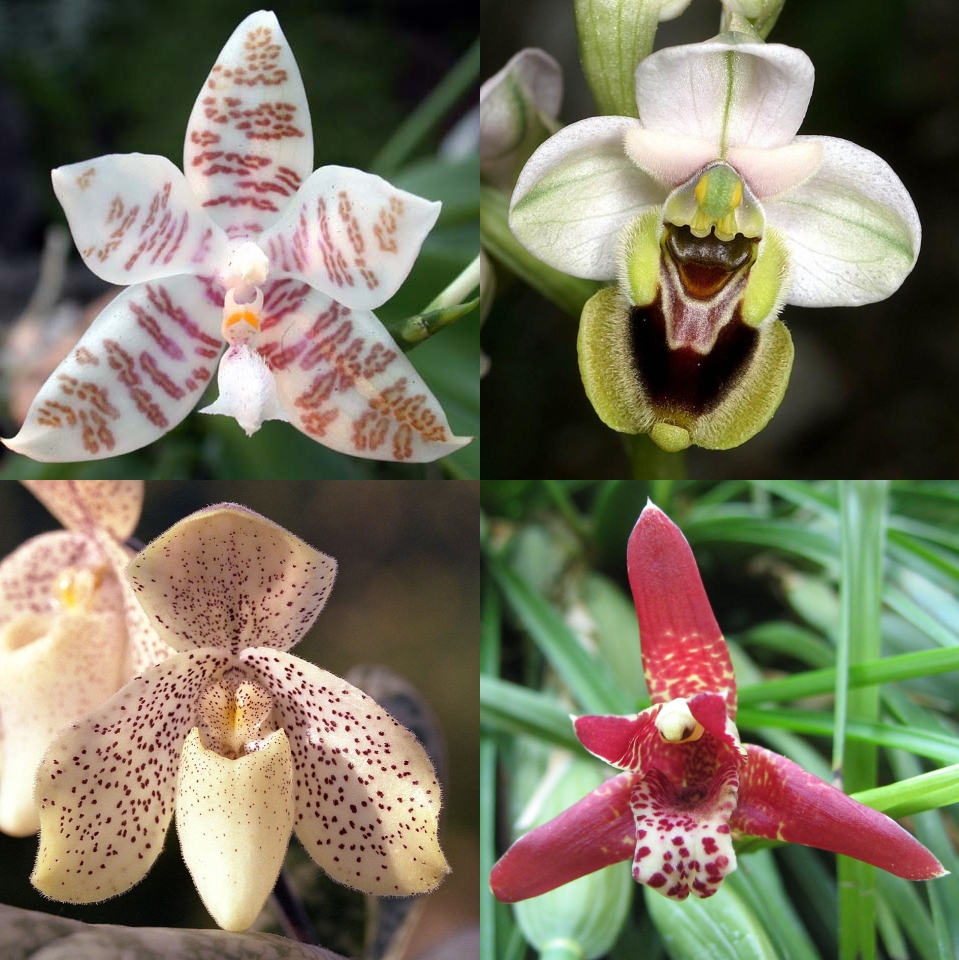 OrchidOrchidaceae
A vast family of colourful, often fragrant flowers found almost everywhere on earth
Orchidaceae · Wildflower
OrchidOrchidaceae
A vast family of colourful, often fragrant flowers found almost everywhere on earth
Orchidaceae · Wildflower
 Vanilla
Climbing orchids with pods used for the world’s most popular flavor
🇲🇽 Mexico and 7 more · Wildflower
Vanilla
Climbing orchids with pods used for the world’s most popular flavor
🇲🇽 Mexico and 7 more · Wildflower
 Orchis
A group of wild orchids with tuberous roots from Europe, North Africa and Asia
🇹🇷 Turkey and 7 more · Wildflower
Orchis
A group of wild orchids with tuberous roots from Europe, North Africa and Asia
🇹🇷 Turkey and 7 more · Wildflower
 Waling-walingVanda sanderiana
A rare orchid known as the 'Queen of Philippine flowers'
🇵🇭 Philippines · Orchid
Waling-walingVanda sanderiana
A rare orchid known as the 'Queen of Philippine flowers'
🇵🇭 Philippines · Orchid
More from Indonesia
All the flowers of Indonesia JasmineJasminum
A group of fragrant shrubs and vines with white or yellow star-shaped flowers
🇵🇰 Pakistan and 7 more · Wildflower
JasmineJasminum
A group of fragrant shrubs and vines with white or yellow star-shaped flowers
🇵🇰 Pakistan and 7 more · Wildflower
 Acacia
Shrubs and trees with golden or cream puffball flowers, native mostly to Australia
🇦🇺 Australia and 6 more · Wildflower
Acacia
Shrubs and trees with golden or cream puffball flowers, native mostly to Australia
🇦🇺 Australia and 6 more · Wildflower
 Primula
A large genus of spring-blooming wild and garden flowers from cool and mountain regions
🇨🇳 China and 5 more · Wildflower
Primula
A large genus of spring-blooming wild and garden flowers from cool and mountain regions
🇨🇳 China and 5 more · Wildflower
 Pigeon orchidDendrobium crumenatum
A white, fragrant orchid that blooms all at once after rain
🇮🇳 India and 5 more · Wildflower
Pigeon orchidDendrobium crumenatum
A white, fragrant orchid that blooms all at once after rain
🇮🇳 India and 5 more · Wildflower