
Paphiopedilum insigne
A rare slipper orchid from the Khasi hills with helmet-shaped yellow flowers
Paphiopedilum insigne is a slipper orchid native to the Khasi hills of India and nearby regions of Bangladesh and China. Its solitary, helmet-shaped flower varies in yellow and brown shades, with wavy petals and purple spots. Once prized by collectors, it is now rare in the wild due to overharvesting and habitat loss.
- Native to the Khasi hills of India and Sylhet region of Bangladesh
- Produces a single helmet-shaped flower in autumn and winter
- Wild populations are now very rare due to overcollection
- Flower colors range from yellow and brown to white and purple-spotted
- Once sold for high prices among European collectors
What does Paphiopedilum insigne look like?
Paphiopedilum insigne is a terrestrial orchid with 5 to 6 leathery, light green leaves up to 32 cm long. The plant produces a single flower on an upright stem, 7–12 cm wide. The flower shows a white-tipped dorsal sepal with purple spots, wavy yellow-brown petals, and a helmet-shaped lip in yellow or yellowish-green with purple-brown shading. The base of the leaves and bract are purple-spotted.
Where does Paphiopedilum insigne come from?
This orchid is native to the Khasi hills in Assam and Meghalaya, India, and the Sylhet region of Bangladesh, with some populations in northwest Yunnan, China. It grows on steep limestone slopes above streams and waterfalls, often among grasses and shrubs. The species was first described from a Sylhet specimen, but may now be extinct there due to overcollection and habitat loss. Reports from Myanmar and Thailand are likely erroneous or refer to extinct populations.
When and how Paphiopedilum insigne blooms
Paphiopedilum insigne flowers from October to December. It grows in humus and debris in rock crevices on dolomitic limestone cliffs at elevations of 1000–1600 meters. The plant is grown from seed or division, usually in conditions that mimic its cool, moist, rocky native habitat.


How Paphiopedilum insigne is used
This orchid was highly prized by European and American collectors in the 19th century, leading to its rarity in the wild. Today, it is mainly grown as a garden and collector's plant. Its striking flower makes it a favorite among orchid enthusiasts, but wild plants are now scarce due to past overharvesting.
Kinds of Paphiopedilum insigne
Several varieties and forms have been described, though many are synonyms. The main type is mooreana. The variety sanderae, a semi-alba form, was once sold for high prices. The name montanum was used for forms with narrower leaves and more marked flowers, often from different mountain regions, but is not a true botanical variety.
What Paphiopedilum insigne means
The Latin name 'insigne' means 'badge of honor', reflecting the flower's striking appearance. Its popularity in the 19th century led to heavy collecting and a sharp decline in wild populations. Today, it stands as a symbol of the risks of overcollection and the importance of orchid conservation.
Questions people ask about Paphiopedilum insigne
Where does Paphiopedilum insigne come from?
It is native to the Khasi hills in Assam and Meghalaya, India, the Sylhet region of Bangladesh, and northwest Yunnan in China. It grows on limestone cliffs and slopes above streams and waterfalls.
What does the flower of Paphiopedilum insigne look like?
The flower is helmet-shaped, 7–12 cm wide, with a white-tipped dorsal sepal marked with purple spots, wavy yellow-brown petals, and a yellow or yellowish-green lip shaded with purple-brown.
Why is Paphiopedilum insigne rare in the wild?
It became rare due to heavy collection for the orchid trade in the 19th and 20th centuries, as well as ongoing poaching and habitat destruction in its native regions.
When does Paphiopedilum insigne flower?
It flowers from October to December in its native range, which includes parts of India, Bangladesh, and China.
Are there different varieties of Paphiopedilum insigne?
Yes, several varieties and forms have been described, including mooreana and sanderae, though many names are now considered synonyms or trade names rather than true botanical varieties.
Good reading and sources
- IUCN Red List of Threatened SpeciesIUCN Red List, Article
- Paphiopedilum insigneRoyal Horticultural Society, Article
- Plants of the World OnlineRoyal Botanic Gardens, Kew, Plant database
- Where it has been recordedGBIF, Plant database
- Sightings and photos by naturalistsiNaturalist, Plant database
- Paphiopedilum insigne on WikipediaEncyclopedia
- More photos on Wikimedia CommonsPhotos
- Wikidata recordOpen data
The facts on this page come from the Wikipedia article "Paphiopedilum insigne", written by its contributors and used under the CC BY-SA 4.0 licence, and from its Wikidata record (CC0). Phool rewrote the text in its own words, with AI assistance, and compares every page with the article to make sure no passage is copied. It may be reused under the same CC BY-SA 4.0 licence with a link back.
It may contain mistakes. It is not medical or foraging advice: many flowers are poisonous, and traditional uses are reported, not recommended. If something is wrong, tell us. Last refreshed 2026-10-03.
Others in the family Orchidaceae
The whole family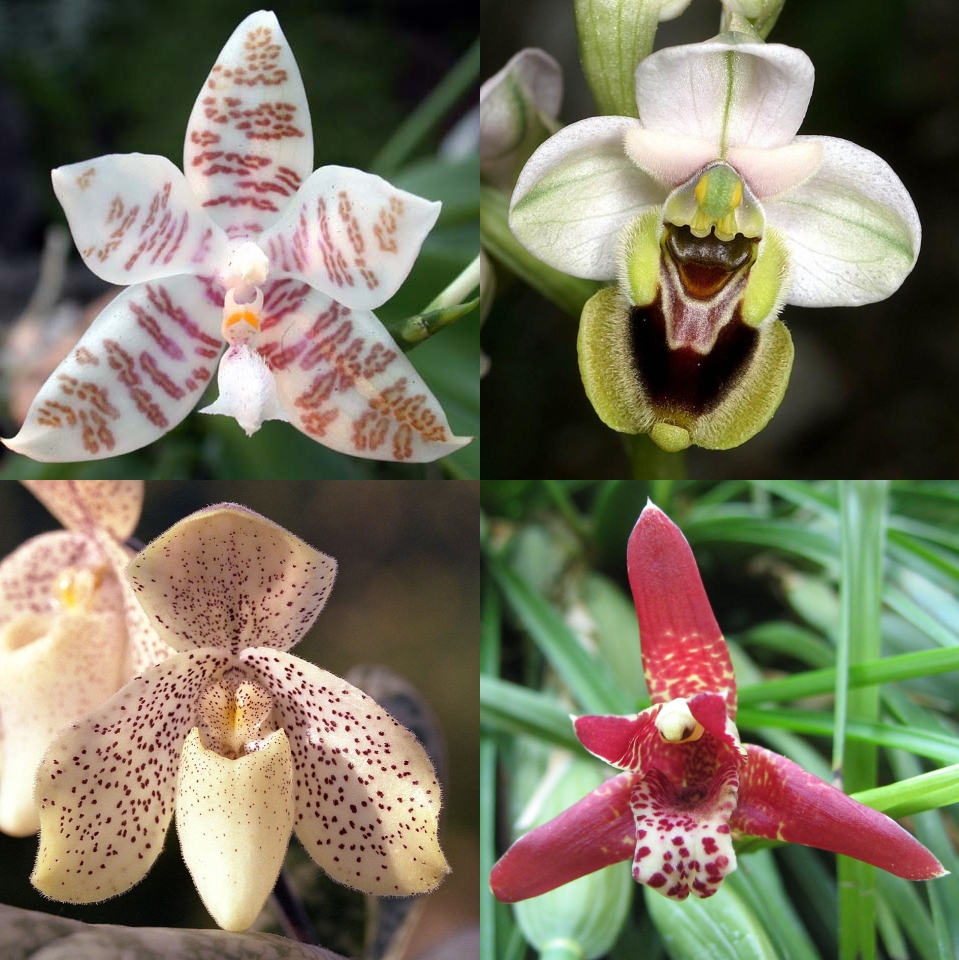 OrchidOrchidaceae
A vast family of colourful, often fragrant flowers found almost everywhere on earth
Orchidaceae · Wildflower
OrchidOrchidaceae
A vast family of colourful, often fragrant flowers found almost everywhere on earth
Orchidaceae · Wildflower
 Vanilla
Climbing orchids with pods used for the world’s most popular flavor
🇲🇽 Mexico and 7 more · Wildflower
Vanilla
Climbing orchids with pods used for the world’s most popular flavor
🇲🇽 Mexico and 7 more · Wildflower
 Orchis
A group of wild orchids with tuberous roots from Europe, North Africa and Asia
🇹🇷 Turkey and 7 more · Wildflower
Orchis
A group of wild orchids with tuberous roots from Europe, North Africa and Asia
🇹🇷 Turkey and 7 more · Wildflower
 Fire star orchidEpidendrum radicans
A bright orange orchid that roots along its whole stem
🇲🇽 Mexico and 7 more · Orchid
Fire star orchidEpidendrum radicans
A bright orange orchid that roots along its whole stem
🇲🇽 Mexico and 7 more · Orchid
More from India
All the flowers of India PeachPrunus persica
A flowering fruit tree from China, grown for its pink blossoms and sweet fruit
🇨🇳 China and 7 more · Flowering tree
PeachPrunus persica
A flowering fruit tree from China, grown for its pink blossoms and sweet fruit
🇨🇳 China and 7 more · Flowering tree
 PomegranatePunica granatum
A shrub with bright red flowers and a fruit full of edible seeds
🇮🇷 Iran and 9 more · Flowering shrub
PomegranatePunica granatum
A shrub with bright red flowers and a fruit full of edible seeds
🇮🇷 Iran and 9 more · Flowering shrub
 TulipTulipa
Spring-blooming bulbs with showy, cup-shaped flowers in many colours
🇳🇱 Netherlands and 7 more · Wildflower
TulipTulipa
Spring-blooming bulbs with showy, cup-shaped flowers in many colours
🇳🇱 Netherlands and 7 more · Wildflower
 FennelFoeniculum vulgare
A tall, aromatic herb with feathery leaves and yellow umbels, used for food and spice
🇨🇳 China and 7 more · Herb or useful flower
FennelFoeniculum vulgare
A tall, aromatic herb with feathery leaves and yellow umbels, used for food and spice
🇨🇳 China and 7 more · Herb or useful flower