Rothschild's slipper orchid
Paphiopedilum rothschildianum, family Orchidaceae
A rare orchid with wide-spread petals from Mount Kinabalu, Borneo
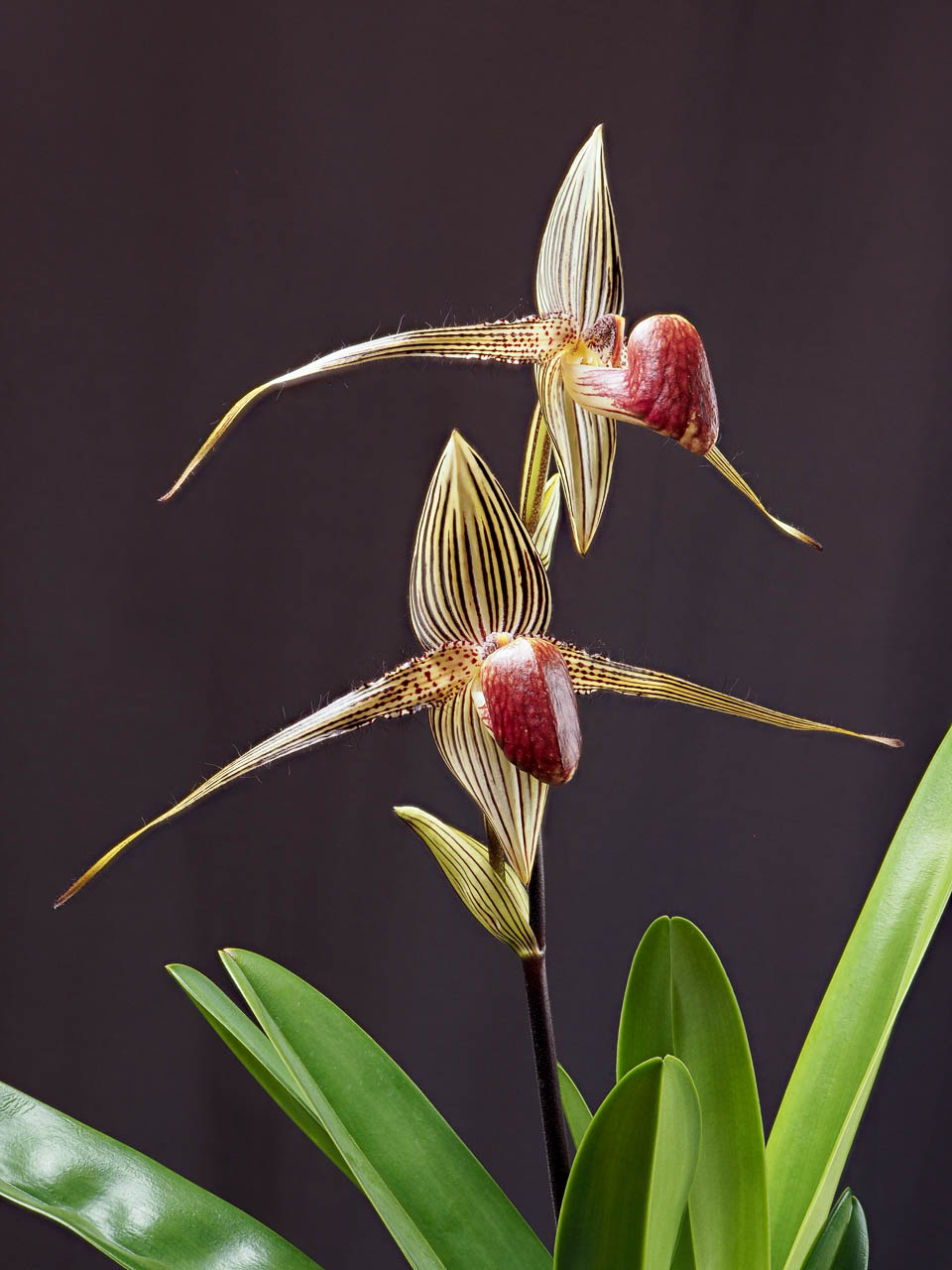
Rothschild's slipper orchid is a striking orchid native only to the slopes of Mount Kinabalu in Malaysian Borneo. Its tall stems hold up to six large flowers, each with horizontally spread petals marked in green and red. Highly prized and critically endangered, it grows in rainforest soils and is threatened by illegal collection.
- Endemic to Mount Kinabalu in Malaysian Borneo
- Flowers have green and red-spotted, horizontally spread petals
- Critically endangered due to illegal collection and habitat loss
- Can fetch up to US$5000 per plant on the black market
- Blooms mainly from April to May
What does Rothschild's slipper orchid look like?
This orchid produces tall stems, each carrying up to six large flowers. The blooms are notable for their horizontally held petals, which are green with red spots. The plant has clear green leaves and can grow as either a ground-dwelling or rock-dwelling orchid. Its flowers are among the largest in its genus, measuring up to 13 inches across.
Where does Rothschild's slipper orchid come from?
Rothschild's slipper orchid is found only on Mount Kinabalu in Sabah, Malaysian Borneo. It was first described in the 19th century, but its true location was kept hidden for decades, leading to confusion about its origins. The plant was thought extinct until rediscovered in 1959. Its habitat is limited to rainforest slopes and cliffs with ultramafic soils, which are rich in minerals like nickel and chromium.
When and how Rothschild's slipper orchid blooms
The orchid grows in warm, humid environments, often near streams at elevations between 500 and 1200 meters. It can take four to five years to flower, especially if grown in shade. The plant prefers noticeable temperature differences between day and night, similar to its native mountain habitat. It blooms mainly from April to May.

How Rothschild's slipper orchid is used
This orchid is highly valued by collectors and is sometimes called the 'King of Orchids.' Its rarity and beauty have made it a symbol of prestige. However, illegal collection for trade has pushed it to the brink of extinction, and it is now protected, with efforts underway to conserve and reintroduce it to the wild.
Kinds of Rothschild's slipper orchid
Paphiopedilum rothschildianum belongs to the Corypetalum group of slipper orchids, known for their distinctive petal arrangement. While there are many Paphiopedilum species in Borneo, this one stands out for its size and petal shape. No cultivated varieties are widely recognized in the sources.
What Rothschild's slipper orchid means
The orchid's rarity and striking appearance have earned it nicknames like 'Gold of Kinabalu' and 'King of Orchids.' It is a symbol of the unique flora of Mount Kinabalu and is one of the world's most sought-after orchids. Conservation efforts include habitat protection and attempts at propagation to prevent its extinction.
Questions people ask about Rothschild's slipper orchid
Where does Rothschild's slipper orchid come from?
This orchid is found only on the slopes of Mount Kinabalu in Sabah, Malaysian Borneo. It grows in rainforest and rocky areas with mineral-rich soils.
Why is this orchid so rare?
It is critically endangered due to illegal collection for trade, habitat destruction, and its very limited natural range. Its rarity and beauty make it highly sought after.
What does the flower look like?
The orchid produces large flowers with green and red-spotted petals that spread out almost flat. Each stem can hold up to six blooms.
When does it flower?
The main blooming season is from April to May in its native habitat on Mount Kinabalu.
What does Rothschild's slipper orchid symbolise?
It is seen as a symbol of rarity and prestige, sometimes called the 'King of Orchids' and the 'Gold of Kinabalu.'
Good reading and sources
- IUCN Red List of Threatened SpeciesIUCN Red List, Article
- Paphiopedilum rothschildianumRoyal Horticultural Society, Article
- Plants of the World OnlineRoyal Botanic Gardens, Kew, Plant database
- Where it has been recordedGBIF, Plant database
- Sightings and photos by naturalistsiNaturalist, Plant database
- Paphiopedilum rothschildianum on WikipediaEncyclopedia
- More photos on Wikimedia CommonsPhotos
- Wikidata recordOpen data
The facts on this page come from the Wikipedia article "Paphiopedilum rothschildianum", written by its contributors and used under the CC BY-SA 4.0 licence, and from its Wikidata record (CC0). Phool rewrote the text in its own words, with AI assistance, and compares every page with the article to make sure no passage is copied. It may be reused under the same CC BY-SA 4.0 licence with a link back.
It may contain mistakes. It is not medical or foraging advice: many flowers are poisonous, and traditional uses are reported, not recommended. If something is wrong, tell us. Last refreshed 2026-10-03.
Others in the family Orchidaceae
The whole family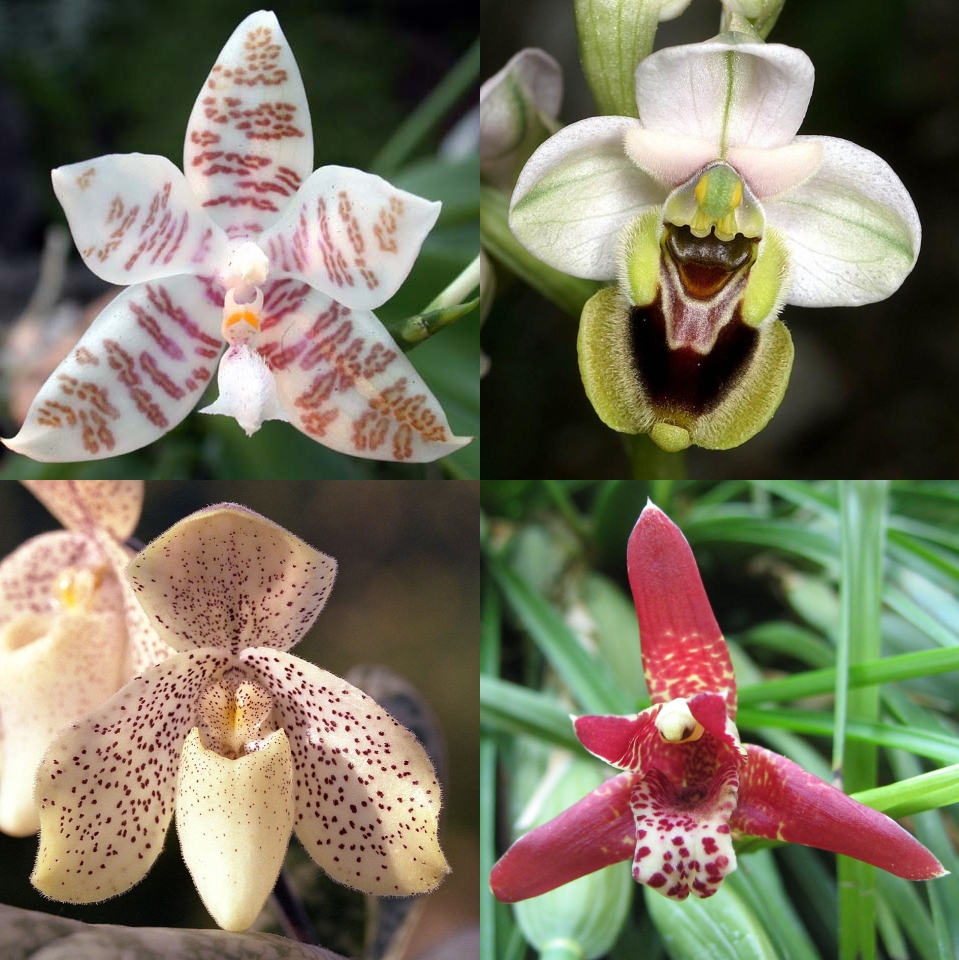 OrchidOrchidaceae
A vast family of colourful, often fragrant flowers found almost everywhere on earth
Orchidaceae · Wildflower
OrchidOrchidaceae
A vast family of colourful, often fragrant flowers found almost everywhere on earth
Orchidaceae · Wildflower
 Vanilla
Climbing orchids with pods used for the world’s most popular flavor
🇲🇽 Mexico and 7 more · Wildflower
Vanilla
Climbing orchids with pods used for the world’s most popular flavor
🇲🇽 Mexico and 7 more · Wildflower
 Orchis
A group of wild orchids with tuberous roots from Europe, North Africa and Asia
🇹🇷 Turkey and 7 more · Wildflower
Orchis
A group of wild orchids with tuberous roots from Europe, North Africa and Asia
🇹🇷 Turkey and 7 more · Wildflower
 Waling-walingVanda sanderiana
A rare orchid known as the 'Queen of Philippine flowers'
🇵🇭 Philippines · Orchid
Waling-walingVanda sanderiana
A rare orchid known as the 'Queen of Philippine flowers'
🇵🇭 Philippines · Orchid
More from Malaysia
All the flowers of Malaysia Hibiscus
A tropical genus with large, colourful trumpet-shaped flowers
🇮🇳 India and 7 more · Wildflower
Hibiscus
A tropical genus with large, colourful trumpet-shaped flowers
🇮🇳 India and 7 more · Wildflower
 Dillenia suffruticosa
Large yellow-flowered shrub and national flower of Brunei
🇧🇳 Brunei and 3 more · Wildflower
Dillenia suffruticosa
Large yellow-flowered shrub and national flower of Brunei
🇧🇳 Brunei and 3 more · Wildflower
 Pigeon orchidDendrobium crumenatum
A white, fragrant orchid that blooms all at once after rain
🇮🇳 India and 5 more · Wildflower
Pigeon orchidDendrobium crumenatum
A white, fragrant orchid that blooms all at once after rain
🇮🇳 India and 5 more · Wildflower
 Grammatophyllum
A group of rainforest orchids with striking green and purple-marked blooms
🇮🇩 Indonesia and 4 more · Wildflower
Grammatophyllum
A group of rainforest orchids with striking green and purple-marked blooms
🇮🇩 Indonesia and 4 more · Wildflower