
Grammatophyllum
A group of rainforest orchids with striking green and purple-marked blooms
Grammatophyllum is a genus of orchids found in tropical rainforests from Southeast Asia to the Pacific islands. These orchids range from medium to very large, with yellow-green or olive flowers marked in dark purple-red. Some species, like the giant orchid, can form massive clusters, while others are more modest in size. People grow them for their unusual appearance and long-lasting flowers.
- Some Grammatophyllum species can bloom for up to nine months
- The giant orchid can weigh several hundred kilograms to a ton
- Flowers are yellow-green or olive with dark purple-red markings
- The genus includes about 13 species from Southeast Asia and the Pacific
What does Grammatophyllum look like?
Grammatophyllum orchids can be medium-sized or grow to enormous proportions. Their leaves show clear parallel lines, and the plants have thick, cane-like pseudobulbs. The flowers are waxy, usually yellow-green or olive, and decorated with dark purple or reddish spots or streaks. Some species, such as Grammatophyllum speciosum, can form huge clumps, while others like Grammatophyllum scriptum are much smaller. The roots often form tangled, impressive masses.
Where does Grammatophyllum come from?
These orchids are native to dense, humid rainforests stretching from Southeast Asia through the Philippines, Malaysia, Indonesia, New Guinea, and into the southwest Pacific islands. The genus name comes from Greek, describing the lined leaves or the marked petals. Over time, different species have been found in places such as Borneo, Sabah, the Marianas, and Fiji. The plants have been collected and grown for their size and unusual flowers.
When and how Grammatophyllum blooms
Grammatophyllum orchids grow as epiphytes, meaning they live on trees rather than in soil. Their flowering stems rise from the base of the pseudobulbs and can carry many blooms at once. Some, like Grammatophyllum multiflorum, are known for exceptionally long flowering periods. These orchids are grown in gardens or collections, usually in warm, humid conditions similar to their rainforest homes.
How Grammatophyllum is used
People cultivate Grammatophyllum mainly for their decorative value, both in gardens and as show plants. Their large, colorful flowers and unusual growth habits make them popular among orchid enthusiasts. Some species are especially prized for their ability to bloom for many months, providing a long display.
Kinds of Grammatophyllum
The genus includes about 13 species, with notable ones such as Grammatophyllum speciosum (the giant orchid), Grammatophyllum scriptum (the bell orchid), and Grammatophyllum multiflorum, which is known for its long-lasting flowers. There are also hybrids, like 'Tiger's paw', bred from different species within the group. Each species varies in size, flower shape, and blooming habits.
What Grammatophyllum means
Grammatophyllum orchids are admired for their impressive size and striking flowers. The giant orchid is especially famous for its massive clusters and is sometimes called the Queen of Orchids. While not tied to specific festivals or religious practices in the sources, these plants are valued in horticultural circles and orchid shows for their unique appearance and the challenge they present to growers.
Questions people ask about Grammatophyllum
Where do Grammatophyllum orchids come from?
These orchids are native to tropical rainforests in Southeast Asia, including Indonesia, Malaysia, the Philippines, New Guinea, and nearby Pacific islands.
What do Grammatophyllum flowers look like?
Their flowers are usually yellow-green or olive, with dark purple or reddish markings. The blooms are waxy and can appear in large numbers on long stems.
How large can Grammatophyllum orchids grow?
Some, like the giant orchid, can form clusters weighing several hundred kilograms to a ton, with pseudobulbs reaching up to 2.5 meters long.
How long do their flowers last?
Certain species, such as Grammatophyllum multiflorum, can stay in bloom for as long as nine months.
What are Grammatophyllum orchids used for?
They are mainly grown for their decorative value in gardens and collections, prized for their size, unusual flowers, and long blooming periods.
Good reading and sources
- Plants of the World OnlineRoyal Botanic Gardens, Kew, Plant database
- Where it has been recordedGBIF, Plant database
- Sightings and photos by naturalistsiNaturalist, Plant database
- Grammatophyllum on WikipediaEncyclopedia
- More photos on Wikimedia CommonsPhotos
- Wikidata recordOpen data
The facts on this page come from the Wikipedia article "Grammatophyllum", written by its contributors and used under the CC BY-SA 4.0 licence, and from its Wikidata record (CC0). Phool rewrote the text in its own words, with AI assistance, and compares every page with the article to make sure no passage is copied. It may be reused under the same CC BY-SA 4.0 licence with a link back.
It may contain mistakes. It is not medical or foraging advice: many flowers are poisonous, and traditional uses are reported, not recommended. If something is wrong, tell us. Last refreshed 2026-10-03.
Others in the family Orchidaceae
The whole family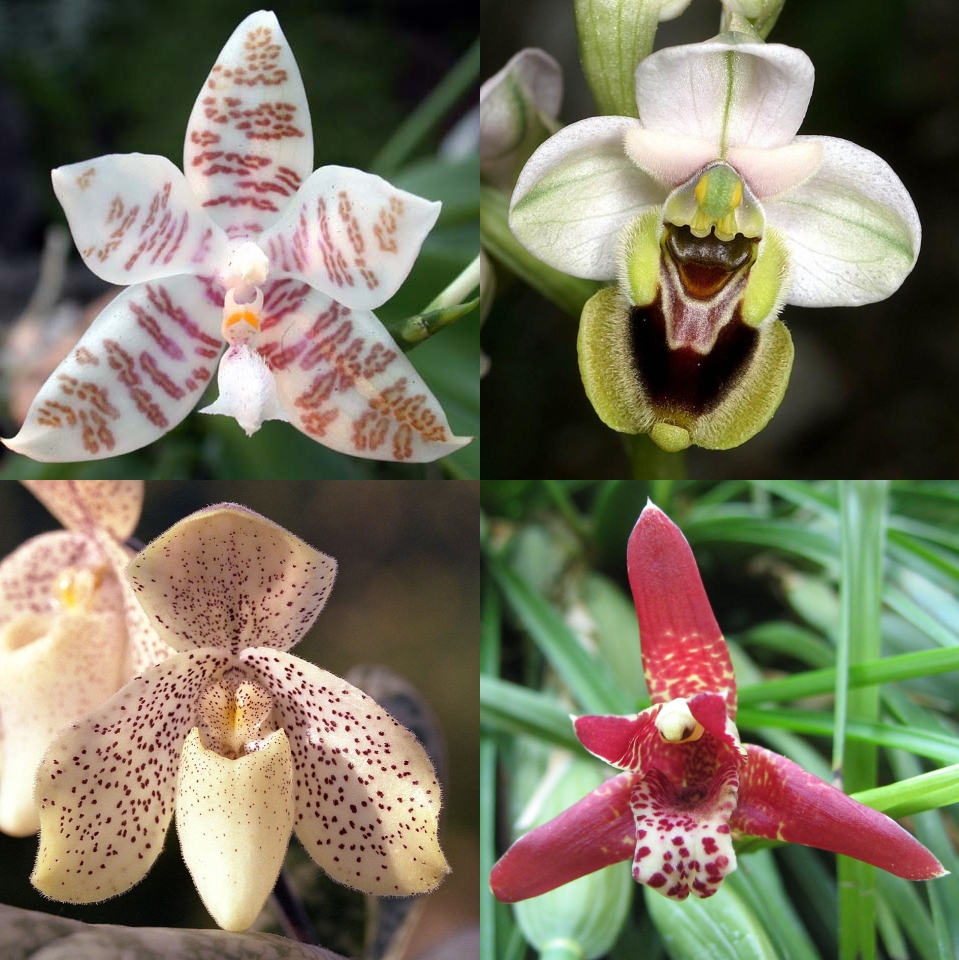 OrchidOrchidaceae
A vast family of colourful, often fragrant flowers found almost everywhere on earth
Orchidaceae · Wildflower
OrchidOrchidaceae
A vast family of colourful, often fragrant flowers found almost everywhere on earth
Orchidaceae · Wildflower
 Vanilla
Climbing orchids with pods used for the world’s most popular flavor
🇲🇽 Mexico and 7 more · Wildflower
Vanilla
Climbing orchids with pods used for the world’s most popular flavor
🇲🇽 Mexico and 7 more · Wildflower
 Orchis
A group of wild orchids with tuberous roots from Europe, North Africa and Asia
🇹🇷 Turkey and 7 more · Wildflower
Orchis
A group of wild orchids with tuberous roots from Europe, North Africa and Asia
🇹🇷 Turkey and 7 more · Wildflower
 Paphiopedilum glaucophyllum
A Southeast Asian slipper orchid with blue-green leaves and striped flowers
🇮🇩 Indonesia · Wildflower
Paphiopedilum glaucophyllum
A Southeast Asian slipper orchid with blue-green leaves and striped flowers
🇮🇩 Indonesia · Wildflower
More from Indonesia
All the flowers of Indonesia JasmineJasminum
A group of fragrant shrubs and vines with white or yellow star-shaped flowers
🇵🇰 Pakistan and 7 more · Wildflower
JasmineJasminum
A group of fragrant shrubs and vines with white or yellow star-shaped flowers
🇵🇰 Pakistan and 7 more · Wildflower
 Acacia
Shrubs and trees with golden or cream puffball flowers, native mostly to Australia
🇦🇺 Australia and 6 more · Wildflower
Acacia
Shrubs and trees with golden or cream puffball flowers, native mostly to Australia
🇦🇺 Australia and 6 more · Wildflower
 Primula
A large genus of spring-blooming wild and garden flowers from cool and mountain regions
🇨🇳 China and 5 more · Wildflower
Primula
A large genus of spring-blooming wild and garden flowers from cool and mountain regions
🇨🇳 China and 5 more · Wildflower
 Plumeria
Fragrant tropical tree with waxy, five-petaled flowers in many colours
🇲🇽 Mexico and 6 more · Flowering tree
Plumeria
Fragrant tropical tree with waxy, five-petaled flowers in many colours
🇲🇽 Mexico and 6 more · Flowering tree