
Zonal geranium
Pelargonium × hortorum, family Geraniaceae
The classic potted and bedding plant with rounded leaves and ball-shaped flower heads
Zonal geranium is a hybrid flowering plant widely grown for its bright, ball-shaped clusters of red, pink, white, or orange flowers and distinctive round leaves with a dark ring. Originally bred from South African wild pelargoniums, it is now a favorite in gardens, balconies, and window boxes across the world.
- Hybrid of two South African pelargonium species
- Flower heads form large, tight balls above the leaves
- Blooms from spring until late autumn
- Leaves have a dark circular zone
- Many cultivars with single or double flowers
What does Zonal geranium look like?
Zonal geraniums are sturdy, bushy plants with rounded, soft leaves marked by a dark circular band. Their flower heads form tight, ball-like clusters on long stalks rising above the foliage. Flowers can be single or double, with five petals each, and come in shades of red, pink, white, scarlet, orange, and yellow. The leaves are often faintly fragrant, and the plant grows to about 25–30 cm tall.
Where does Zonal geranium come from?
The zonal geranium is a hybrid between two South African species, Pelargonium zonale and Pelargonium inquinans. These wild ancestors were collected in the late 17th and early 18th centuries and brought to Europe, where they became popular with gardeners and collectors. Over time, crossing and selection produced the modern zonal geranium, with its name reflecting its horticultural origins. The plant's common name, 'geranium', comes from a long tradition, even though botanically it belongs to the genus Pelargonium.
When and how Zonal geranium blooms
Zonal geraniums are usually grown from cuttings or seeds. Cuttings root easily in sandy soil at moderate temperatures, while seed varieties have also been developed. The plant prefers strong light, some direct sun, and well-drained peat or loam soil. It thrives in containers, on balconies, or in flowerbeds, and blooms from spring through autumn. Most varieties do not set seed and are propagated vegetatively.


How Zonal geranium is used
These plants are most often used as ornamentals in pots, window boxes, balconies, and flowerbeds. Their long-lasting, colorful blooms and decorative leaves make them a staple in home and public gardens. Zonal geraniums are also popular gifts and are valued for their ease of care and ability to flower over many months.
Kinds of Zonal geranium
There are many cultivars, including those with double flowers called Rosebud Pelargoniums, whose blooms resemble small roses and never fully open. Newer varieties include orange and yellow-flowered forms. The visibility of the leaf's dark zone and the flower's fullness vary by cultivar, offering a wide range of choices for gardeners.
What Zonal geranium means
Zonal geraniums became widely popular in Europe by the 19th century, especially in England and France, where they were prized for their robust growth and showy flowers. They are among the most common plants in garden centers and florists, often associated with balcony and window box displays. Their name and classification reflect a long history of horticultural enthusiasm and cross-cultural exchange.
Questions people ask about Zonal geranium
Where does the zonal geranium come from?
The zonal geranium is a hybrid originally bred from two wild pelargonium species native to South Africa. These ancestors were brought to Europe in the late 17th and early 18th centuries, where the modern plant was developed.
What does the zonal geranium look like?
It is a bushy plant with rounded leaves marked by a dark ring and ball-shaped clusters of flowers. The blooms can be red, pink, white, orange, or yellow, and may be single or double-petalled.
How is the zonal geranium used?
It is mainly grown as an ornamental plant in pots, window boxes, balconies, and flowerbeds. Its long-lasting flowers and decorative leaves make it a favorite for home and public gardens.
Why is it called a 'geranium' if it belongs to Pelargonium?
The name 'geranium' comes from gardening tradition, though botanists now place these plants in the genus Pelargonium. The term 'geranium' is still widely used by gardeners and florists.
What does the zonal geranium symbolise?
The sources do not mention any particular symbolism for the zonal geranium.
Good reading and sources
- Encyclopaedia BritannicaArticle
- USDA Plants DatabaseUS Department of Agriculture, Article
- Plants of the World OnlineRoyal Botanic Gardens, Kew, Plant database
- Where it has been recordedGBIF, Plant database
- Sightings and photos by naturalistsiNaturalist, Plant database
- Pelargonium × hortorum on WikipediaEncyclopedia
- More photos on Wikimedia CommonsPhotos
- Wikidata recordOpen data
The facts on this page come from the Wikipedia article "Pelargonium × hortorum", written by its contributors and used under the CC BY-SA 4.0 licence, and from its Wikidata record (CC0). Phool rewrote the text in its own words, with AI assistance, and compares every page with the article to make sure no passage is copied. It may be reused under the same CC BY-SA 4.0 licence with a link back.
It may contain mistakes. It is not medical or foraging advice: many flowers are poisonous, and traditional uses are reported, not recommended. If something is wrong, tell us. Last refreshed 2026-10-03.
Others in the family Geraniaceae
The whole family Geranium
A group of wild and garden flowers with five-petaled blooms and lobed leaves
Geranium · Wildflower
Geranium
A group of wild and garden flowers with five-petaled blooms and lobed leaves
Geranium · Wildflower
 Pelargonium
A diverse group of flowering plants often grown as garden and house plants
🇿🇦 South Africa and 7 more · Garden flower
Pelargonium
A diverse group of flowering plants often grown as garden and house plants
🇿🇦 South Africa and 7 more · Garden flower
 Bloody crane's-billGeranium sanguineum
A hardy crimson-flowered perennial of grasslands and gardens
🇨🇭 Switzerland · Wildflower
Bloody crane's-billGeranium sanguineum
A hardy crimson-flowered perennial of grasslands and gardens
🇨🇭 Switzerland · Wildflower
 Herb-RobertGeranium robertianum
A pink-flowered wild geranium found in woods and gardens across the north
Geranium robertianum · Wildflower
Herb-RobertGeranium robertianum
A pink-flowered wild geranium found in woods and gardens across the north
Geranium robertianum · Wildflower
More from South Africa
All the flowers of South Africa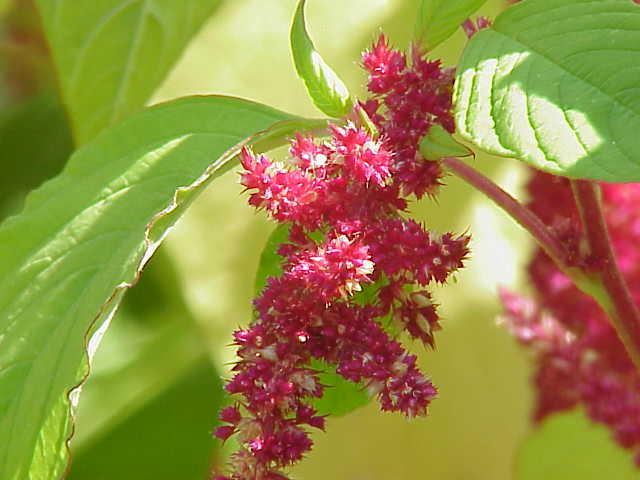 AmaranthAmaranthus
A tall, colourful plant grown for its flowers, leaves and edible seeds
🇲🇽 Mexico and 7 more · Wildflower
AmaranthAmaranthus
A tall, colourful plant grown for its flowers, leaves and edible seeds
🇲🇽 Mexico and 7 more · Wildflower
 Acacia
Shrubs and trees with golden or cream puffball flowers, native mostly to Australia
🇦🇺 Australia and 6 more · Wildflower
Acacia
Shrubs and trees with golden or cream puffball flowers, native mostly to Australia
🇦🇺 Australia and 6 more · Wildflower
 Sensitive PlantMimosa pudica
A touch-sensitive plant whose leaves fold up when disturbed
🇧🇷 Brazil and 8 more · Wildflower
Sensitive PlantMimosa pudica
A touch-sensitive plant whose leaves fold up when disturbed
🇧🇷 Brazil and 8 more · Wildflower
 Prickly pearOpuntia
Cactus with flat pads and edible fruit, native to the Americas
🇲🇽 Mexico and 7 more · Wildflower
Prickly pearOpuntia
Cactus with flat pads and edible fruit, native to the Americas
🇲🇽 Mexico and 7 more · Wildflower