
Ivy-leaved geranium
Pelargonium peltatum, family Geraniaceae
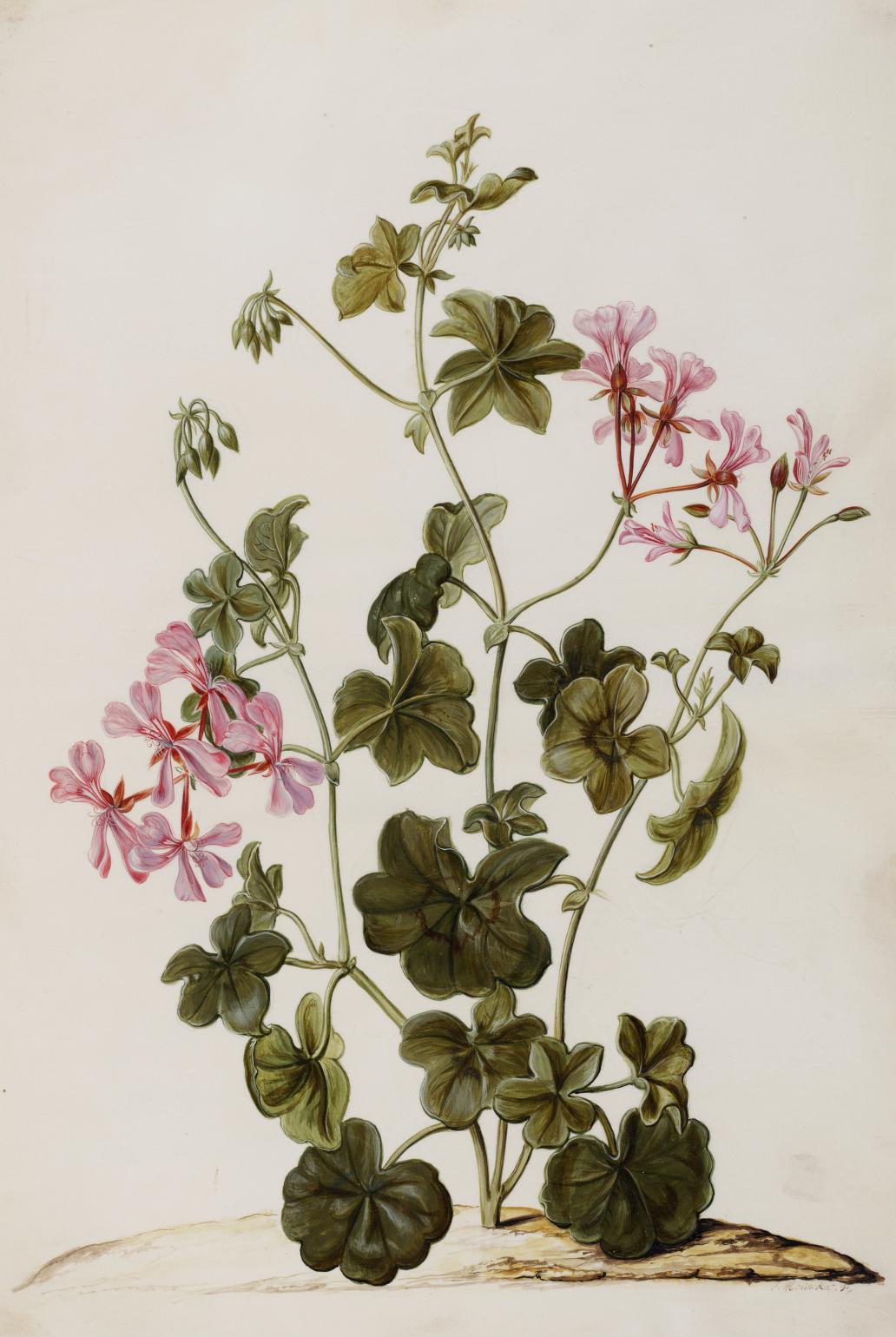
A trailing plant with fleshy, lobed leaves and pale mauve to pink flowers
Ivy-leaved geranium is a perennial from South Africa, known for its trailing stems and rounded, lobed leaves. Its pale pink to mauve flowers appear most in late winter and spring, and the plant is widely used in gardens and containers for its cascading habit.
- Native to the Cape regions of South Africa
- Flowers range from white to pale pink and mauve
- Grown worldwide as a trailing ornamental plant
- Leaves are edible with a sharp taste
- Petals can be used to make blue dye
What does Ivy-leaved geranium look like?
This plant grows with slender, smooth stems that can reach up to 2 meters, often draping over other plants or containers. Its leaves are fleshy, rounded to heart-shaped, and divided into five shallow or deep lobes, sometimes marked with a colored band. The flowers form in small clusters, each with five petals in shades from white to mauve or pale pink, sometimes showing purple streaks on the upper petals. The blooms have no scent.
Where does Ivy-leaved geranium come from?
Ivy-leaved geranium is originally found in the Cape regions of South Africa, where it grows on rocky slopes and coastal areas with well-drained soil. It was brought to Europe in the early 18th century, first to the Netherlands and later to Britain. Over time, it became popular in gardens and has escaped cultivation in several Mediterranean and subtropical regions. The plant's name refers to its shield-like leaves, with the stalk attached near the center.
When and how Ivy-leaved geranium blooms
The plant flowers throughout the year in its native climate, but produces the most blooms from late winter into spring. It thrives in sandy or loamy soils that drain well and does not tolerate frost or heavy shade. Gardeners often grow it from cuttings, as it roots easily. Its trailing stems and ability to withstand dry conditions make it a favorite for hanging baskets and window boxes.


How Ivy-leaved geranium is used
People grow ivy-leaved geranium for its decorative trailing stems and clusters of pale flowers, both outdoors and as a houseplant. The leaves are sometimes eaten and have a sharp, tangy flavor. The petals can be used to make a blue dye for textiles. In some regions, it has become naturalized outside gardens and may spread easily.
Kinds of Ivy-leaved geranium
Many garden hybrids have been bred from this species, often grouped under the name 'ivy-leaved pelargoniums.' These forms can differ in leaf shape, the depth of the lobes, and the presence of colored bands. Some names given to these variations in the past are now considered synonyms, as the differences blend into each other.
What Ivy-leaved geranium means
In its home region, the plant is not threatened and is considered of least concern for conservation. Its Afrikaans name, 'kolsuring,' refers to the sour sap in the leaves. The plant is also important to certain insects, as some butterfly and moth caterpillars feed on its stems, and carpenter bees visit the flowers.
Questions people ask about Ivy-leaved geranium
Where does the ivy-leaved geranium come from?
It is originally from the Cape Provinces in South Africa, where it grows on rocky hillsides and coastal slopes.
What does the plant look like?
It has long, smooth, trailing stems with fleshy, rounded or heart-shaped leaves, and clusters of unscented flowers in white, pink, or mauve shades.
How is the ivy-leaved geranium used?
It is mainly grown for decoration in gardens and containers. The leaves can be eaten and the petals are used to make a blue dye.
Is the plant important in any culture or tradition?
Its Afrikaans name reflects the sour taste of its sap, and it is valued as a garden plant in many countries, but the sources do not mention religious or festival uses.
What wildlife is associated with this plant?
Certain butterfly and moth caterpillars feed on its stems, and carpenter bees are frequent visitors to its flowers.
Good reading and sources
- USDA Plants DatabaseUS Department of Agriculture, Article
- Plants of the World OnlineRoyal Botanic Gardens, Kew, Plant database
- Where it has been recordedGBIF, Plant database
- Sightings and photos by naturalistsiNaturalist, Plant database
- Pelargonium peltatum on WikipediaEncyclopedia
- More photos on Wikimedia CommonsPhotos
- Wikidata recordOpen data
The facts on this page come from the Wikipedia article "Pelargonium peltatum", written by its contributors and used under the CC BY-SA 4.0 licence, and from its Wikidata record (CC0). Phool rewrote the text in its own words, with AI assistance, and compares every page with the article to make sure no passage is copied. It may be reused under the same CC BY-SA 4.0 licence with a link back.
It may contain mistakes. It is not medical or foraging advice: many flowers are poisonous, and traditional uses are reported, not recommended. If something is wrong, tell us. Last refreshed 2026-10-03.
Others in the family Geraniaceae
The whole family Geranium
A group of wild and garden flowers with five-petaled blooms and lobed leaves
Geranium · Wildflower
Geranium
A group of wild and garden flowers with five-petaled blooms and lobed leaves
Geranium · Wildflower
 Pelargonium
A diverse group of flowering plants often grown as garden and house plants
🇿🇦 South Africa and 7 more · Garden flower
Pelargonium
A diverse group of flowering plants often grown as garden and house plants
🇿🇦 South Africa and 7 more · Garden flower
 Meadow Crane's-billGeranium pratense
A hardy wildflower with pale blue, saucer-shaped blooms
🇨🇳 China · Wildflower
Meadow Crane's-billGeranium pratense
A hardy wildflower with pale blue, saucer-shaped blooms
🇨🇳 China · Wildflower
 Bloody crane's-billGeranium sanguineum
A hardy crimson-flowered perennial of grasslands and gardens
🇨🇭 Switzerland · Wildflower
Bloody crane's-billGeranium sanguineum
A hardy crimson-flowered perennial of grasslands and gardens
🇨🇭 Switzerland · Wildflower
More from South Africa
All the flowers of South Africa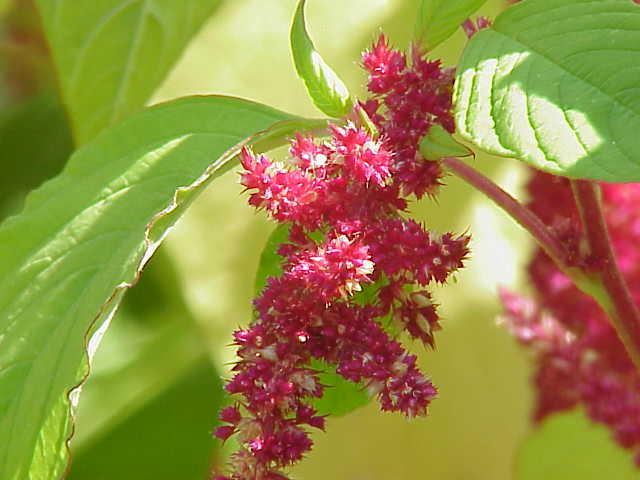 AmaranthAmaranthus
A tall, colourful plant grown for its flowers, leaves and edible seeds
🇲🇽 Mexico and 7 more · Wildflower
AmaranthAmaranthus
A tall, colourful plant grown for its flowers, leaves and edible seeds
🇲🇽 Mexico and 7 more · Wildflower
 Acacia
Shrubs and trees with golden or cream puffball flowers, native mostly to Australia
🇦🇺 Australia and 6 more · Wildflower
Acacia
Shrubs and trees with golden or cream puffball flowers, native mostly to Australia
🇦🇺 Australia and 6 more · Wildflower
 Sensitive PlantMimosa pudica
A touch-sensitive plant whose leaves fold up when disturbed
🇧🇷 Brazil and 8 more · Wildflower
Sensitive PlantMimosa pudica
A touch-sensitive plant whose leaves fold up when disturbed
🇧🇷 Brazil and 8 more · Wildflower
 Prickly pearOpuntia
Cactus with flat pads and edible fruit, native to the Americas
🇲🇽 Mexico and 7 more · Wildflower
Prickly pearOpuntia
Cactus with flat pads and edible fruit, native to the Americas
🇲🇽 Mexico and 7 more · Wildflower