
Greater Plantain
Plantago major, family Plantaginaceae
A hardy wayside perennial with oval ribbed leaves and slender seed spikes
Greater plantain is a hardy perennial herb native to Eurasia and Africa, recognised by its broad, ribbed leaf rosettes and tall flower spikes. While often treated as a common weed, people have long gathered its edible leaves and used them in traditional wound poultices.
- A single plant can produce up to 20,000 tiny bitter seeds carried on tall flowering spikes.
- Native American peoples called it 'white man's footprint' as it spread around colonial settlements.
- The roots help restore damaged ground by breaking up hard earth and preventing soil erosion.
- Tough mature fibres from the leaves can be twisted into strong twine, fishing lines, or cordage.
What does Greater Plantain look like?
Greater plantain forms a low rosette of wide, oval leaves that usually spans between 15 and 30 centimetres across. Each leaf has a smooth border, a pointed tip, and three to seven prominent veins that run down its entire length to a sturdy stalk. Rising high above the foliage are stiff, narrow spikes that carry clusters of minute blossoms. These tiny flowers are greenish-brown with soft purple stamens. The blossoms rely on breezes for pollination rather than insects. As the spike matures, it develops thousands of tiny, bitter oval seeds. The foliage remains close to the ground, allowing the plant to withstand heavy foot traffic.
Where does Greater Plantain come from?
This perennial is native across temperate regions of Africa, central and northern Asia, and nearly the whole of Europe, with Iceland being a notable exception. Because its tiny seeds frequently mingled with agricultural grain shipments, the plant travelled alongside human migration to colonise every continent. Puritan settlers accidentally introduced it to North America during the colonial era. It quickly spread through pathways, clearings, and pastures disturbed by new farms. Today it grows freely in road verges, lawns, waste ground, and open meadows, thriving in locations where heavy tread has packed the earth firm.
When and how Greater Plantain blooms
In the Northern Hemisphere, flowering starts in May and continues through October. The plant reproduces mainly by shedding abundant seeds, with a single specimen capable of producing up to 20,000 in one season. It establishes readily in tough, disturbed soils where other plants struggle. Its strong root network breaks through hard, compressed earth layers while binding the topsoil together, which helps reduce ground erosion. It tolerates frequent trampling across pathways and lawns, but it can also settle within undisturbed grasslands and moist ground.


How Greater Plantain is used
For centuries, people have gathered plantain for both nutrition and home remedies. Young leaves are tender enough to eat fresh in salads, whereas older, tougher foliage is typically simmered in stews. The leaves are rich in dietary fibre and contain minerals and protein. In traditional folk medicine, crushed fresh leaves were applied as poultices to soothe insect bites, burns, open sores, and minor wounds, or to help stop bleeding. Herbalists also prepared root decoctions to treat fevers and chest infections. In addition, the tough leaf fibres have served in survival contexts to make durable cordage and fishing lines.
Kinds of Greater Plantain
Botanists recognise three distinct subspecies of greater plantain. The standard subspecies occurs across the primary range. Another form, named intermedia, features narrower leaves with fine hairs and prefers wet or saline habitats like salt marshes. A third subspecies, winteri, is native to central and northeastern Europe. Gardeners also grow selected ornamental varieties, such as 'Rubrifolia', which displays deep purple foliage, and 'Variegata', cultivated for its patterned leaves.
What Greater Plantain means
Because greater plantain followed European travellers and sprang up wherever soil was disturbed, several Native American groups called it white man's footprint. Its persistent appearance along cart tracks, pathways, and cottage gates earned it historical nicknames like waybread, roadweed, and dooryard plantain. It is completely unrelated to the starchy cooking banana that shares the common name plantain. In botanical studies, the plant remains valued for its soil-repairing abilities, as its roots open compacted earth while preventing surface wash-off.
Questions people ask about Greater Plantain
Where does greater plantain come from?
Greater plantain is native to Europe, northern and central Asia, and temperate parts of Africa. It spread across the globe along trade and migration routes, often carried as a seed contaminant in agricultural grain shipments, and now grows on almost every continent.
How has greater plantain been used traditionally?
The tender young leaves are gathered for salads, while mature leaves are cooked in stews or stripped for tough cordage fibres. In traditional herbal medicine, poultices made from fresh leaves were applied to wounds, insect bites, and burns, and the roots were brewed for fevers.
Why was it called white man's footprint?
Native American communities gave the plant this name after European settlers arrived. Greater plantain flourished in the compacted, disturbed earth surrounding colonial homesteads and footpaths, marking the spread of European settlements across the landscape.
Is greater plantain related to the banana called plantain?
No, the two plants are entirely unrelated. Greater plantain is a low-growing herbaceous wildflower in the family Plantaginaceae, whereas the edible fruit known as a plantain is a type of banana.
Good reading and sources
- Encyclopaedia BritannicaArticle
- IUCN Red List of Threatened SpeciesIUCN Red List, Article
- USDA Plants DatabaseUS Department of Agriculture, Article
- Plantago majorRoyal Horticultural Society, Article
- Plants of the World OnlineRoyal Botanic Gardens, Kew, Plant database
- Where it has been recordedGBIF, Plant database
- Sightings and photos by naturalistsiNaturalist, Plant database
- Plantago major on WikipediaEncyclopedia
- More photos on Wikimedia CommonsPhotos
- Wikidata recordOpen data
The facts on this page come from the Wikipedia article "Plantago major", written by its contributors and used under the CC BY-SA 4.0 licence, and from its Wikidata record (CC0). EveryPhool rewrote the text in its own words, with AI assistance, and compares every page with the article to make sure no passage is copied. It may be reused under the same CC BY-SA 4.0 licence with a link back.
It may contain mistakes. It is not medical or foraging advice: many flowers are poisonous, and traditional uses are reported, not recommended. If something is wrong, tell us. Last refreshed 2026-10-04.
Others in the family Plantaginaceae
The whole family FoxgloveDigitalis purpurea
Tall spikes of bell-shaped, spotted flowers in purple, pink, white or yellow
🇩🇪 Germany and 5 more · Wildflower
FoxgloveDigitalis purpurea
Tall spikes of bell-shaped, spotted flowers in purple, pink, white or yellow
🇩🇪 Germany and 5 more · Wildflower
 Mexican twistLophospermum erubescens
A pink and white climbing flower from Mexico, grown as a garden ornamental
🇲🇽 Mexico and 7 more · Garden flower
Mexican twistLophospermum erubescens
A pink and white climbing flower from Mexico, grown as a garden ornamental
🇲🇽 Mexico and 7 more · Garden flower
 ToadflaxLinaria
A group of nearly 200 flowering plants called toadflax, found mainly around the Mediterranean
Linaria · Wildflower
ToadflaxLinaria
A group of nearly 200 flowering plants called toadflax, found mainly around the Mediterranean
Linaria · Wildflower
 Rocky Mountain penstemonPenstemon strictus
A blue-flowered perennial from the western slopes of the Rocky Mountains
🇺🇸 United States · Wildflower
Rocky Mountain penstemonPenstemon strictus
A blue-flowered perennial from the western slopes of the Rocky Mountains
🇺🇸 United States · Wildflower
More from China
All the flowers of China RoseRosa
Prickly flowering shrubs grown across the world for fragrant blossoms and rose hips
🇨🇳 China and 7 more · Flowering shrub
RoseRosa
Prickly flowering shrubs grown across the world for fragrant blossoms and rose hips
🇨🇳 China and 7 more · Flowering shrub
 PeachPrunus persica
A flowering fruit tree from China, grown for its pink blossoms and sweet fruit
🇨🇳 China and 7 more · Flowering tree
PeachPrunus persica
A flowering fruit tree from China, grown for its pink blossoms and sweet fruit
🇨🇳 China and 7 more · Flowering tree
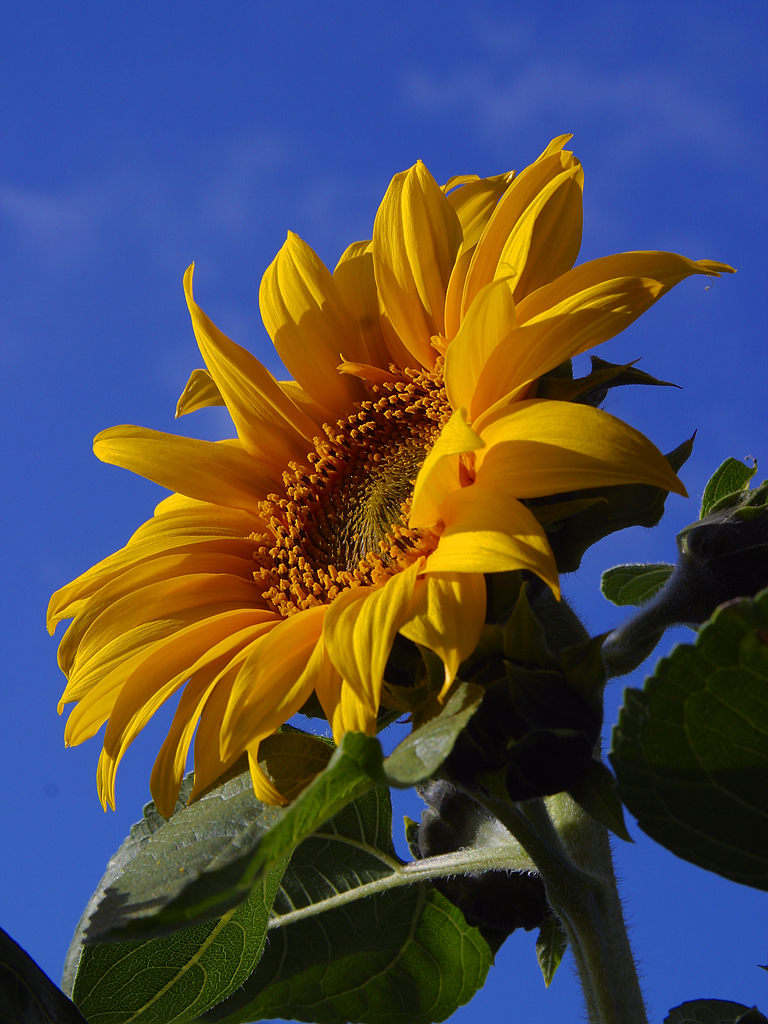 Common sunflowerHelianthus annuus
A tall annual plant grown for its large yellow flower heads and edible seeds
🇨🇦 Canada and 4 more · Wildflower
Common sunflowerHelianthus annuus
A tall annual plant grown for its large yellow flower heads and edible seeds
🇨🇦 Canada and 4 more · Wildflower
 PomegranatePunica granatum
A shrub with bright red flowers and a fruit full of edible seeds
🇮🇷 Iran and 9 more · Flowering shrub
PomegranatePunica granatum
A shrub with bright red flowers and a fruit full of edible seeds
🇮🇷 Iran and 9 more · Flowering shrub