
Rocky Mountain penstemon
Penstemon strictus, family Plantaginaceae
A blue-flowered perennial from the western slopes of the Rocky Mountains
Rocky Mountain penstemon is a perennial plant with upright stems and striking blue flowers, native to the western slopes of the Rocky Mountains in the United States. It is valued for its drought tolerance and is often used in dry gardens, roadsides, and naturalistic plantings.
- Native to the western slopes of the Rocky Mountains
- Flowers are deep blue with a violet tube
- Often grown in dry gardens and roadside plantings
- Attracts bumblebees, mason bees, and hummingbirds
What does Rocky Mountain penstemon look like?
This perennial grows in clumps with several upright or slightly leaning stems, usually between 35 and 70 centimeters tall. The leaves are narrow, sometimes leathery, and smooth except for some tiny hairs along the edges or base. Its flowers are deep blue with a violet tube, about 2.5 to 3 centimeters long, arranged in spikes. The upper petals project forward, giving the flower a porch-like look. Seed capsules follow the blooms.
Where does Rocky Mountain penstemon come from?
Rocky Mountain penstemon is native to the western slopes of the Rocky Mountains, from southern Wyoming and western Colorado through northeastern Arizona and northern New Mexico. There are also introduced populations in Montana, Alberta, and parts of California. Botanist George Bentham formally named the species in 1846. The plant is found in open woods, scrub, and forest edges, often with sagebrush or among piñon, juniper, and pine.
When and how Rocky Mountain penstemon blooms
The plant is most often grown from seed, which benefits from a cold, moist period before sprouting. Seeds germinate best when kept cool for a few months and exposed to light near the soil surface. It is also possible to divide mature plants. Rocky Mountain penstemon is tolerant of dry conditions and is less demanding about soil drainage than some other penstemons. It is suited to USDA zones 2 through 9.


How Rocky Mountain penstemon is used
Gardeners plant this penstemon in dry gardens, meadows, and along roadsides, especially in regions with little rainfall. State highway departments in the United States use it for revegetation projects. Its flowers attract bumblebees, mason bees, pollen wasps, and occasionally hummingbirds, making it a good choice for pollinator-friendly gardens.
Kinds of Rocky Mountain penstemon
There are no recognized subspecies of Penstemon strictus, though a downy-leaved form was described in 1920. The species is sometimes confused with others in the genus, but its upright stems and blue flowers with porch-like upper petals set it apart.
What Rocky Mountain penstemon means
Rocky Mountain penstemon is valued for its resilience and its ability to support pollinators. Its showy blue flowers make it a favorite in xeriscape and naturalistic gardens. The plant does not have a strong presence in folklore or symbolism, but its role in supporting bees and other insects is well documented.
Where Rocky Mountain penstemon is used and seen

Questions people ask about Rocky Mountain penstemon
Where does Rocky Mountain penstemon grow naturally?
It is native to the western slopes of the Rocky Mountains, including parts of Wyoming, Colorado, Arizona, and New Mexico. There are also introduced populations in Montana, Alberta, and California.
What does the Rocky Mountain penstemon look like?
It is a perennial with upright stems, narrow smooth leaves, and spikes of deep blue flowers with a violet tube. The upper petals stick out like a small roof.
How is Rocky Mountain penstemon used in gardens?
It is planted in dry gardens, meadows, and along roadsides, valued for its drought tolerance and ability to attract pollinators such as bumblebees and hummingbirds.
Does Rocky Mountain penstemon have any special meaning or symbolism?
The sources do not mention any particular symbolism, but the plant is appreciated for its resilience and support for pollinators.
Good reading and sources
- USDA Plants DatabaseUS Department of Agriculture, Article
- Library of Congress CatalogLibrary of Congress, Article
- Penstemon strictusRoyal Horticultural Society, Article
- Plants of the World OnlineRoyal Botanic Gardens, Kew, Plant database
- Where it has been recordedGBIF, Plant database
- Sightings and photos by naturalistsiNaturalist, Plant database
- Penstemon strictus on WikipediaEncyclopedia
- More photos on Wikimedia CommonsPhotos
- Wikidata recordOpen data
The facts on this page come from the Wikipedia article "Penstemon strictus", written by its contributors and used under the CC BY-SA 4.0 licence, and from its Wikidata record (CC0). Phool rewrote the text in its own words, with AI assistance, and compares every page with the article to make sure no passage is copied. It may be reused under the same CC BY-SA 4.0 licence with a link back.
It may contain mistakes. It is not medical or foraging advice: many flowers are poisonous, and traditional uses are reported, not recommended. If something is wrong, tell us. Last refreshed 2026-10-03.
Others in the family Plantaginaceae
The whole family FoxgloveDigitalis purpurea
Tall spikes of bell-shaped, spotted flowers in purple, pink, white or yellow
🇩🇪 Germany and 5 more · Wildflower
FoxgloveDigitalis purpurea
Tall spikes of bell-shaped, spotted flowers in purple, pink, white or yellow
🇩🇪 Germany and 5 more · Wildflower
 ToadflaxLinaria
A group of nearly 200 flowering plants called toadflax, found mainly around the Mediterranean
Linaria · Wildflower
ToadflaxLinaria
A group of nearly 200 flowering plants called toadflax, found mainly around the Mediterranean
Linaria · Wildflower
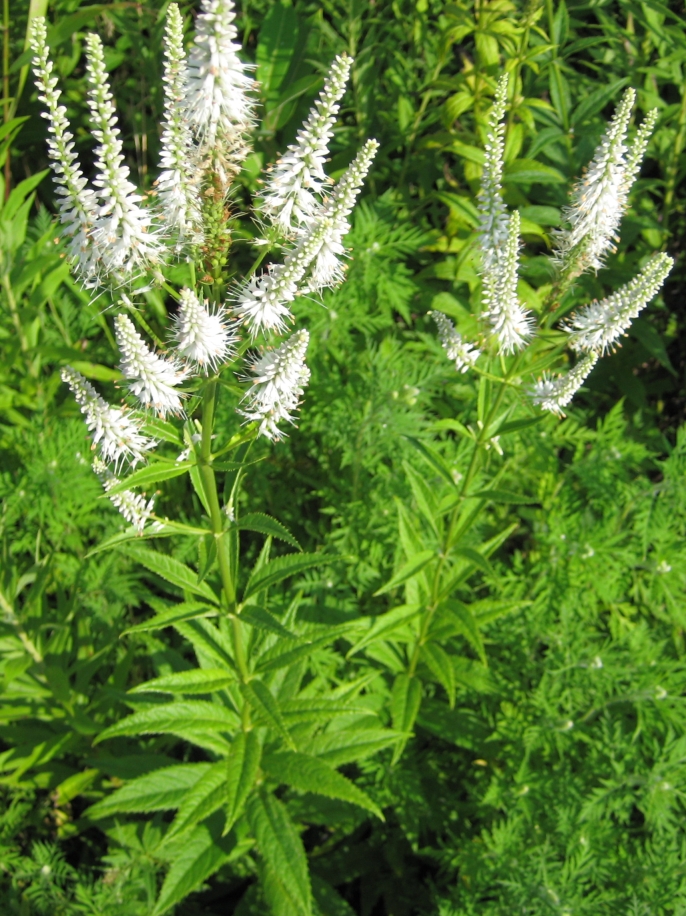 Veronicastrum
A group of upright flowering plants in the plantain family
Veronicastrum · Wildflower
Veronicastrum
A group of upright flowering plants in the plantain family
Veronicastrum · Wildflower
 Mexican twistLophospermum erubescens
A pink and white climbing flower from Mexico, grown as a garden ornamental
🇲🇽 Mexico and 7 more · Garden flower
Mexican twistLophospermum erubescens
A pink and white climbing flower from Mexico, grown as a garden ornamental
🇲🇽 Mexico and 7 more · Garden flower
More from the United States
All the flowers of the United States PeachPrunus persica
A flowering fruit tree from China, grown for its pink blossoms and sweet fruit
🇨🇳 China and 7 more · Flowering tree
PeachPrunus persica
A flowering fruit tree from China, grown for its pink blossoms and sweet fruit
🇨🇳 China and 7 more · Flowering tree
 AlmondPrunus amygdalus
A Mediterranean tree grown for its fragrant spring flowers and edible seeds
🇮🇷 Iran and 6 more · Flowering tree
AlmondPrunus amygdalus
A Mediterranean tree grown for its fragrant spring flowers and edible seeds
🇮🇷 Iran and 6 more · Flowering tree
 CactusCactaceae
Succulent plants with spines, native to the Americas
🇲🇽 Mexico and 7 more · Wildflower
CactusCactaceae
Succulent plants with spines, native to the Americas
🇲🇽 Mexico and 7 more · Wildflower
 Chrysanthemum菊花
Autumn-blooming flower with thousands of varieties, cherished in East Asia and beyond
🇨🇳 China and 6 more · Wildflower
Chrysanthemum菊花
Autumn-blooming flower with thousands of varieties, cherished in East Asia and beyond
🇨🇳 China and 6 more · Wildflower