
Cinquefoil
Potentilla, family Rosaceae
Five-petalled wild and garden blooms in the rose family
Cinquefoils are hardy herbaceous plants in the rose family, native across northern cool zones and montane highlands. Closely resembling strawberry plants with dry seedheads, they produce sunny yellow, white, or red blooms valued in gardens and traditional herbal remedies.
- Encompasses more than 500 species of herbaceous plants in the rose family.
- Named from Old French and Latin roots meaning five leaves.
- Serves as a historic heraldic symbol of strength and loyalty.
- Spring cinquefoil is the traditional county flower of Cromartyshire.
What does Cinquefoil look like?
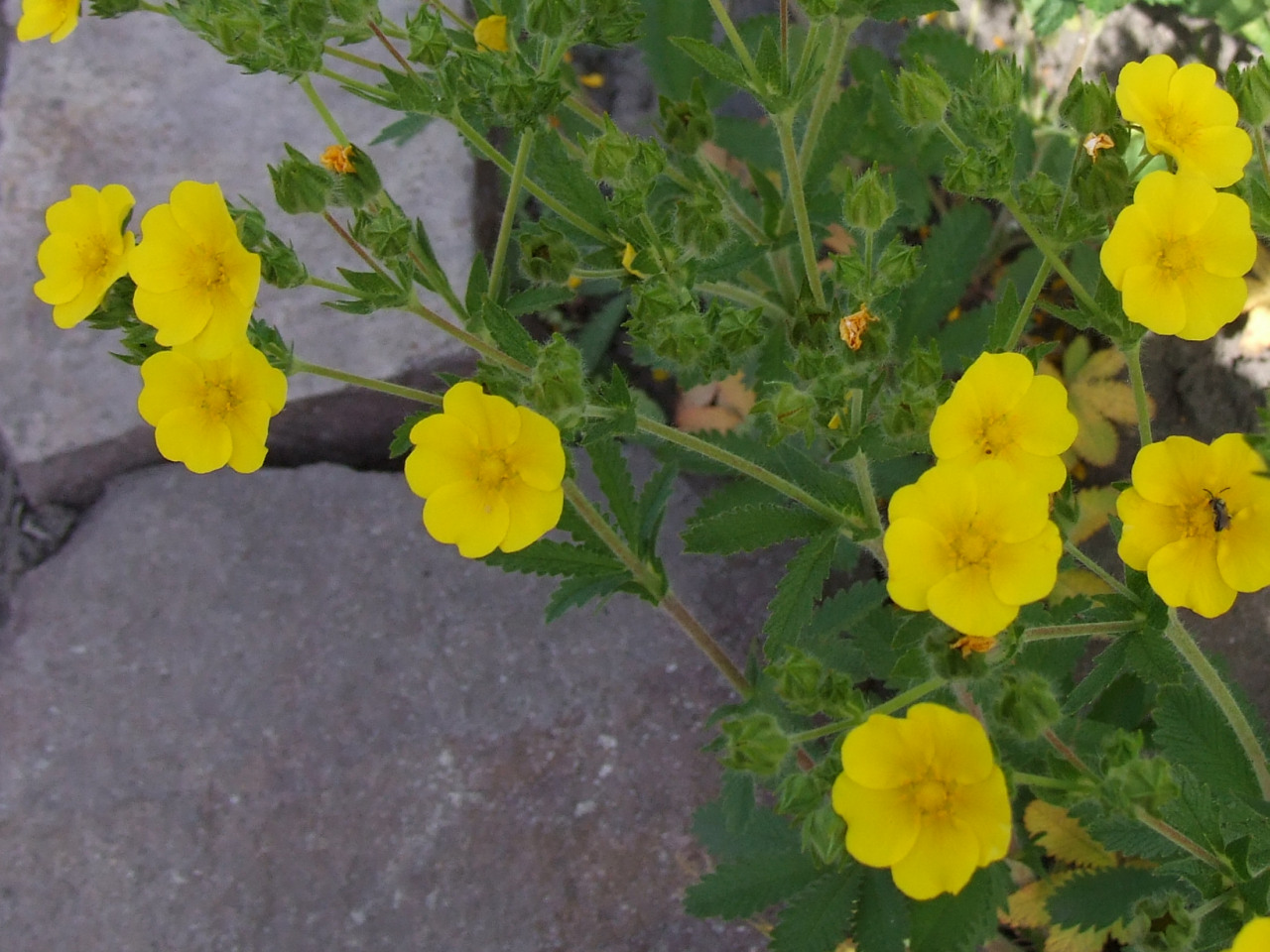
Cinquefoils belong to the rose family and encompass over five hundred plant species. Most grow as perennial herbs, though some live as annuals or low-growing woody shrubs. Foliage commonly features hand-shaped leaves divided into distinct leaflets. Depending on the species, foliage might display three leaflets or more than fifteen arranged in pairs. Cinquefoil blossoms usually have five open petals in bright yellow tones, though cultivated varieties and wild types can produce cream, white, pink, or deep red flowers. Although the foliage and blossoms resemble wild strawberries, the fruits are dry, seed-like nutlets rather than sweet berries.
Where does Cinquefoil come from?
These plants naturally colonize the cooler northern areas across Europe, Asia, and North America, with additional populations thriving in the high elevations of New Guinea. Fossilized fruitlets dating back to the Miocene epoch have been discovered in modern Denmark and Poland. The common name cinquefoil comes from ancient French and Latin terms meaning five leaves. Meanwhile, the botanical name Potentilla links to medieval Latin words for power and strength, reflecting historical beliefs in the therapeutic potency of tormentil root.
When and how Cinquefoil blooms
In wild landscapes, cinquefoils flourish across peat mires, upland pastures, pine and oak forests, and coastal heaths. They frequently grow alongside heather, wild thyme, and moor grasses. Insect visitors such as butterflies, bees, hoverflies, and ants pollinate their open blossoms. In cultivation, gardeners sow seeds or plant hardy root crowns in rockeries, borders, and moist beds. Plant breeders have also created striking garden hybrids and double-flowering cultivars, including historic selections first bred during the nineteenth century.


How Cinquefoil is used
Gardeners cultivate various cinquefoil species for rock gardens, mixed borders, and decorative ground cover. In historical and folk herbal traditions, roots and leaves served as remedies for stomach pains, digestive inflammation, and mouth sores. Species such as common tormentil remain subjects of modern study for bowel health, while specific Asian species have a background in treating metabolic issues. The plants also support wildlife, providing nectar for rare butterflies and host foliage for the scale insects once gathered to make traditional red dye.
Kinds of Cinquefoil
Notable ornamental species include the ruby cinquefoil, celebrated for rich crimson flowers, along with the yellow golden cinquefoil and sulphur cinquefoil. Gardeners also grow Nepal cinquefoil and hardy spring cinquefoil. Hybrid forms like Hopwood's cinquefoil offer delicate blended hues. Recent botanical classifications have moved certain woody shrub types into separate genera such as Dasiphora, while retaining herbaceous mock-strawberries and mousetails inside the main genus.
What Cinquefoil means
During the Middle Ages, the stylized five-leaf cinquefoil served as a widespread heraldic charge. It symbolized military honor, inner strength, and steadfast loyalty. Stone carvers incorporated cinquefoil rosettes into church architecture across Normandy, Brittany, and Burgundy starting in the eleventh century. In Scotland, the small spring cinquefoil holds official status as the traditional floral emblem of the historic county of Cromartyshire.
Where to see Cinquefoil

Questions people ask about Cinquefoil
Where do cinquefoils grow in the wild?
Cinquefoils are native to cool and cold regions across the northern hemisphere, including heaths, upland pastures, and woodlands. A few distinct species also grow in the mountains of the New Guinea Highlands.
How can you tell cinquefoil apart from a strawberry plant?
While their leaves and flowers look nearly identical, cinquefoils produce dry, inedible nutlets rather than swollen, fleshy red berries. For this reason, some wild varieties carry the nickname barren strawberry.
What were cinquefoils used for in traditional medicine?
Folk herbalists used common tormentil to soothe stomach cramps and digestive inflammation. In traditional Chinese medicine, species such as Potentilla discolor and Potentilla multifida were used to treat diabetes.
What did the cinquefoil mean in heraldry?
In medieval European heraldry and church architecture, the five-petalled cinquefoil motif represented power, honor, fortitude, and loyalty, frequently appearing on shields and noble seals.
Good reading and sources
- Encyclopaedia BritannicaArticle
- USDA Plants DatabaseUS Department of Agriculture, Article
- Plants of the World OnlineRoyal Botanic Gardens, Kew, Plant database
- Where it has been recordedGBIF, Plant database
- Sightings and photos by naturalistsiNaturalist, Plant database
The facts on this page come from the Wikipedia article "Potentilla", written by its contributors and used under the CC BY-SA 4.0 licence, and from its Wikidata record (CC0). EveryPhool rewrote the text in its own words, with AI assistance, and compares every page with the article to make sure no passage is copied. It may be reused under the same CC BY-SA 4.0 licence with a link back.
It may contain mistakes. It is not medical or foraging advice: many flowers are poisonous, and traditional uses are reported, not recommended. If something is wrong, tell us. Last refreshed 2026-10-04.
Others in the family Rosaceae
The whole family RoseRosa
Prickly flowering shrubs grown across the world for fragrant blossoms and rose hips
🇨🇳 China and 7 more · Flowering shrub
RoseRosa
Prickly flowering shrubs grown across the world for fragrant blossoms and rose hips
🇨🇳 China and 7 more · Flowering shrub
 PeachPrunus persica
A flowering fruit tree from China, grown for its pink blossoms and sweet fruit
🇨🇳 China and 7 more · Flowering tree
PeachPrunus persica
A flowering fruit tree from China, grown for its pink blossoms and sweet fruit
🇨🇳 China and 7 more · Flowering tree
 AlmondPrunus amygdalus
A Mediterranean tree grown for its fragrant spring flowers and edible seeds
🇮🇷 Iran and 6 more · Flowering tree
AlmondPrunus amygdalus
A Mediterranean tree grown for its fragrant spring flowers and edible seeds
🇮🇷 Iran and 6 more · Flowering tree
 ApricotPrunus armeniaca
A small fruit tree with early white to pink blossoms and golden-orange fruit
🇨🇳 China and 6 more · Flowering tree
ApricotPrunus armeniaca
A small fruit tree with early white to pink blossoms and golden-orange fruit
🇨🇳 China and 6 more · Flowering tree
More from the United Kingdom
All the flowers of the United Kingdom Narcissus
Spring-flowering bulbs with trumpet-shaped blooms in white, yellow, and orange
🇬🇧 United Kingdom and 7 more · Wildflower
Narcissus
Spring-flowering bulbs with trumpet-shaped blooms in white, yellow, and orange
🇬🇧 United Kingdom and 7 more · Wildflower
 HawthornCrataegus
A thorny shrub or tree with white or pink spring flowers and small edible fruits
🇮🇪 Ireland and 7 more · Wildflower
HawthornCrataegus
A thorny shrub or tree with white or pink spring flowers and small edible fruits
🇮🇪 Ireland and 7 more · Wildflower
 BlackthornPrunus spinosa
A spiny shrub with white spring flowers and tart blue-black fruit
🇬🇧 United Kingdom and 7 more · Wildflower
BlackthornPrunus spinosa
A spiny shrub with white spring flowers and tart blue-black fruit
🇬🇧 United Kingdom and 7 more · Wildflower
 Common poppyPapaver rhoeas
The vivid red wildflower of fields and remembrance
🇨🇳 China and 7 more · Wildflower
Common poppyPapaver rhoeas
The vivid red wildflower of fields and remembrance
🇨🇳 China and 7 more · Wildflower