
Protea
In its own language: suikerbos
Large-headed South African flowers called sugarbushes, with many wild species
Protea is a genus of flowering plants native to South Africa, especially the Cape Floristic Region. Known for their large, dense flower heads of reddish or pinkish florets, proteas are grown for gardens and cut flowers in Mediterranean and subtropical climates worldwide.
- About 92% of protea species grow only in South Africa's Cape Floristic Region
- Protea flowers have large heads with red or pink florets and cream centers
- Proteas are cultivated in over 20 countries with Mediterranean or subtropical climates
- Some species, like king protea, can self-pollinate; others need cross-pollination
What does Protea look like?
Proteas are shrubs or small trees with striking, dense flower heads made up of many small florets tightly packed on a woody base. The flower heads are often large, with individual florets in shades of red or pink, and a cream-colored center. The heads can vary in size but are generally noticeable and bold. The leaves are usually leathery and evergreen. Proteas attract insects and birds, which pollinate the flowers as they feed on nectar.
Where does Protea come from?
Most protea species are native to the Cape Floristic Region, a narrow coastal belt in South Africa. About 92% of species are found only there, but some, like Protea madiensis, grow across tropical Africa, and others reach as far as Kenya and Uganda. The genus was named by Carl Linnaeus in 1735, inspired by the varied forms of the plants. Proteas have ancient origins, with fossil evidence tracing their family back to Gondwana over 75 million years ago.
When and how Protea blooms
Proteas flower mainly in spring. They thrive in Mediterranean and subtropical climates, and are grown both for gardens and as cut flowers. Cultivation requires careful selection for yield, handling, and market value. Plants are usually grown from seed or cuttings, and breeding programs focus on developing new cultivars with desirable traits. Growing proteas is time-consuming and requires planning.


How Protea is used
Proteas are popular as ornamental plants in gardens and for use as cut flowers in arrangements. Their dramatic flower heads make them a favorite for gifts and displays. They are cultivated in over 20 countries with suitable climates. In their native regions, proteas are also valued as emblematic plants and are featured in local flora projects and conservation efforts.
Kinds of Protea
The genus Protea includes many species, such as Protea cynaroides (king protea), Protea repens (common sugarbush), and Protea magnifica (queen sugarbush). Species differ in size, leaf shape, and flower color. Some, like the king protea, are self-pollinating, while others require cross-pollination. Regional forms reflect the varied landscapes of southern and tropical Africa.
What Protea means
Proteas have long attracted botanists and plant collectors, especially since their introduction to Europe in the 18th century. They are a symbol of the Cape flora’s diversity and are used as emblems in South Africa. The genus name refers to the Greek god Proteus, known for his ability to change shape, reflecting the diversity within the group. Conservation and mapping projects use proteas as flagship species.
Where to see Protea
 🇿🇦 Cape Town · All yearAdderley Street flower sellersA covered lane off Cape Town's main street where families have sold flowers for generations.
 🇿🇦 Cape Town · Aug to NovFynbos walks on the Cape Peninsula and at HermanusDay walks through the Cape floral kingdom, the smallest and one of the richest plant regions on earth.
 🇿🇦 Plettenberg Bay · Aug to NovGarden Route coastal fynbos walksCoastal paths along South Africa's southern shore, through fynbos and old forest.
 🇵🇹 Funchal · All yearFlower sellers at the Mercado dos LavradoresFunchal's 1940 farmers' market, where women in striped Madeiran dress sell bird of paradise, proteas and orchids.
🇺🇸 Los Angeles · All yearThe Los Angeles Flower District at dawnSeveral blocks of wholesale flower halls in downtown Los Angeles, open to the public and busiest before sunrise.
🇵🇹 Funchal · All yearFlower sellers at the Mercado dos LavradoresFunchal's 1940 farmers' market, where women in striped Madeiran dress sell bird of paradise, proteas and orchids.
🇺🇸 Los Angeles · All yearThe Los Angeles Flower District at dawnSeveral blocks of wholesale flower halls in downtown Los Angeles, open to the public and busiest before sunrise.Questions people ask about Protea
Where do proteas come from?
Most protea species are native to the Cape Floristic Region of South Africa, though some grow across tropical Africa, from Guinea to Kenya and Uganda.
What do protea flowers look like?
Protea flowers have large, dense heads made of many small red or pink florets with a cream-colored center, sitting on a woody base. The heads are bold and noticeable.
How are proteas used?
Proteas are grown as ornamental plants in gardens and are popular as cut flowers for gifts and displays. They are also emblematic plants in their native regions.
What does the name 'Protea' mean?
The genus was named after the Greek god Proteus, who could change his form, reflecting the great diversity of shapes and forms in the group.
Are there different types of proteas?
Yes, the genus includes many species, such as king protea, queen protea, and common sugarbush, each with different flower forms and growing habits.
Good reading and sources
- USDA Plants DatabaseUS Department of Agriculture, Article
- Plants of the World OnlineRoyal Botanic Gardens, Kew, Plant database
- Where it has been recordedGBIF, Plant database
- Sightings and photos by naturalistsiNaturalist, Plant database
The facts on this page come from the Wikipedia article "Protea", written by its contributors and used under the CC BY-SA 4.0 licence, and from its Wikidata record (CC0). Phool rewrote the text in its own words, with AI assistance, and compares every page with the article to make sure no passage is copied. It may be reused under the same CC BY-SA 4.0 licence with a link back.
It may contain mistakes. It is not medical or foraging advice: many flowers are poisonous, and traditional uses are reported, not recommended. If something is wrong, tell us. Last refreshed 2026-10-03.
Others in the family Proteaceae
The whole family Bull banksiaBanksia grandis
A tall, fire-resistant tree with large lobed leaves and pale yellow flower spikes
🇦🇺 Australia · Flowering tree
Bull banksiaBanksia grandis
A tall, fire-resistant tree with large lobed leaves and pale yellow flower spikes
🇦🇺 Australia · Flowering tree
 Grevillea 'Robyn Gordon'Grevillea ‘Robyn Gordon’
A red-flowered Australian shrub named for a gardener’s daughter
🇦🇺 Australia · Flowering shrub
Grevillea 'Robyn Gordon'Grevillea ‘Robyn Gordon’
A red-flowered Australian shrub named for a gardener’s daughter
🇦🇺 Australia · Flowering shrub
 Protea neriifolia
A South African shrub with cone-shaped flower heads and hairy-tipped bracts
🇿🇦 South Africa and 3 more · Wildflower
Protea neriifolia
A South African shrub with cone-shaped flower heads and hairy-tipped bracts
🇿🇦 South Africa and 3 more · Wildflower
 Swamp banksiaBanksia robur
A tough coastal shrub with large serrated leaves and green-gold flower spikes
🇦🇺 Australia · Wildflower
Swamp banksiaBanksia robur
A tough coastal shrub with large serrated leaves and green-gold flower spikes
🇦🇺 Australia · Wildflower
More from South Africa
All the flowers of South Africa Eucalyptus
The tall, aromatic trees and shrubs known as gum trees or eucalypts
🇦🇺 Australia and 7 more · Flowering tree
Eucalyptus
The tall, aromatic trees and shrubs known as gum trees or eucalypts
🇦🇺 Australia and 7 more · Flowering tree
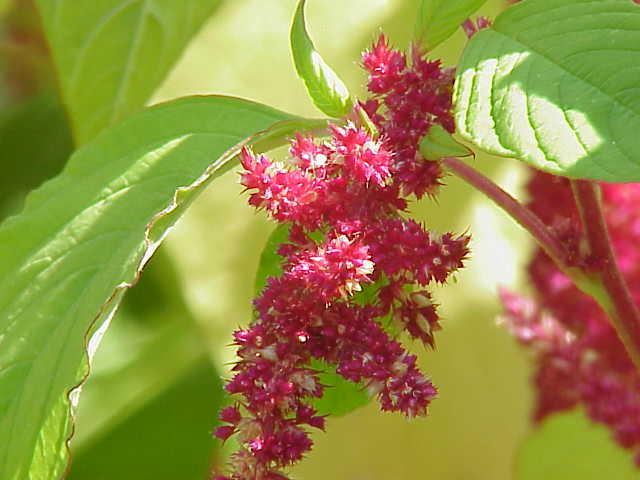 AmaranthAmaranthus
A tall, colourful plant grown for its flowers, leaves and edible seeds
🇲🇽 Mexico and 7 more · Wildflower
AmaranthAmaranthus
A tall, colourful plant grown for its flowers, leaves and edible seeds
🇲🇽 Mexico and 7 more · Wildflower
 Acacia
Shrubs and trees with golden or cream puffball flowers, native mostly to Australia
🇦🇺 Australia and 6 more · Wildflower
Acacia
Shrubs and trees with golden or cream puffball flowers, native mostly to Australia
🇦🇺 Australia and 6 more · Wildflower
 Sensitive PlantMimosa pudica
A touch-sensitive plant whose leaves fold up when disturbed
🇧🇷 Brazil and 8 more · Wildflower
Sensitive PlantMimosa pudica
A touch-sensitive plant whose leaves fold up when disturbed
🇧🇷 Brazil and 8 more · Wildflower