
Protea magnifica
A mountain shrub from South Africa with large, showy flower heads
Protea magnifica is a shrub native to the Western Cape of South Africa. It grows on high mountain slopes and is known for its large, striking flower heads, which are valued as cut flowers. The plant is adapted to fynbos habitats and is pollinated by birds.
- Native to the Western Cape mountains of South Africa
- Grows as a shrub up to 2.5 meters tall
- Flower heads are prized for cut flower arrangements
- Seeds survive fire and are spread by wind
- Pollinated by birds in its natural habitat
What does Protea magnifica look like?
Protea magnifica is a shrub that can stand upright or sprawl, reaching up to about 2.5 meters tall. Its flower heads are made up of many small florets grouped together, forming a large and eye-catching structure. The plant keeps its old seed heads for a long time, and both male and female parts are found in each flower. The leaves and stems are adapted to dry, rocky mountain conditions.
Where does Protea magnifica come from?
This species is found only in the Western Cape province of South Africa, where it grows in isolated patches on mountain slopes. Its natural habitat is the fynbos, a type of vegetation unique to this region. The plant is named Protea magnifica, with the name's authorship attributed to either Henry Cranke Andrews or Johann Heinrich Friedrich Link, depending on the source.
When and how Protea magnifica blooms
Protea magnifica blooms from June to January, during the southern hemisphere's spring and summer. It thrives on rocky slopes, usually in sandstone-based soils, but sometimes on quartzite. Seeds are stored in the old flower heads and are released after fire, using the wind to spread. The plant is most often found at high elevations in hot, dry areas.

How Protea magnifica is used
The large flower heads of Protea magnifica are highly valued in the cut flower trade, with the best specimens often collected from wild plants. It is not commonly grown outside its native region, but is prized for floral arrangements. Its striking appearance makes it a sought-after addition to bouquets and displays.
Kinds of Protea magnifica
This species is known by several names in Afrikaans, reflecting its local importance. There are no widely recognized cultivated varieties, but it may appear slightly different depending on the specific mountain range or habitat where it grows.
What Protea magnifica means
Protea magnifica is not under threat and is considered common in its native range. It is part of the unique fynbos flora of South Africa, which is recognized for its biodiversity. The plant is not linked to particular festivals or symbolic meanings in the sources, but its flower heads are highly regarded in the floral industry.
Questions people ask about Protea magnifica
Where does Protea magnifica come from?
Protea magnifica is native to the Western Cape province of South Africa, where it grows on high mountain slopes in fynbos habitats.
What is Protea magnifica used for?
Its large and showy flower heads are highly valued in the cut flower trade, often used in floral arrangements and displays.
How does Protea magnifica reproduce?
The plant stores its seeds in old flower heads, which are released after fire and dispersed by wind. It is pollinated by birds.
Is Protea magnifica threatened in the wild?
No, Protea magnifica is considered locally common and is not threatened according to recent conservation assessments.
What does Protea magnifica look like?
It is a shrub that can grow up to 2.5 meters tall, with large, composite flower heads made up of many small florets.
Good reading and sources
- IUCN Red List of Threatened SpeciesIUCN Red List, Article
- Plants of the World OnlineRoyal Botanic Gardens, Kew, Plant database
- Where it has been recordedGBIF, Plant database
- Sightings and photos by naturalistsiNaturalist, Plant database
- Protea magnifica on WikipediaEncyclopedia
- More photos on Wikimedia CommonsPhotos
- Wikidata recordOpen data
The facts on this page come from the Wikipedia article "Protea magnifica", written by its contributors and used under the CC BY-SA 4.0 licence, and from its Wikidata record (CC0). Phool rewrote the text in its own words, with AI assistance, and compares every page with the article to make sure no passage is copied. It may be reused under the same CC BY-SA 4.0 licence with a link back.
It may contain mistakes. It is not medical or foraging advice: many flowers are poisonous, and traditional uses are reported, not recommended. If something is wrong, tell us. Last refreshed 2026-10-03.
Others in the family Proteaceae
The whole family Silver treeLeucadendron argenteum
A rare South African tree with silky silver leaves and scented pink flowers
🇿🇦 South Africa · Flowering tree
Silver treeLeucadendron argenteum
A rare South African tree with silky silver leaves and scented pink flowers
🇿🇦 South Africa · Flowering tree
 Grey tree-pincushionLeucospermum conocarpodendron
A tall South African shrub with yellow pincushion-like flower heads
🇿🇦 South Africa · Flowering shrub
Grey tree-pincushionLeucospermum conocarpodendron
A tall South African shrub with yellow pincushion-like flower heads
🇿🇦 South Africa · Flowering shrub
 Bot River proteaProtea compacta
Pink, bowl-shaped protea from the Cape’s coastal mountains
🇿🇦 South Africa · Wildflower
Bot River proteaProtea compacta
Pink, bowl-shaped protea from the Cape’s coastal mountains
🇿🇦 South Africa · Wildflower
 Protea neriifolia
A South African shrub with cone-shaped flower heads and hairy-tipped bracts
🇿🇦 South Africa and 3 more · Wildflower
Protea neriifolia
A South African shrub with cone-shaped flower heads and hairy-tipped bracts
🇿🇦 South Africa and 3 more · Wildflower
More from South Africa
All the flowers of South Africa Eucalyptus
The tall, aromatic trees and shrubs known as gum trees or eucalypts
🇦🇺 Australia and 7 more · Flowering tree
Eucalyptus
The tall, aromatic trees and shrubs known as gum trees or eucalypts
🇦🇺 Australia and 7 more · Flowering tree
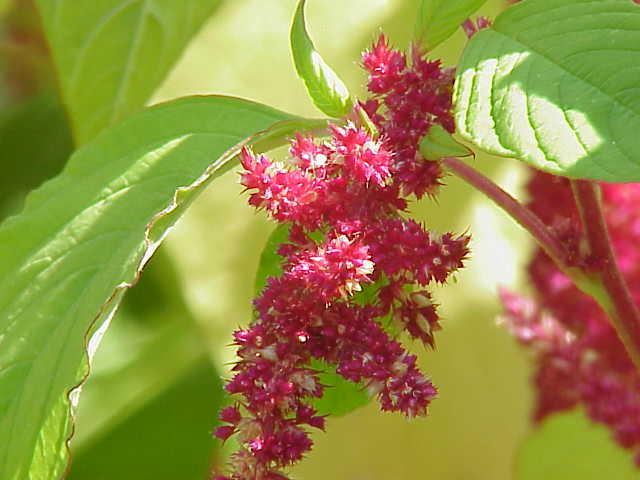 AmaranthAmaranthus
A tall, colourful plant grown for its flowers, leaves and edible seeds
🇲🇽 Mexico and 7 more · Wildflower
AmaranthAmaranthus
A tall, colourful plant grown for its flowers, leaves and edible seeds
🇲🇽 Mexico and 7 more · Wildflower
 Acacia
Shrubs and trees with golden or cream puffball flowers, native mostly to Australia
🇦🇺 Australia and 6 more · Wildflower
Acacia
Shrubs and trees with golden or cream puffball flowers, native mostly to Australia
🇦🇺 Australia and 6 more · Wildflower
 Sensitive PlantMimosa pudica
A touch-sensitive plant whose leaves fold up when disturbed
🇧🇷 Brazil and 8 more · Wildflower
Sensitive PlantMimosa pudica
A touch-sensitive plant whose leaves fold up when disturbed
🇧🇷 Brazil and 8 more · Wildflower