
Buckthorn family
Rhamnaceae, family Rhamnaceae
A global family of thorny trees, shrubs, and climbers prized for dyes and fruit
The buckthorn family includes roughly 950 species of woody trees, shrubs, and climbing vines distributed across the globe. Many bear simple leaves, sharp spines, and tiny flowers in shades of green, yellow, blue, white, or pink, with some grown for ornamental blooms, edible jujube fruit, or vibrant dyes.
- Fossil records of the family trace back to the Late Cretaceous in Colombia and Mexico.
- Several species yield vivid natural green and yellow dyes.
- American Ceanothus shrubs fix nitrogen from the soil through specialized root nodules.
- The wood of Rhamnus was historically the preferred material for gunpowder charcoal.
What does Buckthorn family look like?
Plants in this family are mostly trees and bushes, along with several climbing vines. Their undivided leaves grow either alternately or opposite one another along the branches. Many varieties develop sharp thorns from altered leaf appendages known as stipules. The blossoms display radial symmetry, usually presenting four or five distinct sepals alongside matching numbers of petals, though petals can occasionally be missing. These flowers are typically small and subtle, opening in pale tones of green, yellow, white, blue, or pink, with stamens positioned directly opposite the petals. Certain groups, notably Ceanothus, produce showy, clustered inflorescences. After blooming, the plants produce berries, dry nuts, or fleshy stone fruits containing two to three seeds.
Where does Buckthorn family come from?
This botanical group grows wild throughout the globe, thriving with greatest diversity in warm tropical and subtropical zones. Its lineage reaches deep into prehistory. Ancient floral fossils have been excavated from Late Cretaceous rock layers in Mexico and Colombia, with possible amber inclusions discovered in Myanmar. Additional early remains from the Paleocene epoch occur in Argentina, while recognizable modern genera start appearing within Eocene fossil beds. Today, the family contains around 55 genera and approximately 950 individual species spanning every continent except Antarctica.
When and how Buckthorn family blooms
These plants spread their seeds through diverse natural methods. While a few produce seeds adapted for travel on the wind, most rely on birds and roaming mammals to consume and scatter their fleshy drupes or berries. Some members of the family possess distinctive growth habits. For example, species in the American genus Ceanothus form specialized nodules on their roots that capture nitrogen directly from the soil air. In the genus Colletia, paired buds at the branch joints divide tasks, with one developing into a protective spine while its companion expands into a green vegetative branch.

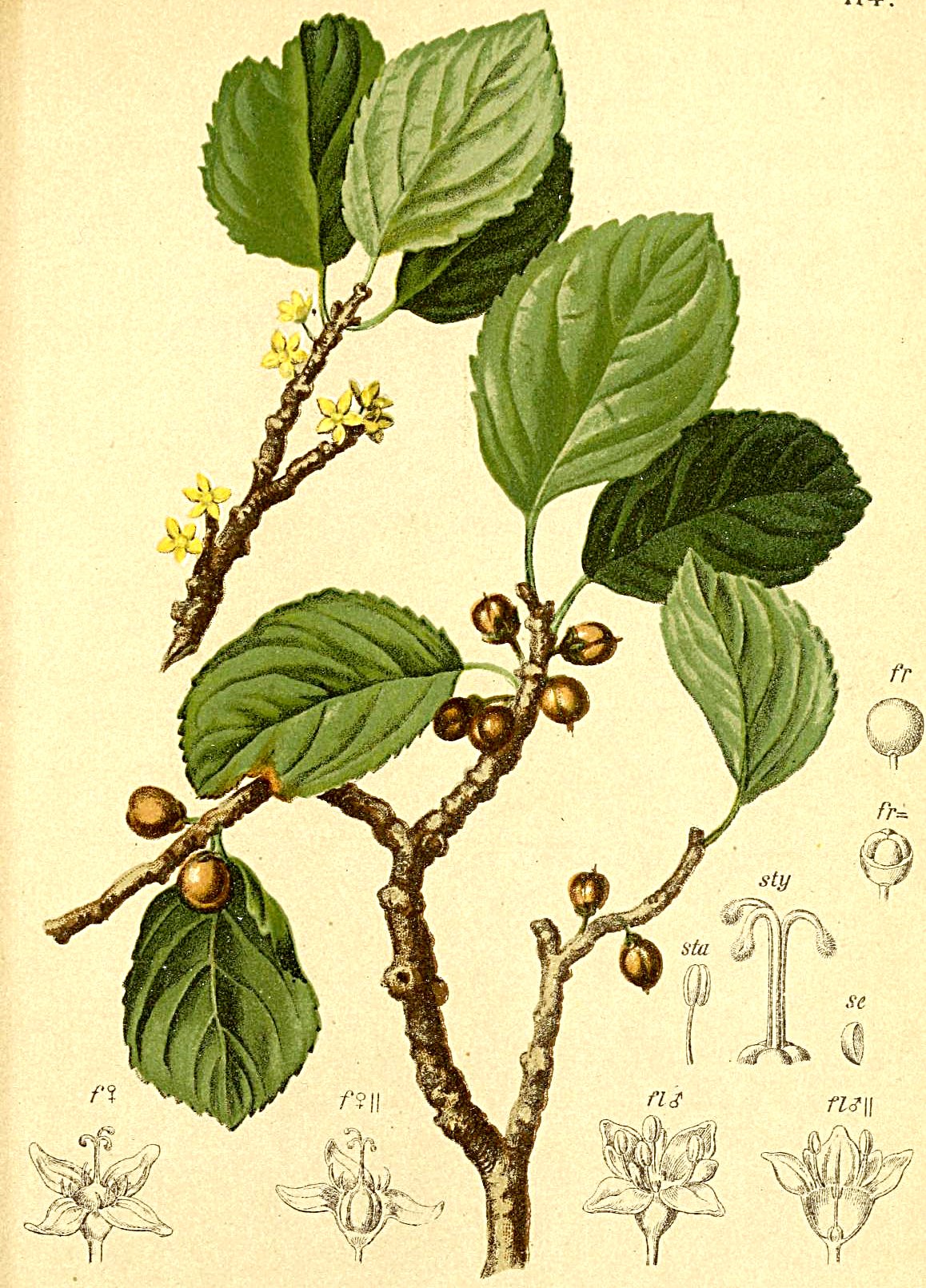


How Buckthorn family is used
People cultivate several members of the family for practical and decorative purposes. Gardeners plant showier types such as Ceanothus for their abundant flower clusters. Certain species yield brilliant green and rich yellow pigments used in fabric dyes. In culinary traditions, the jujube tree (Ziziphus jujuba) produces sweet fruits known as Chinese jujubes, which serve as an important staple crop across China. Historically, craftsmen selected the dense wood of the Rhamnus genus to manufacture high-grade charcoal needed for compounding early gunpowder formulations.
Kinds of Buckthorn family
The family encompasses roughly 55 distinct genera that display striking adaptations. The American genus Ceanothus features dense, eye-catching flower sprays alongside soil-enriching roots. Both Paliurus spina-christi and Colletia paradoxa are noted for their formidable spine systems, with Colletia growing paired thorns and shoots. Ziziphus jujuba is widely grown for Chinese jujube fruits, while the genus Rhamnus yields traditional dyes and specialized wood for charcoal.
Questions people ask about Buckthorn family
Where do plants in the buckthorn family grow?
Members of this family grow worldwide across roughly 55 genera and 950 species, though they occur most abundantly in tropical and subtropical regions across the globe.
What are the primary uses of buckthorn family plants?
People plant them as flowering ornamentals, harvest Chinese jujube fruits for food, and extract rich yellow and green dyes from various species. In the past, Rhamnus wood provided charcoal for gunpowder.
What do Rhamnaceae flowers look like?
The blossoms are radially symmetrical with four or five sepals and petals. Flowers are typically small and colored white, yellow, green, pink, or blue, though some species produce dense, showy clusters.
Good reading and sources
- Encyclopaedia BritannicaArticle
- Plants of the World OnlineRoyal Botanic Gardens, Kew, Plant database
- Where it has been recordedGBIF, Plant database
- Sightings and photos by naturalistsiNaturalist, Plant database
The facts on this page come from the Wikipedia article "Rhamnaceae", written by its contributors and used under the CC BY-SA 4.0 licence, and from its Wikidata record (CC0). EveryPhool rewrote the text in its own words, with AI assistance, and compares every page with the article to make sure no passage is copied. It may be reused under the same CC BY-SA 4.0 licence with a link back.
It may contain mistakes. It is not medical or foraging advice: many flowers are poisonous, and traditional uses are reported, not recommended. If something is wrong, tell us. Last refreshed 2026-10-04.
Others in the family Rhamnaceae
The whole family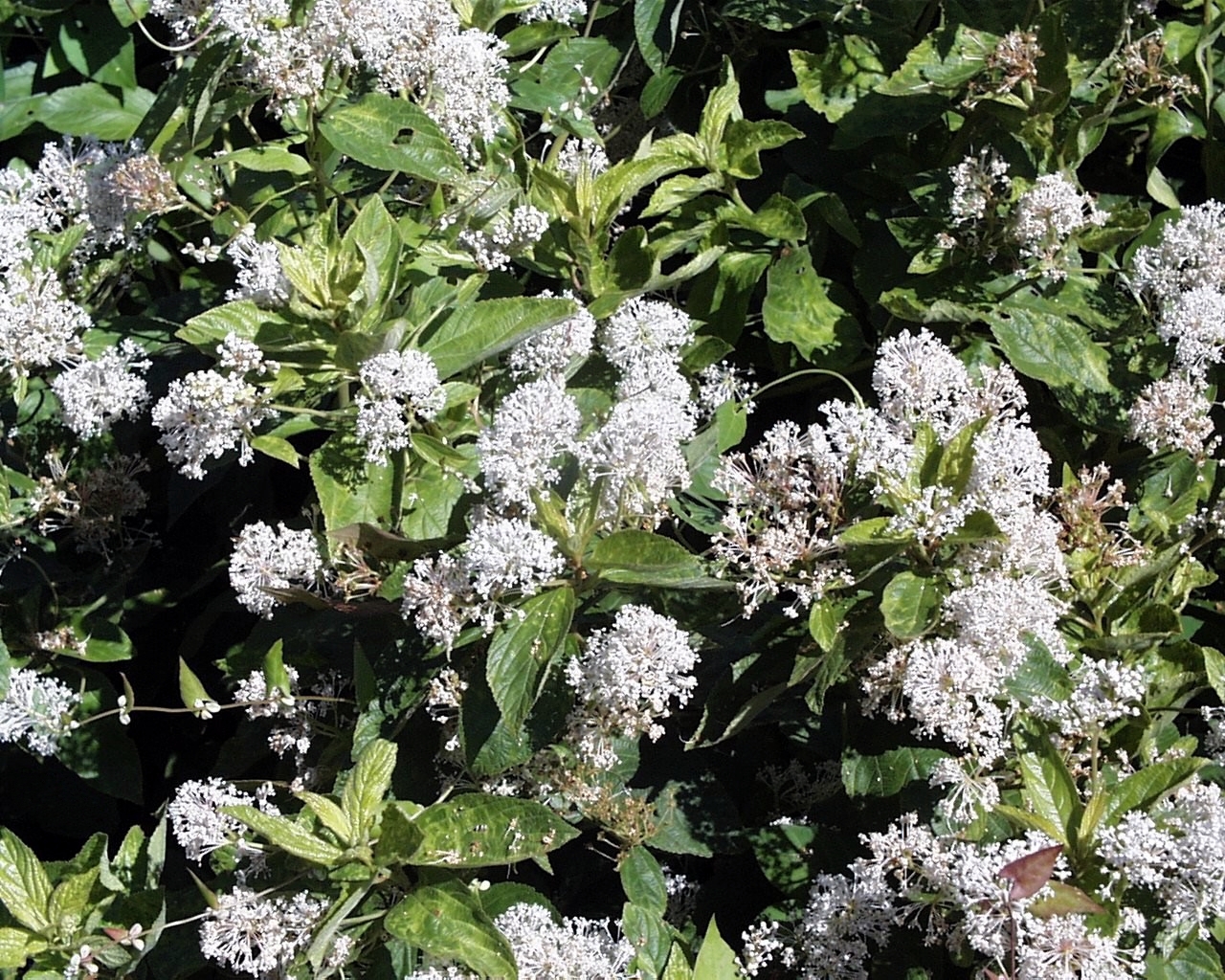 Ceanothus
Shrubs with blue, white or pink flowers native to North America
🇺🇸 United States and 5 more · Wildflower
Ceanothus
Shrubs with blue, white or pink flowers native to North America
🇺🇸 United States and 5 more · Wildflower
 Alder BuckthornFrangula alnus
A wetland shrub with tiny starry blossoms and colourful ripening berries
🇮🇪 Ireland and 6 more · Flowering shrub
Alder BuckthornFrangula alnus
A wetland shrub with tiny starry blossoms and colourful ripening berries
🇮🇪 Ireland and 6 more · Flowering shrub
 Common buckthornRhamnus cathartica
A thorny Eurasian small tree with tiny yellowish-green flowers and black berries
🇲🇦 Morocco and 3 more · Wildflower
Common buckthornRhamnus cathartica
A thorny Eurasian small tree with tiny yellowish-green flowers and black berries
🇲🇦 Morocco and 3 more · Wildflower
 BuckthornRhamnus
Thorny shrubs and trees bearing tiny green flowers and dye-rich berries
🇪🇹 Ethiopia and 4 more · Flowering shrub
BuckthornRhamnus
Thorny shrubs and trees bearing tiny green flowers and dye-rich berries
🇪🇹 Ethiopia and 4 more · Flowering shrub
More from China
All the flowers of China RoseRosa
Prickly flowering shrubs grown across the world for fragrant blossoms and rose hips
🇨🇳 China and 7 more · Flowering shrub
RoseRosa
Prickly flowering shrubs grown across the world for fragrant blossoms and rose hips
🇨🇳 China and 7 more · Flowering shrub
 PeachPrunus persica
A flowering fruit tree from China, grown for its pink blossoms and sweet fruit
🇨🇳 China and 7 more · Flowering tree
PeachPrunus persica
A flowering fruit tree from China, grown for its pink blossoms and sweet fruit
🇨🇳 China and 7 more · Flowering tree
 PomegranatePunica granatum
A shrub with bright red flowers and a fruit full of edible seeds
🇮🇷 Iran and 9 more · Flowering shrub
PomegranatePunica granatum
A shrub with bright red flowers and a fruit full of edible seeds
🇮🇷 Iran and 9 more · Flowering shrub
 BirchBetula
Slender trees with papery bark found across the northern world
🇨🇳 China and 7 more · Wildflower
BirchBetula
Slender trees with papery bark found across the northern world
🇨🇳 China and 7 more · Wildflower