
Buckthorn
Rhamnus, family Rhamnaceae
Thorny shrubs and trees bearing tiny green flowers and dye-rich berries
Buckthorns are woody shrubs and small trees found across temperate and subtropical regions of the world. They bear tiny yellowish-green flowers and dark berries that have long yielded natural dyes, traditional medicine, and brewing flavorings.
- Many buckthorn species feature twigs that end in a sharp, woody spine.
- The berries and bark yield historic natural dyes, including vibrant china green.
- Ethiopian gesho leaves are used to brew a traditional honey mead called tej.
- In 17th-century England, common buckthorn was the only native herbal purgative.
What does Buckthorn look like?
Buckthorns are deciduous or evergreen woody shrubs and small to medium trees, usually growing between one and ten meters tall. Their branches often terminate in sharp, woody spines. The foliage consists of undivided, simple leaves with fine serrations and distinctive veins that arch upward toward the blade tips. Most species are dioecious, bearing male and female flowers on separate individual plants. The blossoms are tiny, yellowish green, and formed in small axillary clusters, racemes, or panicles. Each bloom features four or five pointed sepals arranged in a cup shape, with matching or reduced petals that are sometimes completely missing. After flowering, the plants produce round, berry-like drupes containing two to four hard stones, ripening from green to red or glossy black.
Where does Buckthorn come from?
With approximately 140 recognized species, the genus spans temperate and subtropical climates across the Northern Hemisphere, with smaller native ranges in Africa and South America. Eastern Asia and North America contain the richest diversity of native species. In Europe, common buckthorn was historically known as Spina Cervina and harvested for folk medicine. During later centuries, travelers and gardeners transported various species internationally as ornamental landscape shrubs and hedging. In places such as the United States, Canada, Australia, and New Zealand, introduced buckthorns adapted rapidly to local environments, naturalizing extensively across native woodlands, abandoned pastures, and fragile coastal island reserves.
When and how Buckthorn blooms
Buckthorns are remarkably adaptable plants capable of thriving in shade and poor soils. They reproduce from durable seeds contained inside the fleshy fruit, which spread readily across diverse landscapes. Flowers emerge along leaf joints, opening in modest clusters or branched sprays. Although the leaves and fruit contain unpalatable chemical compounds that deter most foraging animals, buckthorn foliage serves as a vital food source for the caterpillars of numerous moth and butterfly species. In agricultural regions, the bushes also serve as overwintering hosts for pest insects and agricultural fungi.


How Buckthorn is used
Buckthorn components have found diverse applications across craft, industry, and culinary traditions. The berries and bark of several species yield vibrant yellow and green textile dyes, notably the bright china green used on silk and wool. Seed oils are extracted to manufacture soaps, printing inks, and mechanical lubricants. In Ethiopia, the leaves and woody stems of the gesho shrub are an essential ingredient for fermenting the traditional honey mead known as tej. In seventeenth-century England, physicians prepared buckthorn syrups as strong herbal purges, though modern herbalists avoid the plant due to harmful toxic effects.
Kinds of Buckthorn
Botanists accept about 140 species within the genus. Common buckthorn, or Rhamnus cathartica, is a spreading European shrub with four-seeded black berries. Italian buckthorn (Rhamnus alaternus) is an evergreen Mediterranean shrub with robust chemical defenses. In North America, native varieties include the widespread alder-leaf buckthorn (Rhamnus alnifolia) and the western hollyleaf buckthorn (Rhamnus crocea). In parts of southern and eastern Africa, Rhamnus prinoides grows as a glossy-leaved shrub locally called gesho or dogwood.
What Buckthorn means
Historical herbals in England recorded buckthorn syrup as the sole indigenous purgative remedy available during the mid-seventeenth century. Today, buckthorns are widely regulated due to their ecological impact. In New Zealand, Italian buckthorn is strictly prohibited from sale or distribution under national biosecurity accords to safeguard native island ecosystems. In North American farming areas, land managers actively eradicate buckthorn bushes because they shelter soybean aphids and spread fungal crop blights to oat fields.
Questions people ask about Buckthorn
Where do buckthorns grow in the wild?
Most buckthorn species are native to eastern Asia and North America. Smaller numbers of native species also grow across temperate Europe, parts of Africa, and South America.
What are buckthorns used for?
Buckthorns provide natural yellow and green dyes for coloring fabrics like wool and silk. Their seeds yield oils for soaps and inks, while Ethiopian gesho flavors traditional honey mead.
How can buckthorns be distinguished from dogwood?
Both plants share distinctive upward-curving leaf veins. When gently torn apart, dogwood leaves reveal delicate white latex strings between the broken edges, whereas buckthorn leaves produce no latex strands.
Why are some buckthorns considered harmful weeds?
Introduced species spread aggressively, outcompeting native plants in forests and coastal reserves. They release toxic compounds, harm amphibian eggs, and act as winter hosts for damaging soybean aphids.
Good reading and sources
- Encyclopaedia BritannicaArticle
- Midwestern frogs decline, mammal populations altered by invasive plant, studies revealScienceDaily, Article
- USDA Plants DatabaseUS Department of Agriculture, Article
- Plants of the World OnlineRoyal Botanic Gardens, Kew, Plant database
- Where it has been recordedGBIF, Plant database
- Sightings and photos by naturalistsiNaturalist, Plant database
- Rhamnus (plant) on WikipediaEncyclopedia
- More photos on Wikimedia CommonsPhotos
- Wikidata recordOpen data
The facts on this page come from the Wikipedia article "Rhamnus (plant)", written by its contributors and used under the CC BY-SA 4.0 licence, and from its Wikidata record (CC0). EveryPhool rewrote the text in its own words, with AI assistance, and compares every page with the article to make sure no passage is copied. It may be reused under the same CC BY-SA 4.0 licence with a link back.
It may contain mistakes. It is not medical or foraging advice: many flowers are poisonous, and traditional uses are reported, not recommended. If something is wrong, tell us. Last refreshed 2026-10-04.
Others in the family Rhamnaceae
The whole family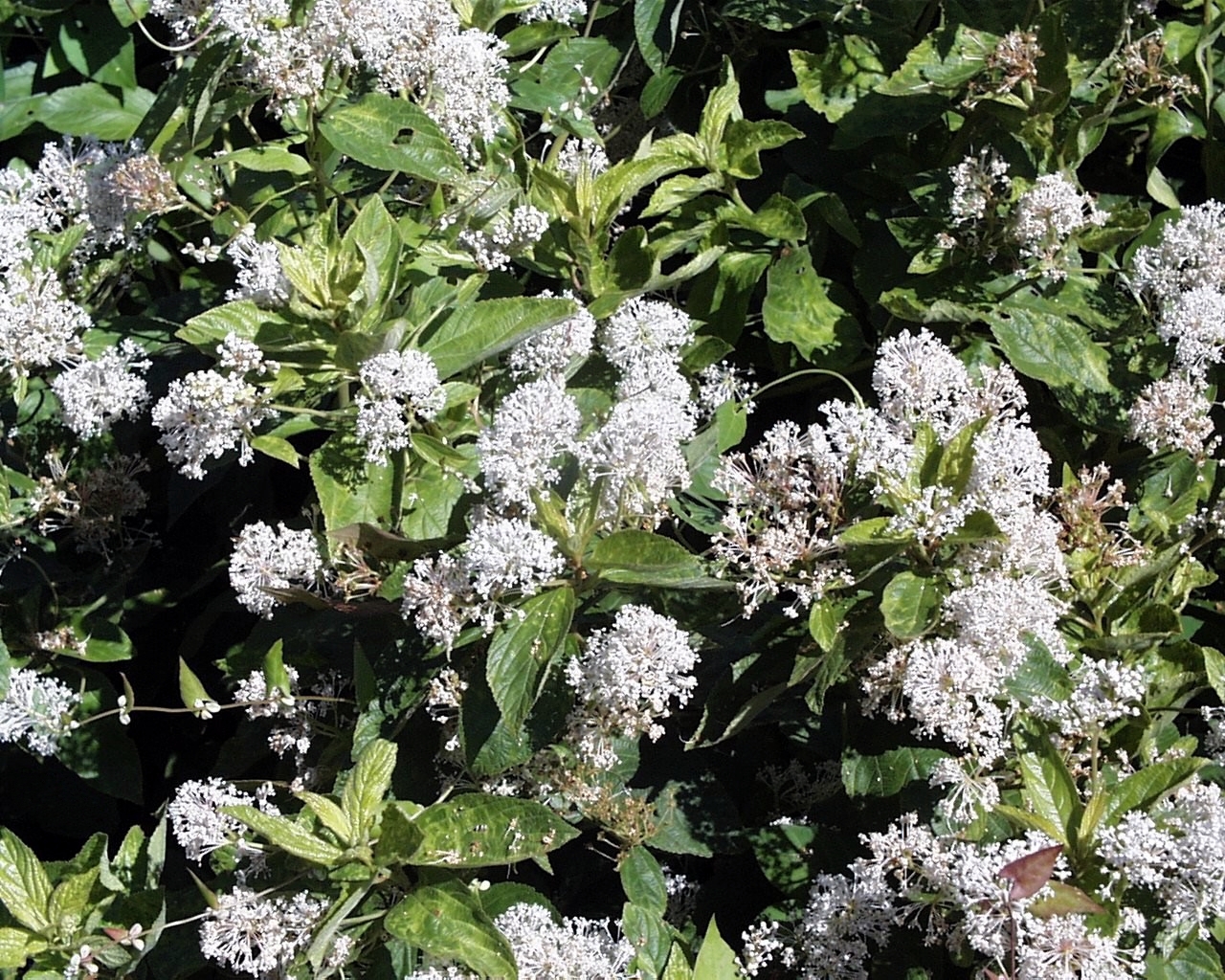 Ceanothus
Shrubs with blue, white or pink flowers native to North America
🇺🇸 United States and 5 more · Wildflower
Ceanothus
Shrubs with blue, white or pink flowers native to North America
🇺🇸 United States and 5 more · Wildflower
 Buckthorn familyRhamnaceae
A global family of thorny trees, shrubs, and climbers prized for dyes and fruit
🇨🇳 China · Flowering tree
Buckthorn familyRhamnaceae
A global family of thorny trees, shrubs, and climbers prized for dyes and fruit
🇨🇳 China · Flowering tree
 Alder BuckthornFrangula alnus
A wetland shrub with tiny starry blossoms and colourful ripening berries
🇮🇪 Ireland and 6 more · Flowering shrub
Alder BuckthornFrangula alnus
A wetland shrub with tiny starry blossoms and colourful ripening berries
🇮🇪 Ireland and 6 more · Flowering shrub
 Common buckthornRhamnus cathartica
A thorny Eurasian small tree with tiny yellowish-green flowers and black berries
🇲🇦 Morocco and 3 more · Wildflower
Common buckthornRhamnus cathartica
A thorny Eurasian small tree with tiny yellowish-green flowers and black berries
🇲🇦 Morocco and 3 more · Wildflower
More from Ethiopia
All the flowers of Ethiopia Thorn-appleDatura stramonium
A poisonous, night-blooming plant with trumpet-shaped white or violet flowers
🇨🇳 China and 7 more · Wildflower
Thorn-appleDatura stramonium
A poisonous, night-blooming plant with trumpet-shaped white or violet flowers
🇨🇳 China and 7 more · Wildflower
 Primula
A large genus of spring-blooming wild and garden flowers from cool and mountain regions
🇨🇳 China and 5 more · Wildflower
Primula
A large genus of spring-blooming wild and garden flowers from cool and mountain regions
🇨🇳 China and 5 more · Wildflower
 Pelargonium
A diverse group of flowering plants often grown as garden and house plants
🇿🇦 South Africa and 7 more · Garden flower
Pelargonium
A diverse group of flowering plants often grown as garden and house plants
🇿🇦 South Africa and 7 more · Garden flower
 Arabian coffeeCoffea arabica
The white-flowered shrub whose beans make most of the world’s coffee
🇪🇹 Ethiopia and 4 more · Wildflower
Arabian coffeeCoffea arabica
The white-flowered shrub whose beans make most of the world’s coffee
🇪🇹 Ethiopia and 4 more · Wildflower