
Alder Buckthorn
Frangula alnus, family Rhamnaceae
A wetland shrub with tiny starry blossoms and colourful ripening berries
Alder buckthorn is a thornless wetland shrub native across Europe, northern Africa, and western Asia. It bears tiny greenish-white blossoms in late spring that turn into berries ripening from red to black, while its bark and wood have long served in traditional medicine, gunpowder making, and natural dyeing.
- Its charcoal was historically prized as the ideal ingredient for gunpowder and slow-burning time fuses.
- Its tiny starry greenish flowers produce berries that turn from green to crimson and finally black.
- The inner bark displays a vivid lemon-yellow colour when sliced and yields a natural yellow dye.
- The plant is an essential food source for caterpillars of the European brimstone butterfly.
What does Alder Buckthorn look like?
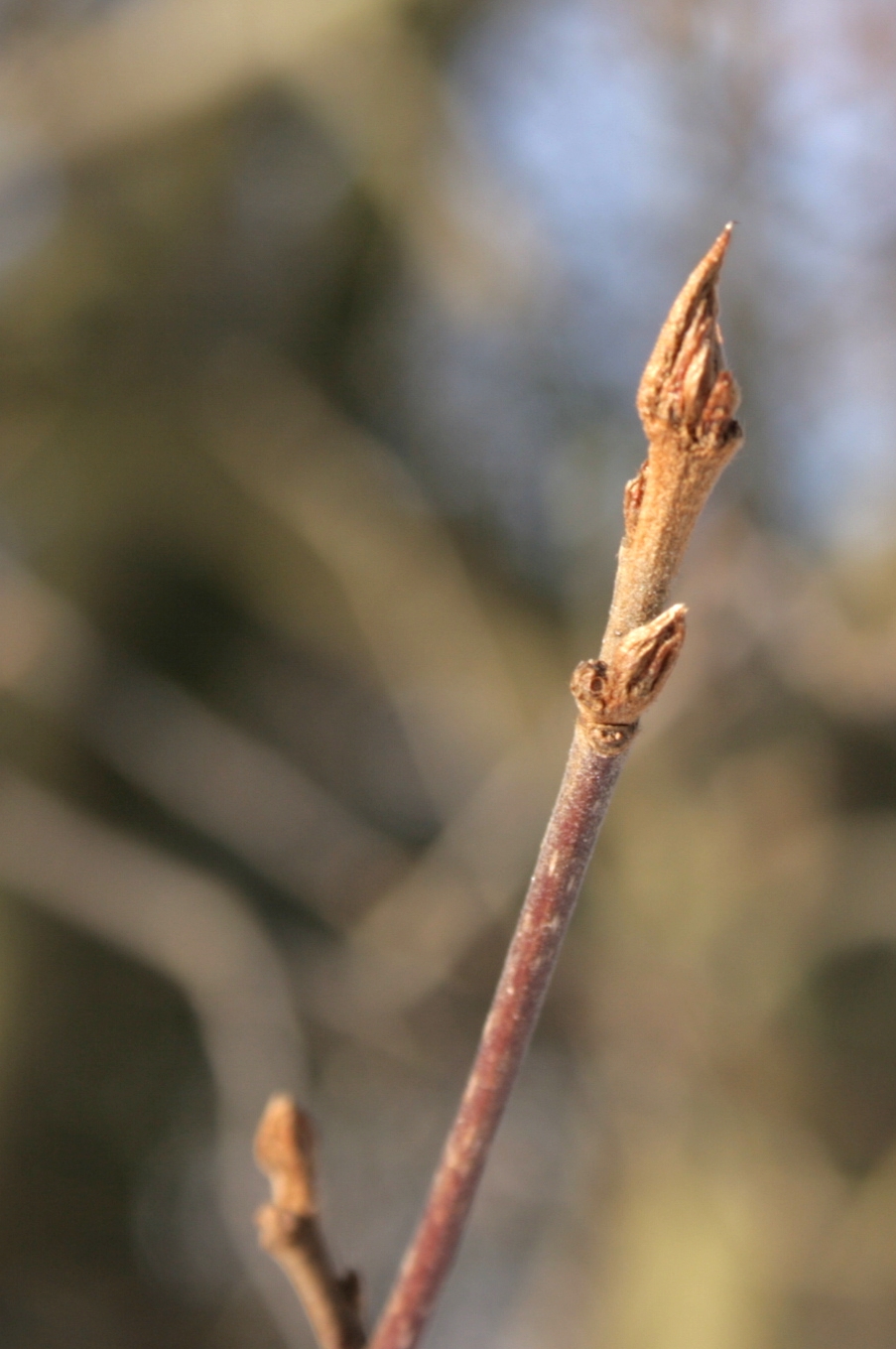
Alder buckthorn is a deciduous shrub that usually reaches three to six metres in height. Unlike related buckthorn species, its stems carry no spines. Slicing through the dark brown outer bark exposes a vivid lemon-yellow interior. Its oval leaves feature prominent grooved veins and hairy undersides. During late spring, small clusters of starry flowers open at the leaf joints. Each flower measures only three to five millimetres wide, showing five pointed greenish-white petals. These modest blossoms attract insect pollinators and yield small berries that shift in colour over the season. The fruit begins green, turns bright red as summer ends, and finishes a deep blackish-purple in the autumn.
Where does Alder Buckthorn come from?
This plant ranges across temperate regions of Europe, North Africa, and western Asia, extending from the British Isles to western China and southward into Iran and Morocco. Carl Linnaeus initially classified it in 1753 under the genus Rhamnus. Later, in 1768, botanist Philip Miller moved it into Frangula because its blossoms contain both male and female parts with five petals, whereas true Rhamnus flowers are four-parted. The botanical genus name comes from the Latin word for breaking, pointing to the plant's brittle branches. The species name reflects its tendency to share damp ground with alder trees. In places like Northern Ireland, shrinking bogs have made the wild shrub increasingly rare.
When and how Alder Buckthorn blooms
Alder buckthorn thrives naturally on acidic, damp ground, often colonising wet woodlands, hedgerows, and boggy clearings. It grows well in open sunshine as well as partial shade. Flowering occurs in May and June, producing nectar that feeds honeybees and other pollinators. The shrub is also crucial for wildlife because its foliage serves as one of only two food sources for caterpillars of the brimstone butterfly. Birds such as thrushes feast on the juicy autumn berries and spread the seeds across the landscape. In eastern North America, where it was introduced two centuries ago, this prolific bird-spread seeding allows it to spread aggressively through forest gaps.



How Alder Buckthorn is used
Historically, the shrub provided valuable materials for craft and industry. Its light charcoal was long considered the finest fuel for manufacturing gunpowder and precision time fuses because it burns at an exceptionally steady rate. Woodworkers also turned the timber into shoe lasts, small nails, and decorative veneers. Dyers extract a rich yellow pigment from boiled bark and collect green tones from immature berries. In folk medicine, bark stored and dried for a full year was taken as a laxative. Herbalists avoided fresh bark because it triggers violent stomach irritation and toxic reactions.
Kinds of Alder Buckthorn
Gardeners occasionally grow selected cultivars for landscape use. The cultivar 'Asplenifolia' is grown for its unusually narrow, thread-like foliage, while 'Variegata' displays leaves edged or patterned with creamy white. A dense, upright selection called 'Tallhedge' was developed specifically for screening and boundary planting. Outside of these cultivated forms, the wild shrub looks very similar across its vast natural range.
What Alder Buckthorn means
The ancient Greek physician Galen mentioned the shrub in the second century, though early writers frequently confused it with related plants. Ancient folk traditions viewed the shrub as a protective charm against poisons, severe headaches, witchcraft, and evil spirits. In modern ecology, the shrub holds an essential cultural and conservation status among entomologists as the primary nursery plant for bright yellow brimstone butterflies across European reserves.
Questions people ask about Alder Buckthorn
Where does alder buckthorn come from?
Alder buckthorn is native to wet ground and woodlands across Europe, northern Africa, and western Asia, extending eastward into Siberia and Xinjiang in western China. It was introduced to North America roughly two centuries ago, where it now grows wild as an invasive species in wetlands and forests.
What do the flowers of alder buckthorn look like?
The shrub produces clusters of small, star-shaped blossoms measuring three to five millimetres across between May and June. Each flower has five triangular petals in a pale greenish-white tone. They produce nectar that attracts insect pollinators before developing into multi-coloured berries.
What was alder buckthorn traditionally used for?
Historically, its charcoal was regarded as the best wood for making gunpowder and time fuses. Craftsmen used the timber for shoe lasts and veneers, dyers extracted yellow and green pigments, and aged bark was brewed as a laxative in traditional herbal medicine.
Why is alder buckthorn important for wildlife?
The flowers offer valuable nectar for bees, while birds such as thrushes eat the berries and disperse the seeds. Crucially, the leaves serve as one of only two food plants for caterpillars of the brimstone butterfly.
Good reading and sources
- Frangula alnusUS Department of Agriculture, Article
- IUCN Red List of Threatened SpeciesIUCN Red List, Article
- Plants of the World OnlineRoyal Botanic Gardens, Kew, Plant database
- Where it has been recordedGBIF, Plant database
- Sightings and photos by naturalistsiNaturalist, Plant database
- Frangula alnus on WikipediaEncyclopedia
- More photos on Wikimedia CommonsPhotos
- Wikidata recordOpen data
The facts on this page come from the Wikipedia article "Frangula alnus", written by its contributors and used under the CC BY-SA 4.0 licence, and from its Wikidata record (CC0). EveryPhool rewrote the text in its own words, with AI assistance, and compares every page with the article to make sure no passage is copied. It may be reused under the same CC BY-SA 4.0 licence with a link back.
It may contain mistakes. It is not medical or foraging advice: many flowers are poisonous, and traditional uses are reported, not recommended. If something is wrong, tell us. Last refreshed 2026-10-04.
Others in the family Rhamnaceae
The whole family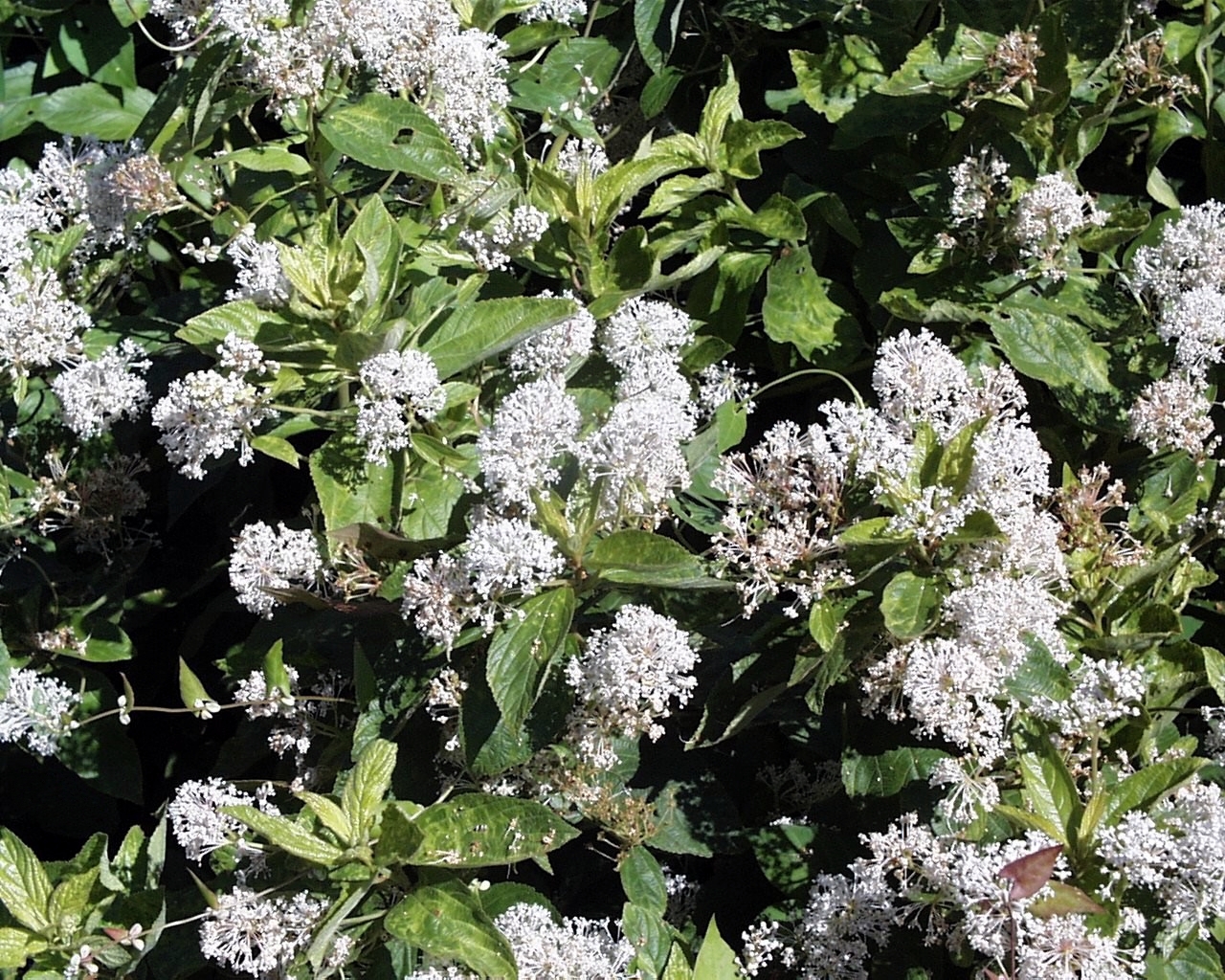 Ceanothus
Shrubs with blue, white or pink flowers native to North America
🇺🇸 United States and 5 more · Wildflower
Ceanothus
Shrubs with blue, white or pink flowers native to North America
🇺🇸 United States and 5 more · Wildflower
 Buckthorn familyRhamnaceae
A global family of thorny trees, shrubs, and climbers prized for dyes and fruit
🇨🇳 China · Flowering tree
Buckthorn familyRhamnaceae
A global family of thorny trees, shrubs, and climbers prized for dyes and fruit
🇨🇳 China · Flowering tree
 Common buckthornRhamnus cathartica
A thorny Eurasian small tree with tiny yellowish-green flowers and black berries
🇲🇦 Morocco and 3 more · Wildflower
Common buckthornRhamnus cathartica
A thorny Eurasian small tree with tiny yellowish-green flowers and black berries
🇲🇦 Morocco and 3 more · Wildflower
 BuckthornRhamnus
Thorny shrubs and trees bearing tiny green flowers and dye-rich berries
🇪🇹 Ethiopia and 4 more · Flowering shrub
BuckthornRhamnus
Thorny shrubs and trees bearing tiny green flowers and dye-rich berries
🇪🇹 Ethiopia and 4 more · Flowering shrub
More from Ireland
All the flowers of Ireland Common flaxLinum usitatissimum
The slender blue-flowered plant grown for linen and linseed
🇨🇳 China and 7 more · Wildflower
Common flaxLinum usitatissimum
The slender blue-flowered plant grown for linen and linseed
🇨🇳 China and 7 more · Wildflower
 HawthornCrataegus
A thorny shrub or tree with white or pink spring flowers and small edible fruits
🇮🇪 Ireland and 7 more · Wildflower
HawthornCrataegus
A thorny shrub or tree with white or pink spring flowers and small edible fruits
🇮🇪 Ireland and 7 more · Wildflower
 Lily-of-the-valleyConvallaria majalis
A woodland plant with sweet-scented white bell flowers in late spring
🇫🇮 Finland and 4 more · Wildflower
Lily-of-the-valleyConvallaria majalis
A woodland plant with sweet-scented white bell flowers in late spring
🇫🇮 Finland and 4 more · Wildflower
 RapeseedBrassica napus
A yellow-flowered crop grown for its oil-rich seeds and protein meal
🇨🇳 China and 7 more · Wildflower
RapeseedBrassica napus
A yellow-flowered crop grown for its oil-rich seeds and protein meal
🇨🇳 China and 7 more · Wildflower